
Scaling vs Deep Cleaning: The Difference and Which One You Need
A scale and polish keeps healthy gums healthy. A deep cleaning treats gum disease below the gum line. The choice should come from measuring your gums, not from a price list.
- Pocket charting decides
- GBT for routine and maintenance cleans
- Open daily 10:00–20:00
If another clinic has recommended a deep cleaning, bring the charting and X-rays.
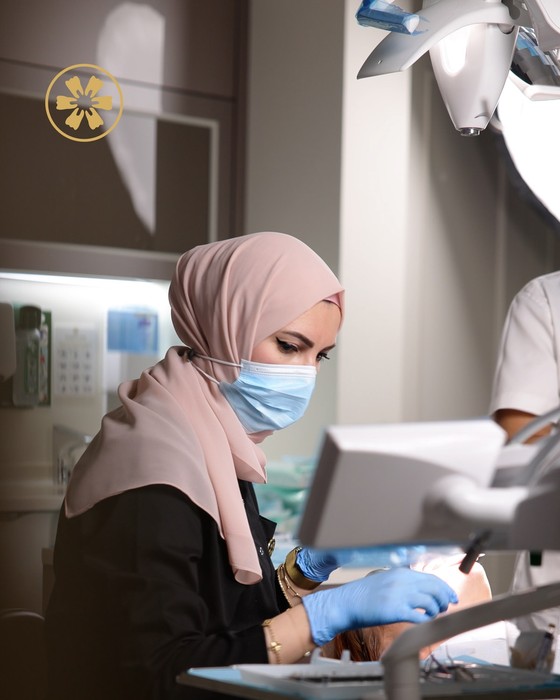
The equipment used for routine and maintenance cleans


Photos of the equipment in our clinic in Jumeirah. They show how cleaning is done, not treatment results.
What is the difference between a scale and polish and a deep cleaning?
A scale and polish removes plaque, stain and tartar from the teeth above and just below the gum line, for healthy gums or gingivitis, usually in one visit without anaesthetic. A deep cleaning (scaling and root planing, or root surface debridement) treats periodontitis by cleaning the root surfaces inside gum pockets, usually under local anaesthetic and followed by a re-check. At Creative Arts in Dubai, pocket charting decides which one you need.
Who treats you here Dr. Duaa Ameen General Dentist · Dr. Julia General Dentist · Dr. Taban Ameen Dentist
Every dentist’s licence can be checked on the DHA Sheryan medical directory.
Scale and polish vs deep cleaning: how do they compare?
Two different appointments for two different situations. Neither is a premium version of the other.
| Scale and polish (routine clean) | Deep cleaning (root surface debridement) | |
|---|---|---|
| Purpose | Prevention: keeps healthy gums healthy and settles gingivitis | Treatment of periodontitis |
| Where it cleans | Tooth surfaces above the gum and the shallow groove just below it | Root surfaces inside pockets of 4 mm or more |
| How the need is decided | Routine visit; gums measure healthy or show gingivitis only | Charting shows deeper pockets that bleed, with bone loss on X-rays |
| Anaesthetic | Rarely needed | Usually local anaesthetic, one area at a time |
| Visits | Usually one | One to several, depending on how many areas are affected |
| Afterwards | Teeth feel smooth; little or no soreness | Tender gums for a few days, cold sensitivity for some weeks |
| Follow-up | Your routine recall | Re-measurement after healing, then maintenance, often every three months at first |
| Relative cost | Lower | Higher; planned and charged as gum treatment |
Why does the gum pocket decide which cleaning you need?
Around every tooth is a shallow groove between gum and tooth. In healthy gums it measures about 1–3 mm, and a routine clean reaches all of it. In periodontitis, the fibres and bone holding the tooth have been destroyed in places, and the groove deepens into a pocket. Tartar forms on the root inside it, where neither a toothbrush nor a routine clean can reach.
That is why a dentist measures before deciding. A fine probe records the depth at several points around each tooth, along with bleeding, and X-rays show whether bone has been lost. One trap is worth knowing: in gingivitis, a swollen gum can make the groove read deeper even though no bone has been lost. If X-rays show normal bone, a routine clean and better home care usually come first, and the gums are measured again once the swelling settles. Our page on gum pockets explains what the numbers mean.
Do you need a scale and polish or a deep cleaning?
Only an examination confirms it, but these patterns usually point one way or the other.
A scale and polish is usually enough if
- Your gums bleed a little but pockets measure 3 mm or less
- X-rays show normal bone levels
- Tartar sits mainly above the gum, such as behind the lower front teeth
- You have had gum treatment before and your measurements are stable
A deep cleaning is usually needed if
- Pockets of 4 mm or more bleed when measured
- X-rays show bone loss or tartar on the roots
- Teeth have started to drift, feel loose or look longer
- Gingivitis-type bleeding has not settled after a thorough routine clean
What if there is too much tartar to measure your gums?
After several years without a professional clean, tartar can be so heavy that the probe cannot reach the bottom of the gum groove, and swollen gums bleed at every touch. In that case the first appointment is usually a thorough clean of the visible deposits, which is neither a full deep cleaning nor the end of the story. Once the gums have settled for a few weeks they are charted properly, and only the areas that still show pockets with bone loss go on to deep cleaning. Our guide to a first cleaning after years explains what to expect.
Scaling, root planing, debridement: what do the words mean?
Scaling simply means removing tartar, with an ultrasonic tip or hand instruments. It is part of both appointments; the difference is where it happens. Root planing is the older name for cleaning the root surface inside a pocket. Historically it aimed to scrape the root completely smooth. Many dentists now prefer root surface debridement, which reflects a gentler aim: remove the tartar and bacterial film while keeping as much of the root surface as possible. On a treatment plan, "deep cleaning", "scaling and root planing" and "root surface debridement" usually describe the same treatment.
A routine clean of healthy gums does not include root planing. Cleaning roots that have no pocket brings no benefit and can make teeth sensitive. If you are wondering whether cleaning itself wears teeth down, see does teeth cleaning damage enamel.
Where does GBT fit in a routine clean and a deep cleaning?
At Creative Arts the routine clean is a Guided Biofilm Therapy (GBT) clean: the biofilm is stained, removed with air, warm water and a fine powder, including just below the gum where suitable, and tartar is scaled only where it remains. The detailed comparison with a traditional scale and polish is in GBT vs traditional cleaning.
GBT does not replace deep cleaning. Hardened tartar on a root deep in a pocket still has to be removed with ultrasonic and fine hand instruments, usually under local anaesthetic. A 2022 review found that air-polishing with erythritol powder gave periodontal results comparable to other non-surgical treatments, not better, which matches how it is used here: as part of treatment and, above all, for the maintenance visits that keep treated gums stable.
A deep cleaning is not a "better" clean
For healthy gums or simple gingivitis, a deep cleaning adds anaesthetic and root instrumentation with no benefit, and can leave teeth sensitive. For periodontitis, a routine clean leaves the cause in the pockets. The right cleaning is the one that matches your measurements, which is why you should be shown them.
Dentists who carry out cleaning and deep cleaning
Dr. Duaa Ameen, Dr. Julia and Dr. Taban Ameen measure the gums, explain the findings and provide routine GBT cleans. Deep cleaning and gum maintenance are led by Dr. Duaa Ameen and Dr. Taban Ameen.


Sources
Clinical statements on this page are consistent with these independent sources. They describe averages from studies, not a promise for any one patient.
- World Health Organization. Oral health — fact sheet. WHO, 2025.
- Onisor F et al.. Effectiveness and Clinical Performance of Erythritol Air-Polishing in Non-Surgical Periodontal Therapy: A Systematic Review of Randomized Clinical Trials. Medicina, 2022.
Frequently asked questions
Is scaling the same as a deep cleaning?
Not quite. Scaling means removing tartar and is part of both a routine clean and a deep cleaning. In a routine scale and polish it is done above and just below the gum line. In a deep cleaning, the root surfaces inside gum pockets are cleaned as well, usually under local anaesthetic, to treat periodontitis.
Can a scale and polish treat periodontitis?
Not on its own. A routine clean does not reach tartar and bacteria on the roots inside pockets of 4 mm or more, so the inflammation continues. Periodontitis needs deep cleaning of the affected areas, then re-measurement and regular maintenance. A routine clean is still useful before and between those stages.
Why was I told I need a deep cleaning when my teeth look clean?
Because periodontitis develops below the gum, where you cannot see it. Teeth can look clean while pockets around the roots hold tartar and bacteria. Ask to see your pocket measurements and X-rays; a recommendation for deep cleaning should be based on them, and name the areas that need it.
Is a deep cleaning bad for healthy gums?
It brings no benefit for healthy gums and can cause sensitivity and slight gum shrinkage, which is why it should only follow charting that shows pockets with bone loss. For healthy gums or gingivitis, a routine clean with good home care is the right treatment.
Is root planing still done, or is it called something else now?
The treatment is still done, but many dentists now call it root surface debridement, reflecting a gentler aim of removing tartar and bacterial film while preserving the root surface rather than scraping it completely smooth. Deep cleaning, scaling and root planing and root surface debridement usually mean the same appointment.
Can a scale and polish and a deep cleaning be done in the same visit?
Sometimes. If only a few teeth have deeper pockets, they may be treated during the same appointment as the routine clean of the rest of the mouth. Where several areas are affected, deep cleaning is usually split over visits, one area at a time under local anaesthetic.
Why does a deep cleaning cost more than a scale and polish?
It is treatment for gum disease rather than routine prevention: it takes longer, usually involves local anaesthetic, is often spread over more than one visit and includes a re-check of the pockets after healing. Your written plan lists the areas to be treated and the visits involved before anything starts.
Related treatments
One clinic, in Jumeirah 3 / Umm Suqeim 1
Creative Arts has a single clinic on Jumeira Street (Jumeirah Beach Road). Ask about parking when you book.
- Address614 Jumeira St, Jumeirah 3, Umm Suqeim 1, Dubai
- Opening hoursDaily 10:00–20:00, including Friday and Sunday
- Neighbouring areasJumeirah 1–3, Umm Suqeim 1–3, Al Wasl, Al Safa, Al Manara
Our clinic in Jumeirah Open in Google Maps · Rated 4.8 on Google from 238 patient reviews (October 2026) — read them
Request a consultation
Tell us what you would like to change. The clinic replies within working hours with an appointment time.
- Address614 Jumeira St, Jumeirah 3, Umm Suqeim 1, Dubai · Our clinic in Jumeirah 3 / Umm Suqeim 1
- Opening hoursClinic open daily, 10:00–20:00
- Phone+971 4 342 4444 · WhatsApp +971 56 677 7537
Book Your Consultation
Or call us +971 4 342 4444Or message us on WhatsApp
Talk to a dentist about your case
A consultation ends with a diagnosis and a written, itemised plan — not a sales pitch. Book online, message us on WhatsApp, or call the clinic.