Plaque in hidden places
Behind the lower front teeth, along the gum line and on the back molars are where children's brushing usually falls short and where gums first become inflamed.
A child's professional clean is short, gentle and usually part of a check-up. It removes plaque, stains and any tartar, shows you where brushing is missing, and adds fluoride when your child's risk calls for it.
Brothers and sisters can often be booked back to back; ask when you book.
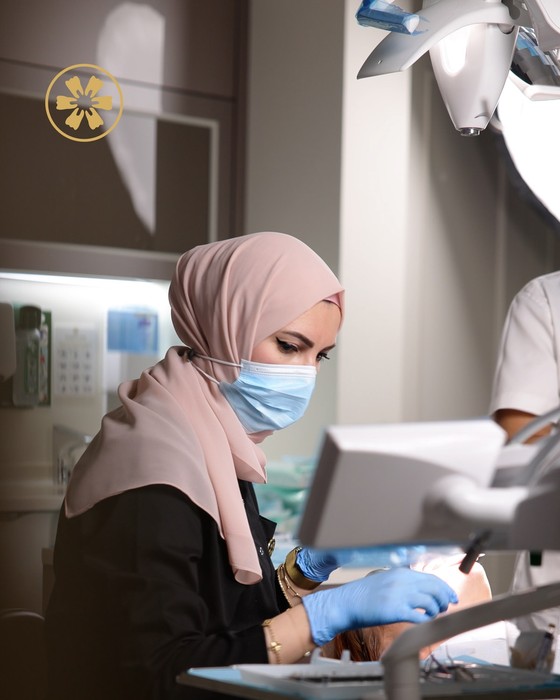
A kids teeth cleaning removes plaque, surface stains and any tartar with a soft polishing brush and gentle hand instruments, usually during a check-up and without any injection. Fluoride varnish is added when a child's decay risk calls for it. Most children are seen every six months or so, but the interval is set by risk. At Creative Arts in Dubai, children's cleans are done by Dr. Duaa Ameen and Dr. Julia, open daily.
Who treats you here Dr. Duaa Ameen General Dentist · Dr. Julia General Dentist
Every dentist’s licence can be checked on the DHA Sheryan medical directory.
Good brushing at home does most of the work. A professional clean deals with what home care misses and shows you where.
Behind the lower front teeth, along the gum line and on the back molars are where children's brushing usually falls short and where gums first become inflamed.
Plaque that stays long enough hardens into tartar, most often behind the lower front teeth. A toothbrush cannot remove it; a gentle professional clean can.
Dark lines near the gum, sometimes linked to iron supplements or certain bacteria, and stains from drinks, polish off at the clinic but not at home.
Cleaning teeth lets the dentist see early decay, enamel defects and gum problems that are hidden under plaque, while they are still small.
The order adapts to the child. Younger or nervous children may have the clean spread over more than one short visit.
Each instrument is named and shown, and often tried on a fingernail, before it touches a tooth. Small children can sit on a parent's lap.
First minutesTeeth, gums, bite and the way new teeth are coming through are checked. X-rays are taken only for a clinical reason.
ExaminationA soft rotating brush or rubber cup with polishing paste removes plaque and stain. Any tartar is lifted gently with small hand instruments, and between the teeth is flossed.
Most of the visitFor children at higher risk of decay, fluoride varnish is painted on in a minute or two. You are told when your child can eat, drink and brush afterwards.
OptionalYou and your child are shown where plaque was left, and the interval to the next visit is set by your child's risk.
Last minutesTypical patterns. NICE guidance in the UK advises tailoring the interval between check-ups to each child's risk, from three months up to twelve months for under-18s.
| Age | What a visit usually involves | Cleaning |
|---|---|---|
| First tooth to age 3 | A first check by the first birthday, mainly advice for parents on brushing, feeding and habits | Rarely needed; parents clean the teeth at home |
| Ages 3 to 6 | Short check-ups that build familiarity; fluoride varnish if decay risk is raised | A quick polish when plaque or stain is found |
| Ages 6 to 12 | First adult molars arrive; fissure sealants are considered; gums and bite are watched | A clean when plaque, stain or tartar is present |
| Teenagers | Gum inflammation, braces and snacking become more common | Closer to an adult clean; more often during braces |
Your child's dentist may suggest shorter intervals for a child with decay, gingivitis or braces, and longer ones for a child with healthy teeth and gums.
A routine clean does not usually hurt. Most children describe the polishing brush as tickly and the water spray and suction as noisy rather than uncomfortable. No injection is needed. If gums are inflamed they may bleed a little, which is a sign of the plaque that the clean is removing, not of damage. Tartar removal can feel scratchy, and the dentist works slowly and stops when asked.
What makes the biggest difference is how a child arrives. Talk about the visit in plain, positive words, avoid phrases like "it won't hurt", which plant the idea, and bring the child to a parent's appointment first if they have never been. Our guide to helping a child who is scared of the dentist has more ideas, and our page on children's dentistry explains how first visits are kept low-key.
Not automatically. Fluoride varnish is a sticky coating painted onto the teeth that releases fluoride over the following hours. It is recommended according to a child's risk of decay: diet, past cavities, brushing, and white spots on the enamel. A Cochrane review found fluoride varnish was linked to about 43% fewer decayed surfaces in permanent teeth and 37% fewer in baby teeth.
The clean and the varnish work together: a clean surface lets the fluoride reach the enamel. For deep grooves on the back molars, fissure sealants are a separate option, and our page on fluoride treatment for children explains varnish in more detail. If your child's gums bleed often, our guide to gum disease in children explains what is behind it.
The interval between cleans is chosen per child. These are common reasons it may be shorter or longer.
Most children's visits combine a check-up and a clean. What is added depends on what the dentist finds; see our guide to kids' dental costs for more.
Children's check-ups and cleans are provided by Dr. Duaa Ameen and Dr. Julia, General Dentists.
Clinical statements on this page are consistent with these independent sources. They describe averages from studies, not a promise for any one patient.
Many children are seen about every six months, with a clean when plaque, stain or tartar is present. The right interval depends on risk: a child with braces, gum inflammation or cavities may need more frequent visits, while a child with healthy teeth may be seen less often. Your dentist sets the interval after each visit.
Check-ups start by the first birthday. For toddlers, the visit is mostly advice and a look at the teeth, and parents do the cleaning at home. A professional polish is often first needed after about age three, when plaque or stain builds up in places a child's brushing misses. The dentist decides at each check-up.
A routine clean does not usually hurt and does not need an injection. Children often describe the polishing brush as tickly. Inflamed gums may bleed a little, and removing tartar can feel scratchy, so the dentist goes slowly and stops when asked. Each instrument is shown to the child before it is used.
Only if your child's risk of decay calls for it. Fluoride varnish is painted on after the clean in a minute or two, and you are told when your child can eat, drink and brush again. A Cochrane review linked varnish to fewer decayed surfaces in both baby and adult teeth.
It is gentler and usually shorter. Most children have little or no tartar, so the clean is mainly polishing and flossing. Teenagers with tartar or braces need a clean closer to an adult one. The instruments, pace and explanations are adapted to the child's age.
Thin dark lines near the gum on children's teeth are often a harmless stain linked to certain mouth bacteria or iron supplements. They do not brush off but polish away at a cleaning, and may return. Dark spots in the grooves or a dark single tooth are different and should be checked for decay or injury.
Yes, and it is often recommended more frequently during braces, because plaque collects around brackets and under the wire. The clean works around the brackets, and your child is shown how to use interdental brushes. Our page on teeth cleaning with braces explains what is involved.
Creative Arts has a single clinic on Jumeira Street (Jumeirah Beach Road). Ask about parking when you book.
Our clinic in Jumeirah Open in Google Maps · Rated 4.8 on Google from 238 patient reviews (October 2026) — read them
Tell us what you would like to change. The clinic replies within working hours with an appointment time.
Or call us +971 4 342 4444Or message us on WhatsApp
A consultation ends with a diagnosis and a written, itemised plan — not a sales pitch. Book online, message us on WhatsApp, or call the clinic.