What are the most common veneers myths, and are they true?
The most common veneers myths are that veneers ruin your teeth, fall off easily, always look fake and make teeth rot underneath. In reality, conventional veneers need a thin, planned layer of enamel removed; a 2021 review estimated about 95% of porcelain veneers survive ten years; a natural look depends on design, not the material; and decay starts at the edges only when plaque is left. At Creative Arts in Dubai, you see a mock-up before any preparation.
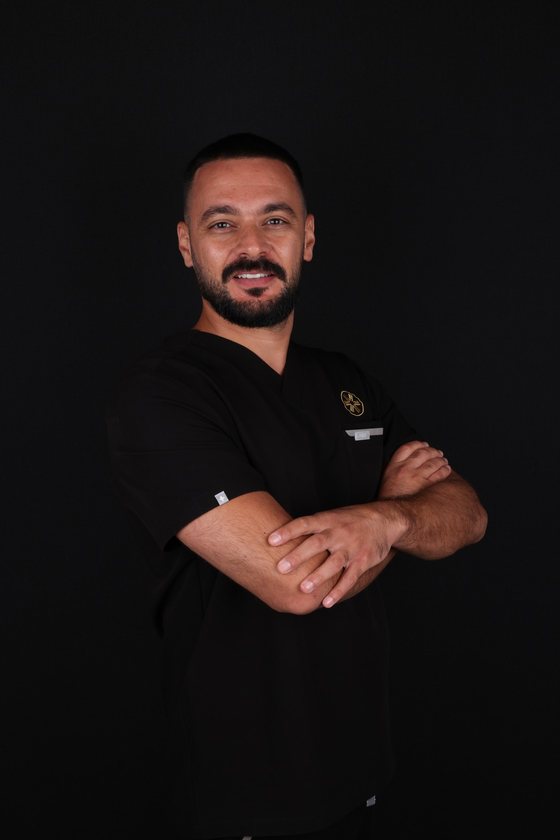
Who treats you here Dr. Khalid Saeed Co-founder & Dentist · Dr. Kinan Bonni Dentist · Dr. Somar Dahdal General Dentist
Every dentist’s licence can be checked on the DHA Sheryan medical directory.
Veneers myths vs facts: which are true?
Ten things patients often say at a first consultation, and what is actually the case.
| The myth | What is actually true | Verdict |
|---|---|---|
| Veneers ruin your teeth | Conventional veneers remove a thin layer of enamel, which is permanent, but far less than a crown | Half-true |
| Veneers fall off easily | Bonded veneers rarely come off; when they do, there is usually a reason such as grinding or bonding to old fillings | Mostly false |
| All veneers look fake | Fake-looking veneers are a design choice: too white, too thick or too uniform | False |
| Teeth rot under veneers | The veneer cannot decay; the tooth can, at the edges, if plaque is left there | Half-true |
| Veneers last forever | They are long-lasting but not permanent; most people need a replacement at some point | False |
| You can whiten veneers later | Whitening does not change porcelain; whiten your own teeth first if you want them lighter | False |
| Veneers straighten crooked teeth | They can mask mild unevenness; orthodontics moves the teeth themselves | Half-true |
| Everyone needs 16 or 20 veneers | The number depends on how many teeth show when you smile and what needs changing | False |
| You cannot eat normally with veneers | You can eat normal food; biting hard objects, ice or bottle tops is what breaks them | False |
| Getting veneers is very painful | Preparation is done under local anaesthetic; mild sensitivity for a few days is common | Mostly false |
"Veneers" here means ceramic (porcelain or E.max) veneers unless stated. Composite veneers behave differently; see our comparison of composite and porcelain veneers.
Do veneers ruin your teeth?
This is the myth with the most truth in it, so it deserves a careful answer. A conventional porcelain veneer is a thin shell bonded to the front of a tooth. To make room for it, the dentist usually removes a thin layer of enamel from the front surface, often a fraction of a millimetre. That enamel does not grow back, so once a tooth has been prepared it will always need some kind of covering. That is the real commitment.
What veneers do not do is file teeth down to small pegs. That image comes from crowns, which cover the whole tooth and need far more reduction, and from some heavily reduced "veneers" that are crowns in all but name. Our guide to veneer thickness explains how much is removed and why it varies.
Good planning keeps the reduction as small as possible. At Creative Arts, the new smile is designed and tried in your mouth as a mock-up before any tooth is touched, and the preparation is guided by that design rather than by a fixed thickness. Where the teeth are small or set back, no-prep or minimal-prep veneers may be possible. Whether the change is reversible is covered in are veneers permanent.
Do veneers fall off easily?
Not when they are bonded well to healthy enamel. A veneer is not glued on like a false nail; it is etched and bonded with resin cement, and the bond to enamel is strong. A 2021 systematic review in the Journal of Clinical Medicine found that fracture and debonding were the most common complications of porcelain veneers, yet the estimated ten-year survival was still about 95%.
When a veneer does come off, there is usually a reason:
- Grinding or clenching, especially at night. A night guard often protects the veneers; see veneers and teeth grinding.
- Bonding to large fillings or exposed dentine instead of enamel. Our guide to veneers on filled teeth explains when a crown is the safer choice.
- Using teeth as tools: opening packets, biting nails or ice.
- A bite that hits the veneer edge, which is why the bite is checked carefully at fitting.
If one does come off, keep it and call the clinic; it can often be cleaned and re-bonded. See what to do if a veneer falls off.
Do all veneers look fake?
No, but the veneers people notice are the ones that do, so the myth persists. A veneer looks artificial for specific, avoidable reasons: a shade much whiter than the whites of the eyes, a flat opaque surface with no translucency at the edges, teeth that are all the same shape and length, veneers that are too thick and push the lip out, or edges that sit badly against the gum.
Natural-looking veneers start with the face rather than the tooth: the length that shows at rest, the curve of the lower lip, the width of the smile and your skin tone. Ceramists then build in the small variations real teeth have, such as slightly translucent edges and surface texture. At Creative Arts, the ceramists of Creative Art Dental Lab work in the same building and can see your teeth under the same light as your dentist. Our page on natural-looking veneers shows what that involves, and the guide to whether veneers change your face or lips covers the effect on lip support.
Do teeth rot under veneers?
The porcelain itself cannot decay, and a well-fitted veneer seals the front of the tooth. But the tooth is still a tooth. Decay can start where the veneer meets the tooth, usually near the gum line or between teeth, when plaque is left there day after day. It is the same process as decay next to an old filling.
The protection is ordinary: brushing twice a day with fluoride toothpaste, cleaning between the teeth, keeping sugary snacks and drinks to mealtimes, and check-ups where the edges are examined and, when needed, X-rayed. Early decay at a veneer edge can often be repaired without replacing the veneer. Our guide to decay under veneers lists the signs, such as a dark line at the edge or sensitivity in one tooth.
The myth that hides a real point
"Once you get veneers, you are committed for life" is close to true for conventional veneers. Prepared teeth will always need a covering, and veneers are replaced over a lifetime. That is why the decision should follow a mock-up, a clear plan and time to think, not a same-week offer.
What else do people get wrong about veneers?
Quicker answers to other beliefs we hear often.
"I'll whiten them later"
Whitening gel lightens natural teeth, not porcelain. If you want lighter teeth around the veneers, whiten first and match the veneers to the result. See can veneers be whitened.
"Veneers will straighten my teeth"
They can disguise mild unevenness, but crooked teeth are often better moved with aligners first, which can mean fewer or thinner veneers. Compare in veneers vs Invisalign.
"I need a full set"
Many smiles need six to ten veneers, some only one or two. It depends on which teeth show and what needs changing; see how many veneers you need.
"I won't be able to eat or talk normally"
Normal food is fine; hard objects are the risk. Speech usually adapts within days. See foods to avoid with veneers and speech after veneers.
Do veneers last forever?
No restoration lasts forever, and veneers are no exception. The 2021 review mentioned above estimated about 95% of porcelain veneers were still in place after ten years. In practice, how long yours last depends on the bite, grinding, gum health, cleaning and the quality of the bond. When a veneer is eventually replaced, the tooth underneath usually needs little extra preparation if it has stayed healthy. Our guide to how long veneers last covers the factors in detail, and the honest list of downsides is in veneers pros and cons.
Want to see how veneers would look before deciding? At Creative Arts in Dubai, your new smile is designed and tried in as a mock-up first, with a written plan that includes the alternatives.
Veneers at Creative ArtsHow are the problems behind these myths avoided?
- Diagnosis first. Gum disease, decay and grinding are treated or planned for before veneers, because they cause most failures.
- A design you can see. A digital design and a physical mock-up show length, shape and shade in your own mouth before any irreversible step.
- Enamel kept where possible. Preparation follows the design, and no-prep veneers are used where the case allows.
- Bite checked. Veneers are adjusted so they are not overloaded, and a night guard is advised for grinders.
- Reviews and cleaning. Regular check-ups catch edge problems early.
None of this makes veneers right for everyone. Sometimes whitening, bonding or orthodontics gives a better result for less enamel, and a good consultation says so.
Who plans veneers at Creative Arts
Veneer treatment is planned by Dr. Khalid Saeed, Dr. Kinan Bonni and Dr. Somar Dahdal, with the ceramists of Creative Art Dental Lab in the same building.