Do veneers cause a lisp?
A lisp after veneers is common in the first days, because the tongue and lips meet new tooth surfaces when making S, F and V sounds. For most people speech returns to normal within a week or two as the tongue adapts, and temporaries often affect it more than the final veneers. If a lisp or whistle lasts beyond a few weeks, the veneer edge or contour may need adjusting; at Creative Arts in Dubai this is checked at review.
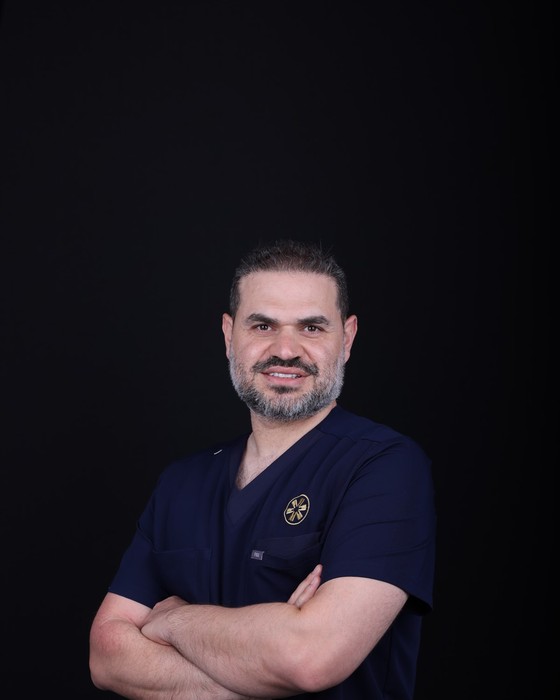
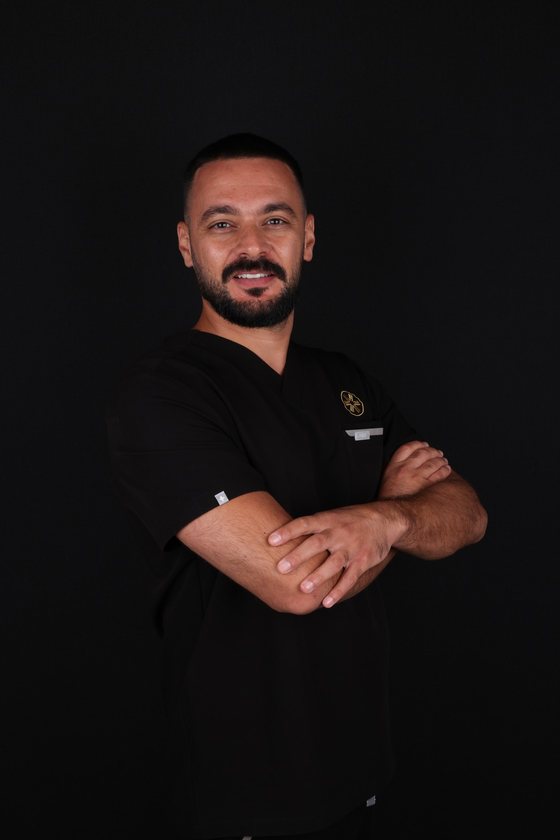
Who treats you here Dr. Khalid Saeed Co-founder & Dentist · Dr. Kinan Bonni Dentist · Dr. Somar Dahdal General Dentist
Every dentist’s licence can be checked on the DHA Sheryan medical directory.
Why can veneers change the way you speak?
Several speech sounds depend on precise contact between your tongue, lips and upper front teeth. Your tongue has learned exactly where those surfaces are, and it finds them automatically. Veneers change them slightly: the teeth can be a fraction thicker, longer or shaped differently at the edge, and the gaps between teeth may be closed. Even small changes mean the tongue and lips briefly aim for the old positions.
The sounds most often affected are:
- S and Z: made by pushing air through a narrow channel between the tongue and the back of the upper front teeth. If that channel changes, S can sound slushy, lisped or whistling.
- F and V: made by the lower lip touching the edges of the upper front teeth. If the edges are longer or further forward, the lip meets them differently.
- TH: made with the tongue lightly between the front teeth, and affected if the edges have changed.
Because the tongue adapts quickly, most of these changes fade on their own. A change that lasts usually points to a specific design detail, which is why it is worth reporting rather than living with.
Which sounds change, and what usually helps?
The sound that is affected is a clue to which part of the veneer the tongue or lip is reacting to.
| Sound | What the teeth do | How veneers can affect it | What usually helps |
|---|---|---|---|
| S, Z, SH | Guide a narrow stream of air off the back of the upper front teeth | Extra thickness or a changed edge alters the air channel; closed gaps change the airflow | Time and practice; if it lasts, smoothing the edge or back contour |
| F, V | Upper edges rest lightly on the lower lip | Edges that are longer or further forward meet the lip earlier | Usually adaptation; occasionally reducing the edge length |
| TH | Tongue tip rests between the front teeth | Changed edge position or length | Usually adaptation within days |
| Whistling | Air escapes through a small space or over a sharp edge | A small gap, a rough edge or a channel between veneers | Checking and polishing the edge or contact |
Only a dentist examining the veneers and listening to your speech can say which detail is responsible.
How long does speech take to adjust after veneers?
For most people, the first two or three days are the most noticeable, and speech is back to normal, or close to it, within about one to two weeks. People who talk a lot for work often adapt faster, simply because they practise more. Lower veneers, or veneers that changed the length of the teeth a lot, can take a little longer.
What speeds it up is using your voice: reading aloud, talking on the phone, repeating words with S, F and V, and counting aloud. Avoid trying to hold the tongue in an unnatural position to hide the sound; that usually slows adaptation. If you have an important presentation or event, it is sensible to plan the veneer fitting with a week or two to spare. See the veneers procedure step by step for the overall timeline.
Normal adjustment or a reason to see your dentist?
A rough timeline for speech after new veneers.
| When | Usually normal | Worth having checked |
|---|---|---|
| First few days | Slight lisp on S, a lip that feels in the way on F and V, the tongue exploring the new surfaces | Pain when biting, a veneer that feels loose, or a sharp edge cutting the tongue or lip |
| One to two weeks | Speech steadily improving; changes noticed mainly by you rather than others | No improvement at all, or a whistle that appears on every S |
| After about a month | Speech back to normal | Any lisp or whistle that is still there; frequent biting of the lip or cheek |
Biting your cheek or lip after new veneers is covered in cheek biting after new crowns or veneers.
Why do temporary veneers feel different from the final ones?
Many patients notice the biggest speech change while wearing temporaries, and worry the final veneers will be the same. Usually they are not. Temporary veneers are made chairside from resin to protect the prepared teeth and preview the shape for a short time. They are often a little thicker, their surfaces are less refined, and they are frequently joined together as one piece so they stay on, which changes the feel of the spaces between teeth that the tongue uses.
The final veneers are made in the laboratory from ceramic, so they can be thinner, smoother and individually shaped. Most patients find speech easier with them. Our guide to temporary veneers explains what to expect while wearing them.
The temporary or mock-up stage is also the ideal time to test speech. While the planned shape is in your mouth, the dentist can ask you to count aloud and say S, F and V words, and note anything that needs changing before the final veneers are made. If something sounds or feels wrong in this stage, say so: it is far easier to change a design before the ceramic is made.
At Creative Arts in Dubai, you see a design and mock-up before any veneer preparation, and the shape, bite and speech are reviewed after fitting. See how veneers are planned.
Explore veneersWhen should a veneer be adjusted for speech?
If a lisp, whistle or difficulty with particular sounds has not improved after two to four weeks, or is getting worse, ask for a review. The dentist listens to the affected sounds and examines the edges and back surfaces of the veneers. Common findings and fixes include:
- Edges slightly too long or too far forward, affecting F and V: the edge can often be shortened or reshaped and polished.
- A contour that narrows the air channel, affecting S: smoothing the area where the tongue meets the teeth can help.
- A small space or rough contact causing a whistle: the contact can be checked, refined and polished.
- A bite that has changed how the front teeth meet: the bite is checked at the same time, because it affects comfort and how long veneers last. See veneers and your bite.
Small adjustments to ceramic are usually done chairside and polished afterwards. Remaking a veneer for speech alone is uncommon, and is considered only when the problem cannot be solved by adjusting it.
Can veneers fix a lisp you already had?
Usually not. Most lisps come from how the tongue is placed, not from the teeth, so changing the teeth rarely changes the habit. There are exceptions: a gap between the front teeth that air escaped through, or a missing or very short edge, can affect certain sounds, and closing or rebuilding them sometimes helps. If you have a lisp before treatment, mention it at the veneer consultation so the design can take it into account, and consider a speech and language therapist if the lisp is unrelated to the teeth.
It is also worth mentioning if you sing, teach, present or speak another language professionally. The design can be checked against the sounds you use most.
Dentists who design and review veneers at Creative Arts
Dr. Khalid Saeed, Dr. Kinan Bonni and Dr. Somar Dahdal design veneers with a mock-up first, check speech and bite during the preview and at review, and adjust veneers when speech does not settle.