Are veneers haram?
Egypt's Dar al-Ifta, a recognised official fatwa body, published a fatwa in 2025 concluding that dental veneers are permissible for men and women, provided they cause no present or future harm, are not used to deceive, and are fitted by licensed dentists. It also stated that veneers do not affect the validity of wudu or ghusl. Creative Arts in Dubai does not issue religious rulings; for your own situation, ask a qualified scholar.
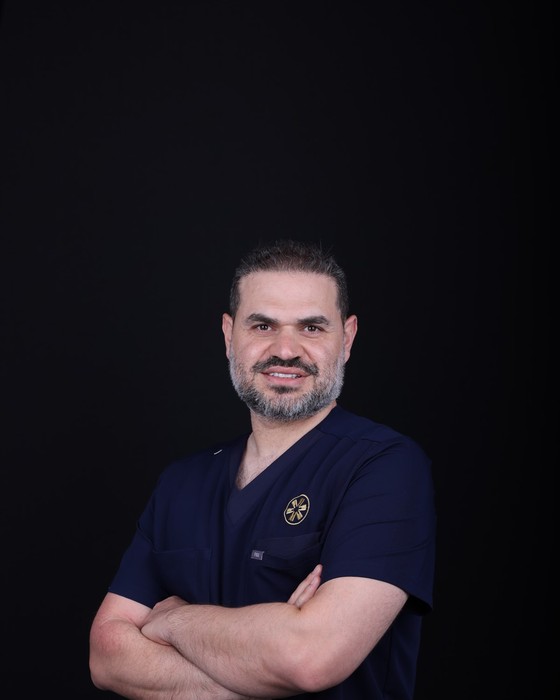
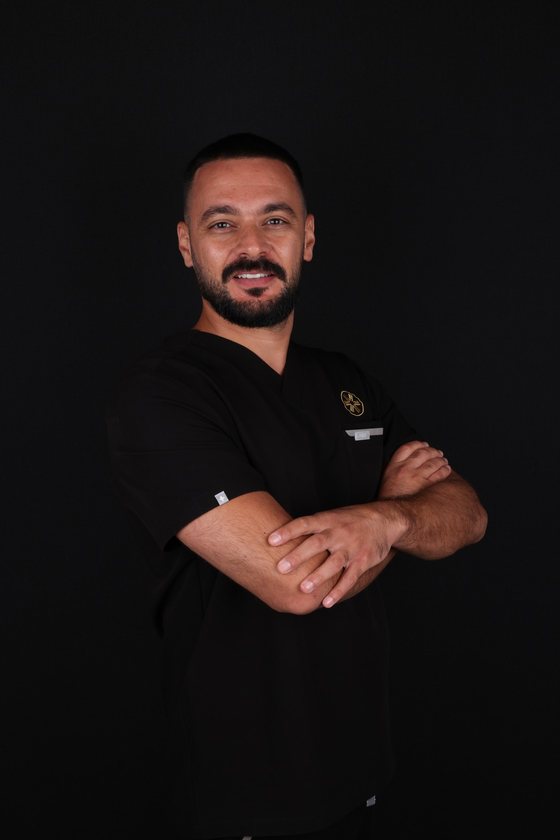
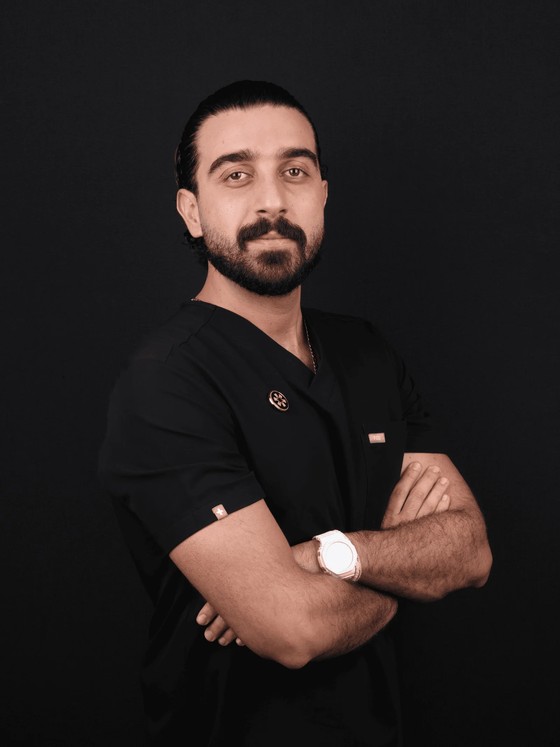
Who treats you here Dr. Khalid Saeed Co-founder & Dentist · Dr. Kinan Bonni Dentist · Dr. Somar Dahdal General Dentist
Every dentist’s licence can be checked on the DHA Sheryan medical directory.
This guide is not a religious ruling
Creative Arts is a dental clinic and does not issue fatwas. Below we summarise, with sources, what Egypt's Dar al-Ifta has published, and explain the dental facts that the rulings depend on. Scholars and schools of thought can differ, and individual circumstances matter. For your own case, ask a qualified scholar, for example through the official fatwa service of the UAE's General Authority of Islamic Affairs and Endowments.
What has Dar al-Ifta said about veneers?
In a fatwa published in 2025, Egypt's Dar al-Ifta answered a question about people fitting veneers to hide congenital defects or repair eroded or broken enamel, and asked whether this counts as altering God's creation. Its conclusion was that fitting veneers is permissible, subject to conditions:
- it causes no harm to the person, now or in the future;
- it is not done to deceive;
- it is carried out by licensed dentists, to avoid harm;
- and the same ruling applies to men and women.
The fatwa distinguishes between treatment and beautification. Medical use is generally permitted. Cosmetic use, it says, is not the prohibited kind of altering creation as long as it is not harmful; the prohibited kind is a lasting change that causes harm, and it gives tattooing and filing teeth without necessity as examples.
What the published fatwas say, at a glance
Each row reports only what the cited fatwa states. Follow the sources at the end of the page for the full text.
| Question | What the fatwa states | Source |
|---|---|---|
| Are veneers permissible? | Yes, if there is no present or future harm, no deception, and the work is done by licensed dentists; same for men and women | Egypt's Dar al-Ifta, 2025 |
| Do wudu and ghusl count with veneers? | Yes; veneers do not affect the validity of either | Egypt's Dar al-Ifta, 2025 |
| Wudu with fixed artificial teeth | Valid; fixed artificial teeth take the place of natural ones and water need not reach underneath | Egypt's Dar al-Ifta, 2023 |
| Gold or silver fillings, caps and wires | Permissible; platinum and similar metals are not prohibited | Egypt's Dar al-Ifta, long-standing fatwa from the 1940s |
| Dental implants as such | We have not reviewed a fatwa dedicated to implant treatment | Ask a qualified scholar |
These are summaries for information. They do not replace asking a scholar about your own circumstances.
Does wudu or ghusl count with veneers or crowns?
This is one of the most common worries, and the published answer is reassuring. The 2025 Dar al-Ifta fatwa on veneers explains that wudu requires washing the face, hands and feet and wiping the head, and washing the teeth is not among its requirements. For ghusl it states that rinsing the mouth is not a requirement under the view it adopts, and that even for scholars who require rinsing, rinsing the mouth and washing the teeth are separate acts. Its conclusion: veneers do not affect the validity of wudu or ghusl.
A separate Dar al-Ifta fatwa from 2023 dealt with fixed artificial teeth that water cannot get under. It concluded that wudu and ghusl are valid for a person with fixed artificial teeth, because they take the place of the natural teeth, and that the person is not required to get water underneath them. Fixed crowns and bridges are bonded or cemented in place and are not removed by the patient, so patients often ask about them in the same way.
Is a Hollywood smile allowed in Islam?
A Hollywood smile is not a separate procedure; it is a set of veneers, and sometimes crowns, across the visible teeth. The fatwa on veneers does not single it out, so the same conditions it sets would be the relevant ones: no harm, no deception and treatment by licensed dentists. Whether a particular design meets those conditions is a question for a scholar.
From the dental side, a Hollywood smile usually involves more teeth and often more preparation than a few veneers, so the "no harm" condition is worth taking seriously: how much enamel would be removed, whether the bite and gums are healthy, and whether a smaller change would achieve what you want. Our comparison of Hollywood smile and veneers explains the differences.
Is filing teeth for beauty different from treatment?
The Dar al-Ifta fatwa itself draws this line: it gives filing teeth without necessity as an example of the prohibited kind of change, while permitting veneers that cause no harm. It does not set out how much preparation is acceptable, so that question belongs with a scholar.
What a dentist can explain is how much enamel a given plan removes. Some veneers need almost no preparation, others need a thin layer removed, and crowns need much more. Where the teeth allow it, minimal-preparation options, composite bonding or small tooth reshaping change less of the natural tooth. A written plan that states what will be done to each tooth is useful to take to a scholar.
Before asking a scholar, it helps to know exactly what veneers would involve for your teeth. At Creative Arts in Dubai you receive a written, itemised plan and see a design and mock-up before any irreversible preparation.
Explore veneersWhat does "no harm" mean in dental terms?
The condition of no harm, now or in the future, is a religious condition, but its facts are dental. A careful plan looks at:
- Healthy foundations: decay, gum disease and grinding are dealt with before cosmetic work, because veneers on unhealthy teeth or gums are more likely to fail.
- Enamel preserved where possible: veneers bond best to enamel, so conservative preparation is good dentistry as well as a common religious concern. See no-prep veneers.
- A preview before anything irreversible: at Creative Arts, patients see a design and mock-up before any veneer preparation.
- The right treatment for the problem: crowded or protruding teeth may be better treated with orthodontics, and a single chip with bonding.
- Licensed dentists: in Dubai, dentists must be licensed by the Dubai Health Authority, and the DHA publishes a public directory where you can check a professional or facility.
Our guide to the veneer consultation lists the questions worth asking.
Are dental implants permissible?
We have not reviewed a Dar al-Ifta fatwa dedicated to implant treatment itself, so we do not state a ruling here. The 2023 fatwa on fixed artificial teeth, summarised above, treats fixed replacements as taking the place of natural teeth for the purposes of purification. For the permissibility of implants in your case, ask a qualified scholar.
Some patients' concern is about the materials used in bone grafting, which can come from animal, human, synthetic or the patient's own sources. That is explained in our guide to bone graft materials, and the material used is something to ask about before surgery.
Are gold teeth or gold crowns allowed?
A long-standing Dar al-Ifta fatwa, first issued in the 1940s, states that fillings, caps and wires made of gold or silver are permissible, and that platinum and similar metals are not prohibited. It gives one general conclusion and does not separate the ruling for men and women.
Dentally, gold is now used mainly for back teeth, where its strength and gentleness on opposing teeth matter more than appearance. Front teeth are usually restored with ceramic. If you have an old metal-based crown and are considering a change, see dental crowns.
Who should I ask for a ruling on my case?
Ask a qualified scholar you trust, or use an official fatwa service, such as the one run by the UAE's General Authority of Islamic Affairs and Endowments. A ruling is easier to give when the facts are clear, so it helps to bring:
- what treatment is proposed (veneers, crowns, bonding, reshaping) and on which teeth;
- why: a defect, damage, wear, or appearance only;
- how much of the natural tooth would be removed, and whether it can be undone;
- any alternatives your dentist has offered.
Your written treatment plan from Creative Arts sets these out, so you can share it with your scholar before deciding. If you are still weighing options, the guide to whether veneers change your face or lips answers another common question.
Dentists who plan veneers at Creative Arts
Dr. Khalid Saeed, Dr. Kinan Bonni and Dr. Somar Dahdal plan veneers and smile treatment, explain how much enamel each option removes, and provide the written plan you can discuss with a scholar.