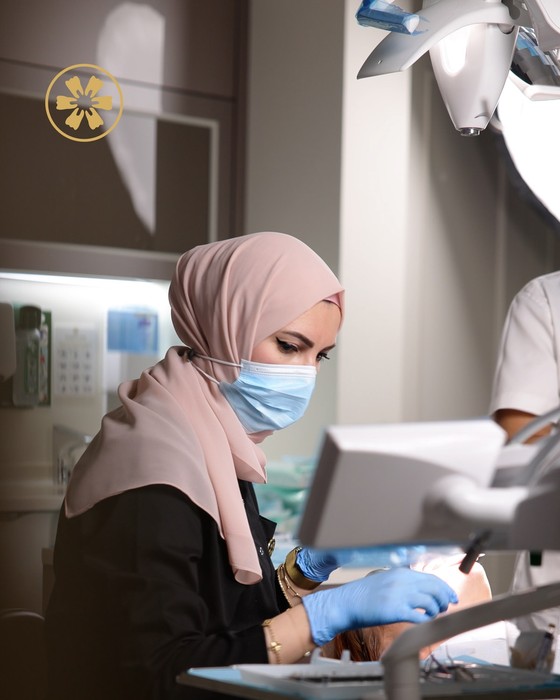
Gum disease and bone loss
As periodontitis destroys the bone around the roots, teeth lose support and the upper front teeth can fan forwards and spread apart. This is the cause that must not be missed.
Teeth are held by living ligament and bone, so they keep moving slightly all your life. A new gap or crowding usually has a cause that can be found, and some causes, like gum disease, need treating first.
Old photos of your smile help show how much has changed and how quickly.
Teeth shift in adulthood because they sit in living bone and ligament that respond to pressure throughout life. Common causes are gum disease with bone loss, a missing tooth that has not been replaced, grinding or tongue pressure, natural crowding of the lower front teeth with age, and teeth moving back after braces when retainers are not worn. At Creative Arts in Dubai, the gums are checked first, then the specialist orthodontists explain the options.
Who treats you here Dr. Muhannad Kazzaz Specialist Orthodontist · Dr. Valeriia Kozachenko Specialist Orthodontist · Dr. Duaa Ameen General Dentist
Every dentist’s licence can be checked on the DHA Sheryan medical directory.
A tooth is not cemented into the jaw. It hangs in its socket from a thin ligament, and the bone around it is constantly being rebuilt. That is what lets orthodontics move teeth, and it also means teeth respond to every force on them for the rest of your life: biting, grinding, the tongue and lips, and the pull of neighbouring teeth.
For most people this movement is slow and slight. Many adults notice their lower front teeth becoming a little more crowded through their 30s, 40s and beyond, even without any disease. What deserves attention is a change you can see happening, a new gap between the front teeth, teeth that feel loose, or a bite that feels different. Those usually have a specific cause.
More than one cause is often involved. Finding them matters, because straightening teeth without treating the cause lets them move again.
As periodontitis destroys the bone around the roots, teeth lose support and the upper front teeth can fan forwards and spread apart. This is the cause that must not be missed.
Neighbouring teeth tilt into the space and the opposite tooth can over-erupt, changing the bite. See what happens when a missing tooth is not replaced.
Heavy forces at night can wear and push teeth, especially where gum support is reduced. A guard protects them; see night guards.
Pushing the tongue against the front teeth when swallowing, or habits such as nail or pen biting, can open spaces or tip teeth over time.
Teeth tend to drift slowly forwards and the lower front teeth crowd. Wisdom teeth are often blamed, but research has not shown that they cause this crowding.
Teeth straightened in the past tend to move back towards where they were if retainers are no longer worn.
The pattern gives clues, but only an examination with X-rays confirms the cause.
| What you notice | Common cause | What is usually checked |
|---|---|---|
| New gap between upper front teeth, teeth fanning forwards | Gum disease with bone loss, sometimes with tongue pressure | Gum pockets, bleeding, mobility and X-rays of the bone |
| Lower front teeth slowly overlapping | Natural age-related crowding, or relapse after braces | Bite, previous orthodontic treatment, retainer history |
| A tooth tilting into a gap | A missing tooth that has not been replaced | Space, bite and options to replace the tooth |
| Teeth that feel loose or move when pressed | Gum disease, heavy grinding or an infection | Prompt gum and bite assessment |
| Bite suddenly feels different | A tooth or filling problem, grinding, or jaw joint changes | Teeth, restorations and the jaw joints |
| Small dark gaps at the gum between teeth | Gum recession or tooth shape | Gum health; see black triangles between teeth |
For crowding confined to the lower front teeth, see crooked bottom teeth.
It can be, and it is the first thing a dentist rules out. Untreated gum disease can spread to the bone that supports the teeth, and in advanced cases teeth may become loose, as the US National Institute of Dental and Craniofacial Research explains. Front teeth with reduced support are pushed forwards by the tongue and lips, and gaps open between them.
Early gum disease often causes no pain, so you may notice only bleeding when brushing, bad breath or gums that look longer. If any of these come with a new gap, have your gums examined before thinking about straightening. Moving teeth through inflamed gums can make bone loss worse. Once the disease is controlled at our gum treatment service, orthodontics is often still possible and can bring the teeth back together, followed by long-term retention.
Book an examination soon if teeth feel loose, a gap is opening quickly, your gums bleed or swell, or your bite has changed suddenly. The clinic is open daily, 10:00–20:00, and is not a 24-hour service. Facial swelling with fever, difficulty breathing or swallowing, or swelling spreading towards the eye or neck needs a hospital emergency department straight away, as does an injury to the face or jaw.
Stopping movement means removing what drives it, then holding the teeth where you want them.
An examination with gum measurements and X-rays, plus questions about grinding, habits and any past orthodontic treatment.
First visitIf gum disease is present, a deep clean and good home care come first. Daily cleaning between the teeth helps keep the gums stable afterwards.
WeeksA night guard for grinding, replacing a missing tooth, and advice on tongue or biting habits reduce the pressure that moves teeth.
As neededA removable or fixed retainer keeps teeth where they are. A Cochrane review found no single retention approach clearly best, so the choice is made for your teeth; see fixed vs removable retainers.
Long termMoving teeth back into line needs orthodontic treatment of some kind. For adults, that is often clear aligners, which are removable and less visible, or fixed braces for more complex movement. Small relapses can sometimes be corrected in a short course, but how long it takes depends on how far the teeth have moved and on the gums. See orthodontics for adults.
If you do not want orthodontics, small changes can sometimes be disguised rather than corrected: an overlapping corner smoothed with tooth reshaping, or a small gap closed with bonding. These change how the teeth look, not where they are, and they do not stop further movement. Veneers are not a substitute for moving teeth that have shifted because of gum disease.
Whatever corrects the position, a retainer is what keeps it. Teeth that shifted once tend to try again.
Dr. Duaa Ameen checks and treats the gums. Dr. Muhannad Kazzaz and Dr. Valeriia Kozachenko, Specialist Orthodontists, plan any straightening and retention; Dr. Kozachenko also assesses jaw function when the bite has changed.
Clinical statements on this page are consistent with these independent sources. They describe averages from studies, not a promise for any one patient.
Teeth keep responding to forces all through life, so some movement with age is normal, especially crowding of the lower front teeth. Faster or visible changes usually have a cause: gum disease with bone loss, a missing tooth, grinding, tongue pressure, or not wearing a retainer after braces. An examination with X-rays identifies which applies.
It can be. When gum disease destroys the bone around the roots, front teeth can fan forwards and spread apart. Bleeding gums, bad breath, receding gums or loose teeth make this more likely. Have your gums examined before any straightening, because moving teeth through inflamed gums can make bone loss worse.
Yes, both can. Neighbouring teeth tilt into the space left by a missing tooth, and the opposite tooth can grow down into it, changing the bite. Heavy grinding pushes and wears teeth, especially when gum support is reduced. Replacing the tooth and wearing a night guard reduce these forces.
First treat what is causing it: gum disease, grinding, a missing tooth or a habit. Then hold the teeth with a retainer, worn as your orthodontist advises. Regular check-ups and cleaning between the teeth help keep the gums stable. Without a retainer, teeth that have moved once are likely to move again.
Moving them back into line needs orthodontic treatment, but for many adults that means clear aligners rather than fixed braces. If you prefer not to straighten them, small changes can sometimes be disguised with reshaping or bonding, which changes how the teeth look but not their position, and does not stop further movement.
Wisdom teeth are often blamed for crowding, but research has not shown that they cause the front teeth to crowd, and removing them to prevent crowding is not recommended for that reason alone. Crowding of the lower front teeth with age happens in people with and without wisdom teeth.
Teeth tend to move back towards their original position, especially in the first period after treatment and whenever retainers are not worn. The fibres around the teeth and continuing changes with age both play a part. Wearing your retainer as advised is the main protection; if it no longer fits, have it checked rather than forcing it.
Creative Arts has a single clinic on Jumeira Street (Jumeirah Beach Road). Ask about parking when you book.
Our clinic in Jumeirah Open in Google Maps · Rated 4.8 on Google from 238 patient reviews (October 2026) — read them
Tell us what you would like to change. The clinic replies within working hours with an appointment time.
Or call us +971 4 342 4444Or message us on WhatsApp
A consultation ends with a diagnosis and a written, itemised plan — not a sales pitch. Book online, message us on WhatsApp, or call the clinic.