Harder to clean
Overlapping lower incisors trap plaque, and tartar builds up fastest behind the lower front teeth. Gums there bleed and become inflamed more easily.
Lower front teeth are the ones most likely to crowd, and they often start overlapping in adulthood. Most cases are treated by moving the teeth, not by covering them.
If you had braces before, bring your old retainer to the visit.
Crooked bottom teeth usually come from too little space in the lower arch for the front teeth, and the lower incisors can keep drifting closer together throughout adult life, especially after braces if retainers are not worn. Mild crowding may need only a retainer or a short course of clear aligners; more crowding needs aligners or braces planned around the bite. At Creative Arts in Dubai, specialist orthodontists assess which option suits your teeth.
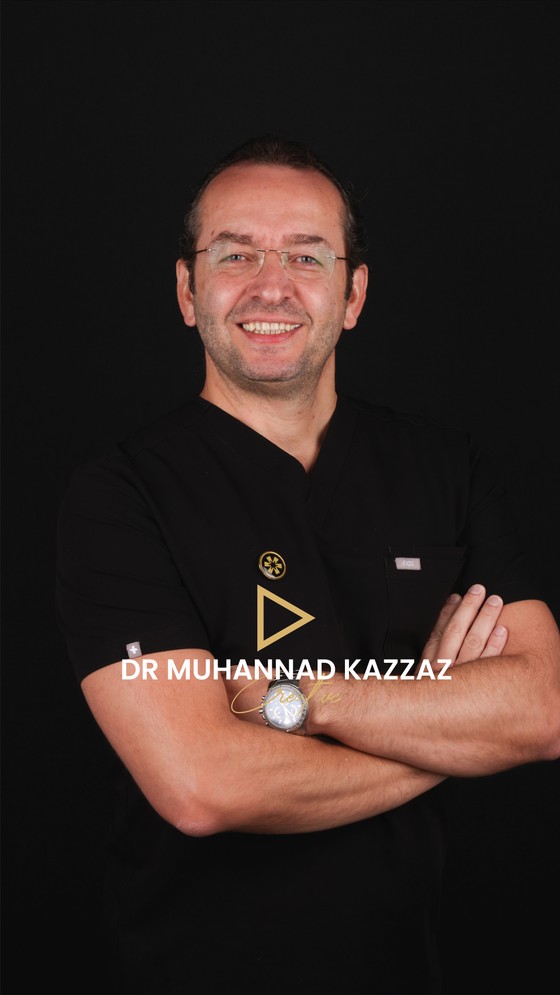
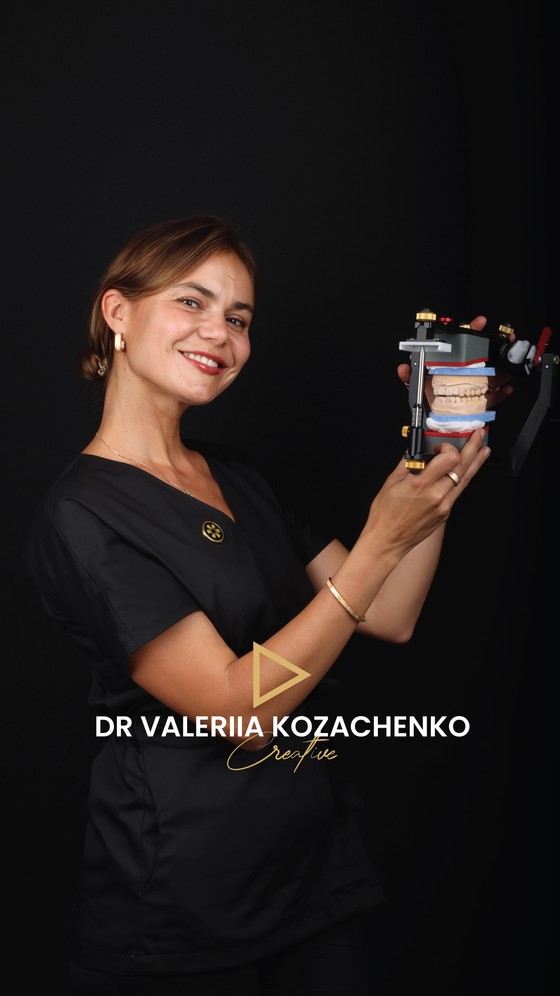
Who treats you here Dr. Muhannad Kazzaz Specialist Orthodontist · Dr. Valeriia Kozachenko Specialist Orthodontist
Every dentist’s licence can be checked on the DHA Sheryan medical directory.
The lower front teeth sit in the narrowest part of the mouth. Four small incisors and two canines share a short curve of bone, and the upper front teeth close over them like a lid. If the lower arch has even slightly less room than the teeth need, the incisors overlap, rotate or one is pushed forwards or backwards out of line.
Several things make the lower teeth crowd more than the upper ones:
Wisdom teeth are often blamed, but systematic reviews have not shown that they cause lower front teeth to crowd, and removing them to prevent crowding is not justified on that basis. Our guide to teeth shifting in adults covers movement elsewhere in the mouth.
Not always. Treatment is a choice, but these are the reasons people decide to go ahead.
Overlapping lower incisors trap plaque, and tartar builds up fastest behind the lower front teeth. Gums there bleed and become inflamed more easily.
A tooth pushed forwards out of the arch can have very thin bone and gum over its root, which tends to recede.
A tooth that sits out of line can catch on an upper tooth and wear or chip at its edge.
Lower teeth show when you talk and in many smiles. Many adults simply want them straight.
The right option depends on how much crowding there is, your bite, your gums and whether you have had braces before.
| Option | When it fits | What to expect |
|---|---|---|
| Monitoring and hygiene | Mild crowding that does not bother you and is easy to clean | Cleaning advice, interdental brushes and regular hygiene visits |
| Refitting or replacing a retainer | Small relapse soon after earlier braces | A retainer may move a tooth back slightly if the change is very small; otherwise it holds the current position |
| Clear aligners (Invisalign) | Mild to moderate crowding, including many relapse cases | Removable trays worn most of the day; small attachments and sometimes IPR |
| Fixed braces | More crowding, rotated teeth or when the bite also needs correcting | Brackets and wires; often both arches are treated together |
| IPR (polishing a little enamel between teeth) | To create a small amount of space as part of aligners or braces | Very thin slices of enamel removed between selected teeth; not a treatment on its own |
| Bonding or veneers after alignment | Worn or uneven edges once the teeth are straight | Shape is corrected after the teeth are moved, not instead of moving them |
Removing a lower front tooth to create space is occasionally part of an orthodontic plan in adults with severe crowding; it is decided only after a full assessment.
Often, yes. Lower crowding is one of the problems clear aligners handle well, and some adults are treated in the lower arch only. Whether that is possible depends on the bite. The lower incisors sit just behind the upper ones; straightening them changes where they meet. If the lower teeth move forwards to unravel the crowding, they may start to hit the upper teeth, so the orthodontist checks how much room there is before agreeing to treat one arch.
Space for alignment comes from a combination of slight arch rounding, tipping the teeth and, where needed, polishing a small amount of enamel between teeth. Our guide to IPR (shaving between teeth) explains what is removed and why it is considered safe when done within limits. Invisalign at Creative Arts is planned digitally from an intraoral 3D scan, so you see the planned movement before you start.
Usually not as the first step. Lower incisors are the thinnest teeth in the mouth, and making overlapping teeth look straight with veneers often means removing a lot of enamel from the teeth that stick out. The result can look bulky, and it does nothing for the cleaning problem underneath. Moving the teeth first and then improving worn edges with bonding or, occasionally, veneers is the more conservative order.
Veneers on lower teeth do have a place, for example after alignment, for worn or discoloured lower teeth, or as part of a full smile design. Our page on lower teeth veneers explains when they are considered, and our guide on crooked teeth compares the options for the upper teeth.
Lower front teeth are the most likely to move again after treatment. A bonded wire behind them, a removable retainer at night, or both, is the usual plan. Retainers are normally worn long term; if a bonded wire comes loose, contact the clinic during opening hours so it can be repaired before teeth start to shift.
Both work when used as instructed. A bonded wire stays in place without relying on you, which is why it is common for the lower front teeth, but it needs careful cleaning and can debond. A removable clear retainer is easier to clean around but only works when worn. Research comparing them, including a Cochrane review, has not shown one approach to be clearly better for everyone, so the choice depends on your teeth, gums and habits. Our comparison of fixed vs removable retainers explains the trade-offs, and our retainers page covers how they are made and replaced.
Dr. Muhannad Kazzaz and Dr. Valeriia Kozachenko are specialist orthodontists. They examine the lower and upper teeth together, explain whether aligners, braces or simply a new retainer suit your case, and give you a written plan before treatment starts.
Clinical statements on this page are consistent with these independent sources. They describe averages from studies, not a promise for any one patient.
The lower arch tends to become slightly shorter and narrower with age, and the teeth slowly drift towards the front of the mouth. The lower incisors have the least room, so they show it first. If you had braces and stopped wearing retainers, relapse adds to this. An orthodontic check shows how much has changed.
Sometimes. Treating the lower arch alone with aligners is possible when the bite leaves room for the lower teeth to straighten without hitting the upper ones. If straightening them would create a new bite problem, the orthodontist will suggest treating both arches. The decision is made after an examination and a 3D scan.
Not always. IPR, polishing a small amount of enamel between some teeth, is one of several ways to make room for crowded lower incisors. It is used when other sources of space are not enough or would push the teeth too far forwards. The amount is planned in advance and kept within safe limits.
Systematic reviews have not shown that wisdom teeth push the lower front teeth out of line, and removing them only to prevent crowding is not justified on current evidence. Wisdom teeth may still need removing for other reasons, such as repeated infection or decay, which your dentist assesses separately.
Only in very mild cases. Lower incisors are thin, and disguising overlap with veneers usually means removing a lot of enamel from the most prominent teeth, with a bulky result. Aligning the teeth first and then refining their shape is usually more conservative and easier to keep clean.
Not necessarily. Small changes may be corrected with a short course of aligners, and very minor shifts are sometimes managed with a new retainer. Larger relapse needs a new orthodontic plan. Bring any old retainer to the assessment, and do not force an old retainer that no longer fits.
It depends on how much crowding there is and whether the bite also needs correcting. Mild lower crowding treated with aligners often takes months rather than years, while combined upper and lower treatment takes longer. Your orthodontist gives you an estimated timeline in the written plan after the assessment.
Creative Arts has a single clinic on Jumeira Street (Jumeirah Beach Road). Ask about parking when you book.
Our clinic in Jumeirah Open in Google Maps · Rated 4.8 on Google from 238 patient reviews (October 2026) — read them
Tell us what you would like to change. The clinic replies within working hours with an appointment time.
Or call us +971 4 342 4444Or message us on WhatsApp
A consultation ends with a diagnosis and a written, itemised plan — not a sales pitch. Book online, message us on WhatsApp, or call the clinic.