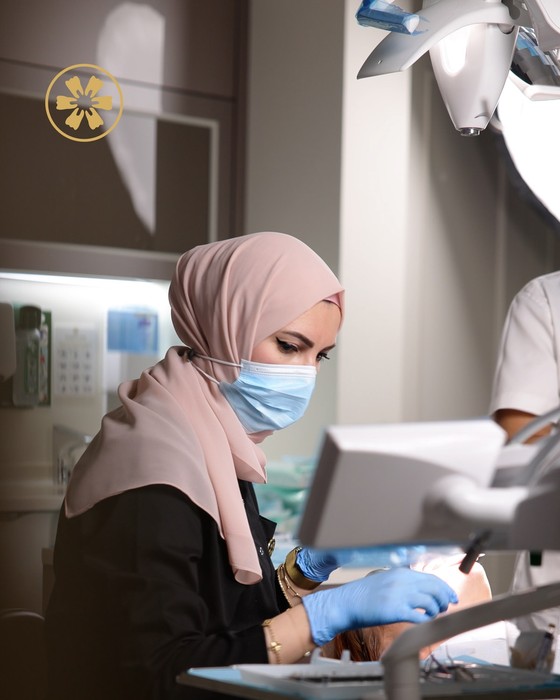
Why do I keep biting my cheek after a new crown?
Biting your cheek after a crown usually happens because the new tooth is shaped or positioned slightly differently from what your cheek and tongue were used to, especially if a gap had been there for a while. Mild cheek biting often settles within one to two weeks as the soft tissue adapts. If you bite the same spot repeatedly, the dentist can smooth or reshape the crown. At Creative Arts in Dubai this is usually a short visit.
Who treats you here Dr. Duaa Ameen General Dentist · Dr. Julia General Dentist · Dr. Marina Antoniuk Dentist
Every dentist’s licence can be checked on the DHA Sheryan medical directory.
Why do I keep biting my cheek after new teeth?
The inside of the cheek rests against the outer surfaces of the back teeth, and the tongue against their inner surfaces. Over years both learn exactly where the teeth are. Any change to that shape, even a millimetre, can put soft tissue in the path of the teeth when you chew. The common reasons are:
- A fuller outer contour. A crown made slightly wider on the cheek side than the old tooth, or a crown on a tooth that had broken down, pushes the cheek outwards into the bite.
- A gap that has been filled. After a tooth has been missing, the cheek and tongue slowly fill the space. A new crown, bridge or implant tooth suddenly takes that space back.
- Changed edges between upper and lower teeth. On back teeth, the outer edge of the upper teeth normally overlaps the lower teeth and keeps the cheek out of the way. If that overlap is reduced, the cheek can slip between them.
- Numbness on the day. Chewing before the anaesthetic wears off is a common cause of a bitten cheek, lip or tongue. Our guide to how long dental numbness lasts explains when it is safe to eat.
- Swelling that feeds itself. Once a spot is bitten it swells, which makes it more likely to be bitten again. This loop is why a single bite can turn into days of soreness.
Biting cheek after crown, veneers or braces: what is the cause?
Clues that point to each cause and what usually fixes it. Your dentist confirms it by looking at the bitten area and checking your bite.
| Situation | Typical clue | What usually helps |
|---|---|---|
| New crown or bridge on a back tooth | Same spot on the cheek bitten when chewing on that side | Smoothing or slightly reducing the cheek-side contour, then polishing |
| Tooth replaced after a long gap | Cheek or tongue feels crowded; bites become less frequent each day | Often settles in one to two weeks; adjust if it does not |
| Veneers on front teeth | Inside of the lower lip catches the edges, or lisping | Usually adaptation; edges can be smoothed if a corner is sharp |
| Braces | Brackets rub or the cheek gets caught on a bracket or wire end | Orthodontic wax; the orthodontist trims or adjusts what is catching |
| Bitten while still numb | One sore area after the appointment day | Salt-water rinses and time; usually heals within about two weeks |
| Clenching or grinding | White line along the cheek at the biting level; tired jaw in the morning | Awareness of the habit; a night guard if grinding is confirmed |
A temporary crown is often slightly bulkier than the final one. Mention cheek biting at your next visit so the final crown's shape can take it into account.
Will cheek biting settle on its own?
Often, yes. The cheek and tongue adapt quickly, and many people find that a crown that felt strange for the first few days is unnoticeable by the second week. The most important thing in those first days is to let a bitten area heal, because a swollen spot is easier to catch again.
- Chew slowly and on the other side for a few days.
- Rinse with warm salt water a few times a day.
- Avoid very spicy, salty or acidic food on the sore area.
- Do not keep testing the spot with your tongue or teeth.
- Use an ulcer gel from the pharmacy if a sore has formed.
The NHS notes that mouth ulcers usually clear up within a week or two, and that biting the cheek is one of the most common causes of a single ulcer. If you are still biting the same place after about two weeks, or every meal is a problem, waiting longer rarely helps. That points to a shape issue that a dentist can correct.
Can the dentist adjust the crown or veneer?
Yes, and it is a routine part of fitting new restorations. The dentist first looks at where the cheek has been bitten and which part of the crown lines up with it. Thin marking paper shows where the teeth touch when you bite and slide your jaw. The cheek-side surface of the crown can then be reshaped very slightly so the cheek is no longer trapped, and the area is polished so it is as smooth as before. Most adjustments take a short appointment and need no anaesthetic.
Ceramic crowns are polished carefully after any adjustment, because a smooth surface is kinder to the cheek and to the opposing teeth. If the contour needs more change than polishing allows, or the crown sits clearly wider than its neighbours, the dentist may discuss remaking it. For patients of Creative Arts, crowns are made by Creative Art Dental Lab in the same building, so the ceramist can see the problem with the dentist when needed. Our pages on dental crowns in Dubai and on pain after a new crown cover the fitting stage and other early problems, such as a high bite.
Veneers more often catch the lower lip or affect speech than cause cheek biting. Our guide to speech after veneers explains the adjustment period for the lips and tongue.
Still biting the same spot after a week or two? Book a short check at Creative Arts in Dubai so the dentist can find what is catching and adjust it.
Book a checkBiting your cheek with braces
With braces the problem is usually different. Brackets on the back teeth sit close to the cheek and, in the first weeks, rub or catch it until the tissue toughens. Orthodontic wax pressed over the bracket after drying it usually helps within days. Some bite corrections also change how the back teeth meet for a while, which can make cheek biting more likely until the bite settles.
A wire end that sticks out at the back, a loose bracket that spins, or a cheek that is being cut rather than rubbed needs the orthodontist. Our page on braces emergencies explains what to do until your appointment.
When does a bitten cheek need checking?
Most bitten areas heal quickly once they are left alone. See a dentist if:
- A sore or ulcer has not healed after three weeks. The NHS advises a check for any mouth ulcer that lasts longer than three weeks.
- The area becomes increasingly painful, red or swollen, or you notice pus or a bad taste.
- A white patch stays after the soreness has gone and cannot be wiped away. A faint white line along the cheek at the level where the teeth meet is common in people who clench, but a patch should be checked. Our page on white patches in the mouth explains the differences.
- You are biting your cheek at night or in your sleep; grinding and clenching can be behind it, and a custom night guard may help.
Swelling that spreads into the face, or comes with fever or difficulty swallowing, is not caused by cheek biting and needs urgent attention; go to a hospital emergency department if breathing or swallowing is affected.
Children after a filling: protect the numb lip and cheek
Children often chew or suck a numb lip or cheek after treatment without realising it, which can leave a swollen ulcer the next day. Keep an eye on them until the numbness has worn off and give soft food only once feeling has returned.
Dentists who adjust new crowns and fillings
Dr. Duaa Ameen (general dentistry), Dr. Julia (general and microscopic dentistry) and Dr. Marina Antoniuk (restorative dentistry, crowns) check bites and adjust new restorations so they are comfortable for the cheek and tongue.