
Invisalign or Other Clear Aligners? What Really Makes the Difference
Invisalign is one brand of clear aligners. The bigger difference is not the plastic but how your case is diagnosed, planned and supervised from first scan to retainer.
- Invisalign with specialist orthodontists
- Planned from a 3D intraoral scan
- Written plan before you commit
Already started aligners elsewhere? Bring your records; a specialist review is welcome.
Is Invisalign different from other clear aligners?
Invisalign is a brand of clear aligners, one of several aligner systems. All of them move teeth with a series of removable plastic trays, so the system matters less than what surrounds it: an in-person examination with X-rays where needed, a plan made by a qualified clinician, attachments and refinements when required, and regular checks. At Creative Arts in Dubai, Invisalign is planned from a 3D scan and supervised in person by specialist orthodontists.
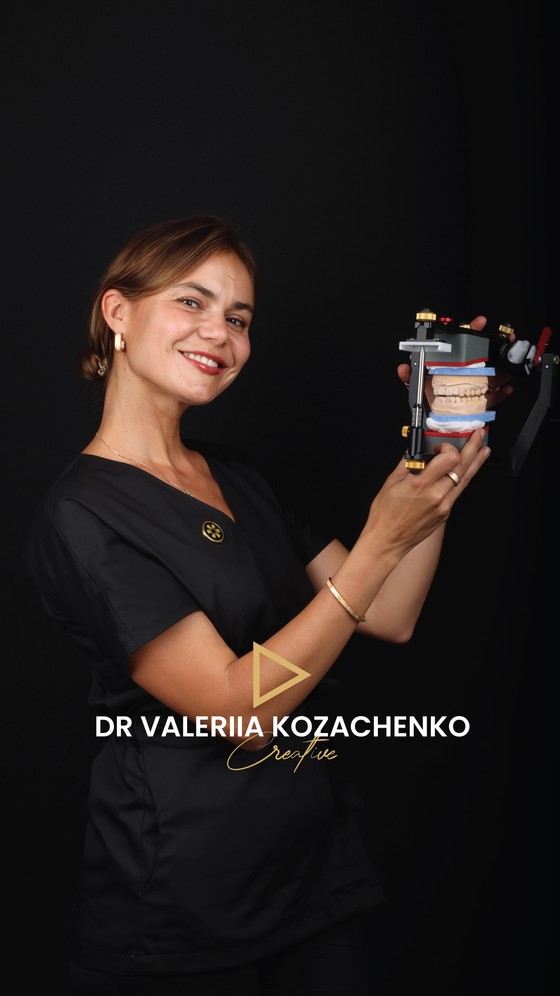
Who treats you here Dr. Muhannad Kazzaz Specialist Orthodontist · Dr. Valeriia Kozachenko Specialist Orthodontist
Every dentist’s licence can be checked on the DHA Sheryan medical directory.
Is Invisalign a brand or a type of braces?
Invisalign is a brand name. "Clear aligners" is the general term for the treatment: a series of thin, removable plastic trays, each shaped slightly differently, that move the teeth in small steps. Invisalign is one manufacturer's aligner system, and other companies make aligners too. Because it was one of the first and is widely known, many people use "Invisalign" to mean any clear aligner, in the same way a brand name can become shorthand for a whole product type.
Aligners are an alternative to fixed braces, not a type of them. Both rely on the same biology of gentle, sustained pressure; they differ in how the force is delivered. Braces use brackets and wires that stay on the teeth, while aligners are removed to eat and clean and must be worn for most of the day to work.
So the useful question is not only "which brand?" but "who is diagnosing my teeth, planning the movements and checking progress?"
What differs between aligner routes?
The three ways people commonly get clear aligners, compared on what affects safety and results. This is about the model of care, not about any named company.
| Invisalign with an orthodontist or dentist | Other aligner systems with an orthodontist or dentist | Mail-order or at-home aligners | |
|---|---|---|---|
| Examination | In person, before any treatment decision | In person, before any treatment decision | Often based on photos or a home impression kit; ask whether anyone examines you in person |
| X-rays and gum check | Taken or reviewed where needed to check roots, bone and decay | Taken or reviewed where needed | Ask whether X-rays are required before treatment starts |
| Who plans the movement | A named clinician who approves the digital plan | A named clinician who approves the digital plan | Ask who the treating doctor is and whether you can contact them |
| Attachments, IPR and elastics | Used when the movement needs them | Depends on the system and the clinician | Usually limited; suits only simpler cases |
| Progress checks | Regular in-person reviews | Regular in-person reviews | Often remote; ask who you see in person if something goes wrong |
| Refinements | Planned for when the teeth do not track fully | Depends on the system and clinic | Ask what happens if teeth do not move as planned |
| Retainers | Planned as part of treatment | Planned as part of treatment | Check what is included and for how long |
The questions in the last column follow consumer advice from the American Association of Orthodontists on direct-to-consumer orthodontics.
What actually decides how well aligners work?
Aligner treatment is only as good as the decisions behind it. The trays carry out a digital plan; they cannot judge whether that plan is right for your mouth. The factors that matter most are:
- Diagnosis. Crowding can be a simple tooth-position problem or the visible sign of a bite or jaw problem. Telling these apart needs an examination and, often, X-rays.
- Planning. How far each tooth moves, in what order, where attachments go and whether enamel polishing (IPR) is needed are clinical decisions made on the 3D plan.
- Case selection. Aligners suit many problems, but not all. A review in BMC Oral Health found aligners and fixed braces both treat malocclusion, with braces better for occlusal contacts, root torque control and retention in the studies included. A good clinician tells you when braces would be more predictable.
- Supervision and wear. Regular checks catch teeth that are not tracking, and about 20 to 22 hours of daily wear keeps the plan on course.
Our guide to what Invisalign can fix covers which problems aligners handle well and where their limits lie.
Why X-rays and a gum check come before any aligner
Moving teeth through bone that is affected by gum disease, or over a hidden root or decay problem, can make that problem worse. An examination, gum assessment and X-rays where needed are not paperwork; they are how a clinician confirms it is safe to start.
What should you ask before choosing mail-order or at-home aligners?
Some aligner services are sold directly to the public, with impressions taken at home or at a scanning shop and progress checked remotely. The American Association of Orthodontists suggests anyone considering this route ask:
- Will I have an in-person examination, and will diagnostic records such as X-rays be taken?
- Will I see a dentist or orthodontist in person at any point during treatment?
- Who is my treating doctor, and can I contact them directly?
- Why is only one type of treatment offered to me?
- Who can I see in person if there is a problem or an emergency?
If the answers are clear and satisfactory, you can judge the option on its merits. If they are not, that tells you something about the level of supervision involved. Patients who have started aligners elsewhere and have concerns are welcome to bring their records for a specialist review.
When are clear aligners a good fit, and when are braces better?
A specialist decides after examining you, but these patterns are typical.
Aligners often suit
- Mild to moderate crowding or spacing
- Relapse after earlier braces
- Many bite problems when attachments and elastics are planned
- Adults who want discreet, removable treatment
- People who can commit to about 20 to 22 hours of daily wear
Fixed braces may be more predictable
- Large rotations of rounded teeth or large vertical movements
- Severe skeletal bite problems, especially if jaw surgery is involved
- Patients unlikely to wear aligners consistently
- Some complex cases needing precise root control
Want to know whether aligners suit your teeth? Our specialist orthodontists examine you in person, plan Invisalign from a 3D scan and tell you honestly when braces would do the job better.
Explore InvisalignHow is Invisalign provided at Creative Arts?
At Creative Arts, clear aligner treatment is provided with Invisalign and supervised by our specialist orthodontists, Dr. Muhannad Kazzaz and Dr. Valeriia Kozachenko. The process is:
- Consultation and examination of the teeth, gums, bite and jaw joints, with X-rays where needed.
- Intraoral 3D scan instead of putty impressions, used to build the digital plan.
- Treatment simulation showing how your teeth are planned to move, and a written plan with the cost and alternatives, including braces where they are relevant.
- Attachments and any IPR placed at the start, as planned.
- In-person reviews to check that teeth are tracking, with a refinement stage if needed.
- Retainers to hold the result; see how long to wear a retainer.
For timing and comfort, see how long Invisalign takes and does Invisalign hurt?. What goes into the fee is explained on our Invisalign cost page.
Specialist orthodontists who supervise aligner treatment
Every Invisalign case at Creative Arts is planned and reviewed in person by one of our specialist orthodontists.

Sources
Clinical statements on this page are consistent with these independent sources. They describe averages from studies, not a promise for any one patient.
- American Association of Orthodontists. Questions to Consider When Researching Direct-To-Consumer Orthodontic Companies. American Association of Orthodontists, 2018.
- Ke Y, Zhu Y, Zhu M. A comparison of treatment effectiveness between clear aligner and fixed appliance therapies. BMC Oral Health, 2019.
Frequently asked questions
Is Invisalign a brand or a type of clear aligner?
Invisalign is a brand: one manufacturer's clear aligner system. "Clear aligners" is the general name for removable plastic trays that move teeth in stages. Because Invisalign is so widely known, people often use the name for any aligner, but other companies also make aligner systems. What matters most is the diagnosis, planning and supervision around them.
Is Invisalign the same as other clear aligners?
They work on the same principle, a series of trays that each move the teeth a little. Systems differ in materials, software and the attachments and features available to the clinician. In practice, the clinician's diagnosis, case selection and monitoring usually have a bigger effect on the result than the aligner brand.
Are mail-order clear aligners safe?
Safety depends largely on supervision. Problems such as gum disease, decay or a bite issue can be missed without an in-person examination and X-rays where needed. The American Association of Orthodontists advises asking whether you will be examined in person, who your treating doctor is, and who you can see if something goes wrong.
Is Invisalign a retainer?
No. Invisalign aligners move teeth; retainers hold them in place after treatment. The two can look similar because both are clear plastic trays, but an aligner is shaped to push teeth towards a new position, while a retainer matches the finished position. Retainers are still needed after Invisalign treatment ends.
Why does Invisalign with an orthodontist involve more appointments than at-home aligners?
Because the appointments are where the clinical work happens: examination and X-rays before starting, placing attachments, any enamel polishing, checking that each tooth is tracking, adjusting the plan and arranging refinements. These steps allow more complex movements to be planned and problems to be caught early.
Can I switch to Invisalign if I started another aligner system?
Often, yes. A specialist orthodontist first examines your teeth, reviews your records and takes a new scan, because the teeth may be in a different position from the original plan. A new Invisalign plan is then made from where your teeth are now. Bring any records, plans and remaining aligners to the consultation.
Which clear aligner brand does Creative Arts use?
Clear aligner treatment at Creative Arts is provided with Invisalign, planned from an intraoral 3D scan and supervised in person by our specialist orthodontists, Dr. Muhannad Kazzaz and Dr. Valeriia Kozachenko. Where fixed braces would be more predictable for your teeth, they explain why and offer braces as an alternative.
Related treatments
One clinic, in Jumeirah 3 / Umm Suqeim 1
Creative Arts has a single clinic on Jumeira Street (Jumeirah Beach Road). Ask about parking when you book.
- Address614 Jumeira St, Jumeirah 3, Umm Suqeim 1, Dubai
- Opening hoursDaily 10:00–20:00, including Friday and Sunday
- Neighbouring areasJumeirah 1–3, Umm Suqeim 1–3, Al Wasl, Al Safa, Al Manara
Our clinic in Jumeirah Open in Google Maps · Rated 4.8 on Google from 238 patient reviews (October 2026) — read them
Request a consultation
Tell us what you would like to change. The clinic replies within working hours with an appointment time.
- Address614 Jumeira St, Jumeirah 3, Umm Suqeim 1, Dubai · Our clinic in Jumeirah 3 / Umm Suqeim 1
- Opening hoursClinic open daily, 10:00–20:00
- Phone+971 4 342 4444 · WhatsApp +971 56 677 7537
Book Your Consultation
Or call us +971 4 342 4444Or message us on WhatsApp
Talk to a dentist about your case
A consultation ends with a diagnosis and a written, itemised plan — not a sales pitch. Book online, message us on WhatsApp, or call the clinic.