
Electric vs Manual Toothbrush: Which Cleans Better, and for Whom?
Both kinds clean well in careful hands. An electric brush mainly helps people who rush, press too hard, wear braces or find the back teeth hard to reach.
- Brushing advice at check-ups
- Guided Biofilm Therapy cleaning
- Open daily 10:00–20:00
Bring your toothbrush to the appointment if you want your technique checked.
Electric vs manual toothbrush: which is better?
Both remove plaque well when used for two minutes with a fluoride toothpaste. Across many trials, powered brushes removed somewhat more plaque and reduced gum inflammation a little more than manual brushes, and they make good technique easier for people with braces, limited dexterity or a habit of scrubbing. At Creative Arts in Dubai, our dentists check how you brush at your visit and suggest the type that suits your mouth.
Who treats you here Dr. Duaa Ameen General Dentist · Dr. Taban Ameen Dentist
Every dentist’s licence can be checked on the DHA Sheryan medical directory.
Electric vs manual toothbrush: how do they compare?
The two types differ less in what they can achieve than in how easy they make it to do a thorough job every day.
| Manual toothbrush | Electric toothbrush | |
|---|---|---|
| Plaque removal | Effective when you angle it to the gum line and work slowly | Somewhat more plaque removed on average in clinical trials |
| Gum inflammation | Controlled well with careful daily brushing | A small extra reduction on average in trials |
| Technique needed | You make every movement; small, gentle strokes | You guide the head tooth by tooth; the head does the movement |
| Pressure control | Easy to scrub too hard without noticing | Many models warn you when you press too hard |
| Timing | You time yourself | Most have a two-minute timer with prompts |
| With braces or bridges | Possible, but slower around brackets | Often easier around brackets and wires |
| Travel and upkeep | Light, cheap, nothing to charge | Needs charging and replacement heads |
| Replacement | The whole brush | The head only |
Whichever you choose, soft bristles and a fluoride toothpaste matter more than the handle.
Do electric toothbrushes really clean better?
On average, yes, by a modest margin. A 2014 Cochrane review pooled trials comparing powered and manual brushing. Powered brushes reduced plaque by 11% over one to three months and by 21% after three months, and gum inflammation (gingivitis) by 6% and 11% over the same periods. The authors noted that the clinical importance of these differences is still unclear, and that side effects reported in the trials were minor and temporary.
Official advice is more relaxed than the marketing. The American Dental Association states that both manual and powered toothbrushes are effective at removing plaque, and the NHS says it does not matter which you use as long as you clean every surface and use a fluoride toothpaste. In practice the difference between people is far bigger than the difference between brushes: someone who brushes carefully with a manual brush usually does better than someone who skims an electric brush over the front teeth for thirty seconds.
That is why the question we ask at a check-up is not which brush you own but where plaque is being left. Plaque-disclosing dye used in a Guided Biofilm Therapy cleaning shows exactly which surfaces your brushing misses, and the answer often changes how you brush more than what you brush with. Our step-by-step guide on how to brush your teeth covers the technique itself.
Oscillating or sonic: does the type of electric toothbrush matter?
Electric brushes move in two main ways. Rotating-oscillating brushes have a small round head that turns back and forth and is placed on one tooth at a time. Sonic or side-to-side brushes have a longer head, similar in shape to a manual brush, that vibrates rapidly and is swept slowly along the teeth.
Most of the research has been done on rotating-oscillating brushes, which showed reductions in plaque and gingivitis at both short and longer follow-up in the Cochrane review. Fewer trials looked at side-to-side brushes, and the reviewers found that brush type did not explain the differences between studies. For most people, then, the choice comes down to comfort and the shape of the mouth: a small round head suits crowded teeth and back molars, while some people find a sonic head feels more like the manual brush they are used to.
Features worth having are a pressure warning, a two-minute timer and soft heads. App connectivity, many modes and whitening settings make little difference to how clean your teeth get.
Who should consider switching to an electric toothbrush?
A manual brush is fine for many people. An electric brush is worth considering when one of these applies.
An electric brush often helps if you…
- Wear fixed braces, a fixed retainer or have bridges that trap plaque
- Have arthritis, a weak grip or another reason that makes small movements hard
- Brush quickly or tend to scrub, and have worn notches or receding gums
- Keep getting bleeding gums despite brushing twice a day
- Are helping a child or an older relative brush
A manual brush is usually enough if you…
- Already brush gently for two minutes and your gums are healthy at check-ups
- Travel often and prefer something light with nothing to charge
- Have a sensitive gag reflex and find a vibrating head uncomfortable
- Have been told by your dentist that your current technique is working
Are electric toothbrushes safe for gums, veneers, implants and braces?
Used gently with a soft head, both kinds are safe on natural teeth and dental work. What causes damage is pressure, not the motor.
| Situation | Electric toothbrush | Manual toothbrush | What matters most |
|---|---|---|---|
| Receding gums | Safe with a soft head and a pressure warning | Safe if strokes are small and light | Never scrubbing sideways at the gum line |
| Veneers and crowns | Safe; a soft head will not loosen well-bonded work | Safe | Non-abrasive fluoride toothpaste and cleaning the edge at the gum |
| Implants | Safe; hold the head at the gum around the implant crown | Safe | Cleaning around the implant every day, plus interdental brushes |
| Fixed braces | Often easier around brackets | Works, but takes longer | Cleaning above and below every bracket |
| Sensitive teeth | Use the gentlest mode and a soft head | Use a soft brush and light pressure | A sensitivity toothpaste and finding the cause |
Plaque around implants causes gum inflammation that can spread to the bone. See implant cleaning for what professional maintenance adds.
How often should you change a toothbrush or electric brush head?
The ADA advises replacing a toothbrush about every three to four months, or sooner if the bristles look worn, because worn bristles clean less well. The same applies to an electric brush head. If bristles splay outwards within a few weeks, you are almost certainly pressing too hard, which is worth fixing before it wears the gum line.
A few habits keep either brush hygienic: rinse it after use, store it upright so it can air-dry, keep it apart from other brushes and never share it. Closed travel caps are useful for a trip but trap moisture if left on every day.
Brushing reaches only part of each tooth. Between the teeth, where decay and gum disease often start, you need floss, interdental brushes or a water flosser; our guide to flossing and water flossers compares them. A coated tongue is another source of bacteria that no toothbrush type fixes on its own; see tongue scraping and tongue cleaning. Timing matters too: after acidic food or drink it is better to wait before brushing, as our guide on brushing right after eating explains.
Harder brushing does not mean cleaner teeth
Plaque is soft and comes away with light pressure. Scrubbing, with any brush, wears enamel and gum at the neck of the tooth and can leave sensitive notches. If your gums are receding or your brush heads wear out fast, ask your dentist to watch you brush at your next visit.
Electric or manual toothbrush for kids?
Either works for children. What matters is that an adult brushes young children's teeth, and supervises older children, with the right amount of fluoride toothpaste for their age. Some children brush longer with an electric brush because the timer and vibration make it more interesting, which can be worth it. Choose a child-sized head and soft bristles, and keep doing the final pass yourself. Our guide to kids' toothpaste and brushing covers amounts by age.
For teenagers in braces, an electric brush often makes the job quicker, and professional cleaning during treatment helps where brushing falls short; see teeth cleaning with braces. Some families also ask about the miswak; our guide on miswak benefits for teeth explains how it compares with a brush. For check-ups and cleaning for the whole family, see general dentistry at Creative Arts in Dubai.
Dentists who check brushing and gum health
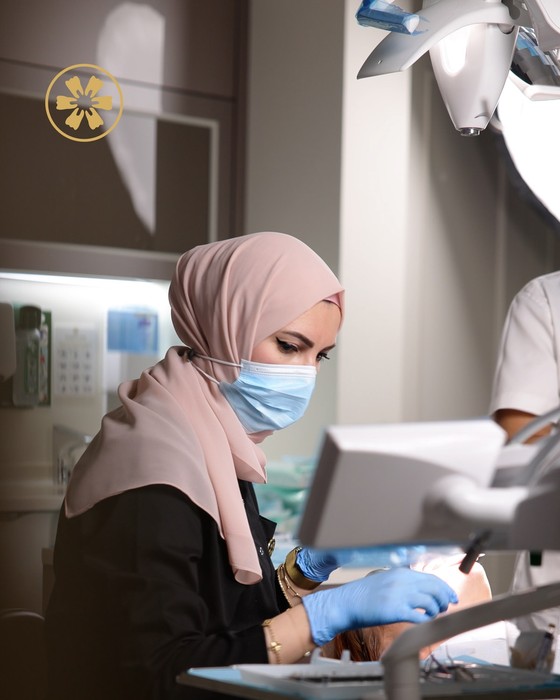
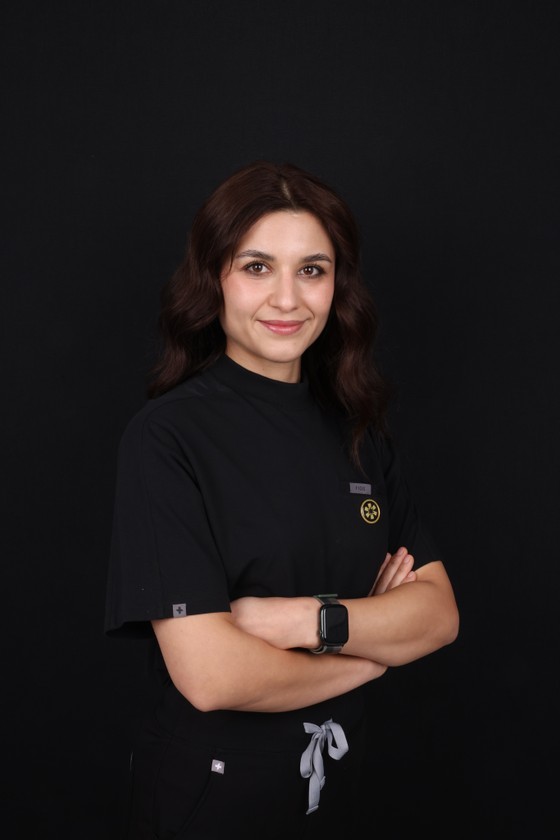
Dr. Duaa Ameen and Dr. Taban Ameen look at where plaque is building up, explain what to change and carry out hygiene treatment at Creative Arts.
Sources
Clinical statements on this page are consistent with these independent sources. They describe averages from studies, not a promise for any one patient.
- Yaacob M, Worthington HV, Deacon SA, et al.. Powered versus manual toothbrushing for oral health. Cochrane Database of Systematic Reviews, 2014.
- American Dental Association. Toothbrushes (Oral Health Topics). ADA, 2026.
- NHS. How to keep your teeth clean. NHS (nhs.uk), 2025.
Frequently asked questions
Do electric toothbrushes clean better than manual toothbrushes?
On average, slightly. A Cochrane review found powered brushes removed more plaque and reduced gum inflammation a little more than manual brushes over weeks and months. Both the ADA and the NHS say either type works well when used properly, so technique, brushing time and a fluoride toothpaste matter more than the brush.
Which is better, an oscillating or a sonic electric toothbrush?
There is more research on rotating-oscillating brushes, which have a small round head placed on each tooth. Sonic, side-to-side brushes have been studied less, and the evidence does not show a clear difference by type. Choose the head shape that reaches your back teeth comfortably, with soft bristles and a pressure warning.
Is an electric toothbrush safe for veneers, crowns and implants?
Yes. A soft electric brush head used with light pressure will not loosen well-bonded veneers or crowns or harm implants. Hold the head at the gum line around the restoration so plaque does not collect at the edge, use a non-abrasive fluoride toothpaste, and clean between the teeth daily.
How often should I change my electric toothbrush head?
About every three to four months, the same as a manual toothbrush, or sooner if the bristles are worn or splayed. Worn bristles clean less well. A head that splays within a few weeks usually means you are pressing too hard, which can wear enamel and gums.
Can an electric toothbrush cause receding gums?
Not when it is used correctly. Recession from brushing comes from heavy pressure and scrubbing, which can happen with either type. A soft head and a pressure warning can actually make it easier to brush gently. If your gums are already receding, ask your dentist to check your technique and the cause.
Is an electric toothbrush better for kids than a manual toothbrush?
Not necessarily. Both work for children if an adult brushes or supervises and uses the right amount of fluoride toothpaste for their age. Some children brush for longer with an electric toothbrush because of the timer, which can help. Use a child-sized soft head and do the final pass yourself.
Is an electric toothbrush better with braces?
Many people find it easier. Brackets and wires trap plaque, and an electric head can clean around them more quickly than a manual brush. Either type still needs time spent above and below every bracket, plus interdental brushes under the wire and regular professional cleaning during treatment.
Do I still need to floss if I use an electric toothbrush?
Yes. No toothbrush, electric or manual, cleans properly between teeth that touch. Floss, interdental brushes or a water flosser once a day reach the surfaces where decay and gum disease often begin. Your dentist can tell you which suits the gaps between your teeth.
Related treatments
One clinic, in Jumeirah 3 / Umm Suqeim 1
Creative Arts has a single clinic on Jumeira Street (Jumeirah Beach Road). Ask about parking when you book.
- Address614 Jumeira St, Jumeirah 3, Umm Suqeim 1, Dubai
- Opening hoursDaily 10:00–20:00, including Friday and Sunday
- Neighbouring areasJumeirah 1–3, Umm Suqeim 1–3, Al Wasl, Al Safa, Al Manara
Our clinic in Jumeirah Open in Google Maps · Rated 4.8 on Google from 238 patient reviews (October 2026) — read them
Request a consultation
Tell us what you would like to change. The clinic replies within working hours with an appointment time.
- Address614 Jumeira St, Jumeirah 3, Umm Suqeim 1, Dubai · Our clinic in Jumeirah 3 / Umm Suqeim 1
- Opening hoursClinic open daily, 10:00–20:00
- Phone+971 4 342 4444 · WhatsApp +971 56 677 7537
Book Your Consultation
Or call us +971 4 342 4444Or message us on WhatsApp
Talk to a dentist about your case
A consultation ends with a diagnosis and a written, itemised plan — not a sales pitch. Book online, message us on WhatsApp, or call the clinic.