
Teeth Grinding in Children (Bruxism): Causes, Checks and Care
Hearing your child grind their teeth at night is unsettling, but it is common and often fades as they grow. What matters is whether the teeth are being damaged and whether sleep or breathing is part of the picture.
- Wear checked at children's check-ups
- Sleep and breathing questions asked
- Open daily 10:00–20:00
Tell us when the grinding happens, whether your child snores, and whether they complain of jaw pain or headaches.
Is teeth grinding in children normal?
Teeth grinding in children, or sleep bruxism, is common and often decreases as children grow. Some flattening of baby teeth is usually harmless. A check is worthwhile if the teeth look worn down, are sensitive or chipped, if your child has jaw pain or morning headaches, or if they snore or breathe through the mouth at night. At Creative Arts in Dubai, the dentist checks the wear and asks about sleep and breathing.
Who treats you here Dr. Duaa Ameen General Dentist · Dr. Julia General Dentist
Every dentist’s licence can be checked on the DHA Sheryan medical directory.
Why do children grind their teeth at night?
Sleep bruxism is rhythmic grinding or clenching of the teeth during sleep. Children rarely know they do it; parents or siblings hear it. It is common in childhood and often becomes less frequent as children get older, but the reasons behind it are not fully understood.
A 2023 review in Frontiers in Oral Health found that parent-reported sleep bruxism in children seems to be associated with sleep-disordered breathing, such as snoring or pauses in breathing, and with parasomnias such as sleep talking or sleepwalking. It also found links with genetics, anxiety, diet and sleep factors, while noting that studies measure grinding in different ways. In practical terms, the things worth thinking about are:
- Sleep and breathing: loud snoring, mouth breathing, restless sleep or large tonsils and adenoids.
- Stress and change: a new school, exams, a move or family events.
- Caffeine: cola, energy drinks, iced tea and chocolate late in the day.
- Changing teeth: grinding is often noticed while baby teeth are being lost and adult teeth arriving, as the bite changes.
- Medicines and health conditions: some medicines and some neurological or developmental conditions are linked with grinding; mention them at the check-up.
Does grinding damage children's teeth? When to worry
Most grinding in children causes only mild wear. These signs suggest a closer look.
| What you notice | Usually fine to monitor | Worth a dental check |
|---|---|---|
| The baby teeth | Slightly flattened tips on the canines and molars, evenly worn | Teeth worn down noticeably shorter, or yellow dentine showing through |
| Sensitivity | None | Pain with cold drinks or ice cream, or when brushing |
| The adult teeth | Not affected | Wear, chips or flat edges on new adult front teeth or molars |
| Jaw and head | No complaints | Jaw pain, tired jaw muscles, clicking with pain, or morning headaches |
| Sleep | Grinding without other sleep problems | Loud snoring, pauses in breathing, mouth breathing or daytime sleepiness |
Bring a short video or audio clip of the grinding if you can; it helps the dentist judge how often and how hard it happens.
Snoring and mouth breathing need a doctor, not only a dentist
If your child snores loudly most nights, stops breathing or gasps during sleep, breathes through the mouth, wets the bed again after being dry, or is very tired, irritable or inattentive in the day, see your GP or paediatrician, who may refer to an ear, nose and throat (ENT) specialist. Treating sleep-disordered breathing matters for your child's health in its own right. Our guide to mouth breathing in children explains the dental side.
How is teeth grinding in children managed, from simplest to more involved?
Most children need only the first two rows. The dentist explains what applies to your child after examining the teeth and asking about sleep.
| Option | When it fits | What it involves |
|---|---|---|
| Monitoring | Mild, even wear with no pain or sleep concerns | Checking wear at each check-up; photos or notes to compare over time |
| Sleep and lifestyle changes | Most children who grind | A calm, regular bedtime, screens off before bed, and no caffeine in the afternoon or evening |
| Help with stress or worry | Grinding that started with a change or a worrying time | Talking it through, a predictable routine and support from school or your doctor if needed |
| Treating damaged teeth | Sensitivity, chips or marked wear | Fluoride varnish for sensitivity, or a filling or other repair where the wear is deep |
| Medical referral | Snoring, breathing pauses or mouth breathing | A GP or paediatrician assessment, sometimes referral to ENT |
| Jaw assessment | Jaw pain, clicking with pain or limited opening | A TMJ assessment with our specialist orthodontists |
| Night guard | Older children with adult teeth showing significant wear | Considered case by case; see below |
For the guards used in adults, see custom night guards; for grinding in adults, see teeth grinding (bruxism).
Does my child need a night guard for grinding?
Usually not. While a child still has baby teeth, the jaws are growing and teeth are being lost and replaced every few months, so a guard can quickly stop fitting and may need remaking often. Wear on baby teeth is also usually mild and the teeth will be replaced anyway. For most young children, monitoring and dealing with sleep, breathing and caffeine is the sensible approach.
A guard may be considered for an older child or teenager whose adult teeth are showing significant wear, chipping or sensitivity, or who has jaw muscle pain linked to clenching. Even then, it is worth knowing what a guard does: a Cochrane review of occlusal splints found they may protect teeth from wear, but there is not enough evidence that they reduce the grinding itself. The dentist explains the pros and cons for your child before anything is made.
What happens at a check for teeth grinding?
A short visit, usually as part of a routine check-up.
Questions about sleep and habits
When the grinding happens, snoring or mouth breathing, bedtime, caffeine, worries, medicines and any jaw pain or headaches.
StartExamining the wear
The dentist looks at the pattern of wear on the baby and adult teeth, any sensitivity or chips, the bite and the jaw muscles.
A few minutesA record to compare
Notes or photos of the wear so the next check-up can show whether it is getting worse or settling.
Same visitA clear plan
Usually monitoring and simple changes at home; treatment, referral or a jaw assessment only if the signs call for it.
Same visit
Dentists who check teeth grinding in children at Creative Arts
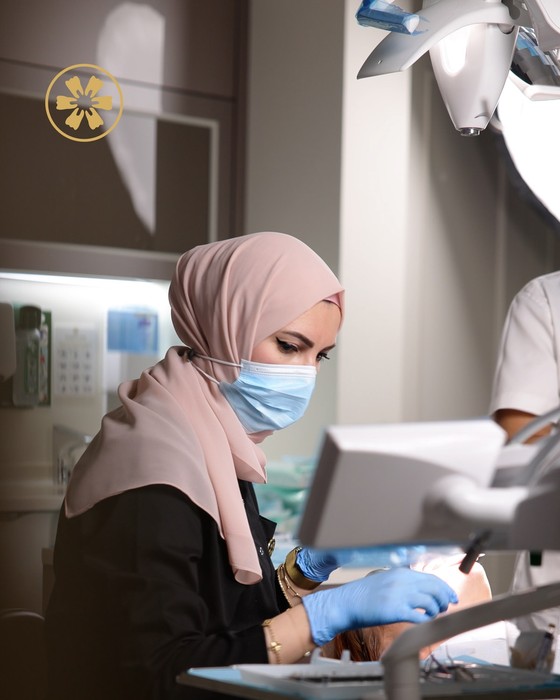
Dr. Duaa Ameen and Dr. Julia, General Dentists, monitor tooth wear at children's check-ups, treat sensitive or damaged teeth, and refer to our specialist orthodontists or to your doctor when the jaw, bite or sleep needs a closer look.

Sources
Clinical statements on this page are consistent with these independent sources. They describe averages from studies, not a promise for any one patient.
- Restrepo-Serna C, Winocur E. Sleep bruxism in children, from evidence to the clinic. A systematic review. Frontiers in Oral Health, 2023.
- Macedo CR et al.. Occlusal splints for treating sleep bruxism (tooth grinding). Cochrane Database of Systematic Reviews, 2007.
Frequently asked questions
Will my child grow out of teeth grinding?
Many children do. Grinding is common in childhood and often becomes less frequent as children get older. It is still worth mentioning at check-ups so the dentist can watch the wear on the teeth, especially once adult teeth arrive, and ask about sleep and breathing.
Does teeth grinding in children damage baby teeth?
It usually causes mild, even flattening of the baby canines and molars, which is not harmful because those teeth will be replaced. A check is worthwhile if the teeth are worn noticeably shorter, show yellow dentine, are sensitive or chipped, or if wear appears on the new adult teeth.
Is teeth grinding in children a sign of worms?
This is a common belief, but there is no good evidence that grinding is caused by worms. The factors that have been linked with grinding in children include sleep-disordered breathing such as snoring, other sleep problems, anxiety and family history. If you are worried about worms for other reasons, speak to your doctor.
Can teeth grinding in children be linked to snoring?
Yes. Research suggests that grinding in children is associated with sleep-disordered breathing, such as snoring or pauses in breathing. If your child snores loudly, breathes through the mouth or is very tired during the day, see your GP or paediatrician as well as the dentist.
Should my child wear a night guard for grinding?
Young children with baby teeth rarely need one, because their jaws are growing and teeth are changing, so a guard soon stops fitting. A guard may be considered for an older child or teenager whose adult teeth are significantly worn or who has jaw pain. It protects the teeth but does not stop the grinding.
My child grinds their teeth during the day. Is that different?
Daytime grinding or clenching is often linked to concentration, stress or habit rather than sleep. Gently pointing it out, encouraging the child to rest the tongue on the roof of the mouth with lips together and teeth apart, and looking at what is causing stress can help. Mention it at the check-up.
Related treatments
One clinic, in Jumeirah 3 / Umm Suqeim 1
Creative Arts has a single clinic on Jumeira Street (Jumeirah Beach Road). Ask about parking when you book.
- Address614 Jumeira St, Jumeirah 3, Umm Suqeim 1, Dubai
- Opening hoursDaily 10:00–20:00, including Friday and Sunday
- Neighbouring areasJumeirah 1–3, Umm Suqeim 1–3, Al Wasl, Al Safa, Al Manara
Our clinic in Jumeirah Open in Google Maps · Rated 4.8 on Google from 238 patient reviews (October 2026) — read them
Request a consultation
Tell us what you would like to change. The clinic replies within working hours with an appointment time.
- Address614 Jumeira St, Jumeirah 3, Umm Suqeim 1, Dubai · Our clinic in Jumeirah 3 / Umm Suqeim 1
- Opening hoursClinic open daily, 10:00–20:00
- Phone+971 4 342 4444 · WhatsApp +971 56 677 7537
Book Your Consultation
Or call us +971 4 342 4444Or message us on WhatsApp
Talk to a dentist about your case
A consultation ends with a diagnosis and a written, itemised plan — not a sales pitch. Book online, message us on WhatsApp, or call the clinic.