
Toothache in Children: Causes, Safe Relief and Urgent Signs
Most toothache in children comes from decay, a new molar coming through, a knock or food stuck between teeth. Here is how to ease it safely at home and how to tell when it cannot wait.
- Children seen by general dentists
- Open daily 10:00–20:00
- Clear plan before any treatment
Tell us your child's age, which tooth hurts, how long it has hurt and whether there is any swelling.
What can I do for my child's toothache?
For a child's toothache, gently brush and floss around the sore tooth to clear trapped food, hold a cold compress on the cheek, give soft food and, if needed, a children's painkiller suited to their age as directed on the label or by a pharmacist. Never give aspirin to under-16s. Book a dentist within a day or two. At Creative Arts in Dubai, facial swelling with fever needs urgent care, not waiting.
Who treats you here Dr. Duaa Ameen General Dentist · Dr. Julia General Dentist
Every dentist’s licence can be checked on the DHA Sheryan medical directory.
When to get urgent help
Go to a hospital emergency department straight away if your child has facial swelling with a fever or seems very unwell, swelling spreading towards the eye or down the neck, difficulty breathing, swallowing or opening the mouth, bleeding that will not stop with pressure, or a head or face injury with drowsiness, vomiting or confusion. The clinic is open daily, 10:00–20:00, but is not a 24-hour service.
Why does my child have toothache?
Where it hurts and when it started usually point to the cause.
| Likely cause | Typical clues | What usually helps |
|---|---|---|
| Tooth decay | Pain with sweet, cold or hot food; a dark spot or hole; pain at night | A dental visit for a filling or other treatment |
| A molar coming through | Ache at the back of the mouth around 6 or 12 years; swollen gum over a new tooth | Cleaning, cold food and simple pain relief; a check if the gum is very swollen |
| Food stuck between teeth | Sudden pain after eating meat, popcorn or seeds; sore gum between two teeth | Gentle flossing and rinsing; see a dentist if it keeps catching |
| A knock or fall | Pain after an injury; a loose, pushed or chipped tooth | A dental check, even if the tooth looks fine |
| Abscess | Throbbing pain, a pimple on the gum, bad taste, swelling | A dental visit the same or next day; urgent care if the face swells |
| Loose baby tooth | A wobbly tooth, sore when chewing, gum a little red | Letting it come out naturally; see wobbly baby teeth |
In babies and toddlers, sore gums from teething are a different problem; see teething. A toothache in a child of school age is rarely teething.
What is safe to give a child with toothache?
- Clean the area first. Brush gently and slide floss between the sore tooth and its neighbours. A trapped piece of food is a common cause of sudden pain, and removing it often ends it.
- A cold compress on the cheek, such as a cold pack wrapped in a cloth, for a few minutes at a time.
- Soft, lukewarm food chewed on the other side; avoid very sweet, very hot or very cold food and drinks.
- Painkillers made for children. Give a paracetamol or ibuprofen product suitable for your child's age, as directed on the label or by your pharmacist or doctor. The NHS advises that children under 16 should not take aspirin.
- Avoid numbing gels. The NHS says general oral pain-relief gels are not suitable for children; ask a pharmacist before using any gel.
- No salt-water rinses for young children, who may swallow them; the NHS suggests warm salt-water rinses for adults, not for children.
Never put aspirin, alcohol, clove oil or anything hot on the gum. These can burn the soft tissue and do not treat the cause. Relief at home buys time; it does not fix a cavity or an infection. The NHS advises seeing a dentist for toothache lasting more than two days or not eased by painkillers.
Can it wait, or should my child see a dentist soon?
A rough guide for parents. If in doubt, call during opening hours and describe the symptoms.
| What you notice | Usually fine to watch for a day | See a dentist soon |
|---|---|---|
| The pain | Brief, after cold or sweet food, then gone | Throbbing, lasting, or waking your child at night |
| The gum | Slightly sore around a new molar or a loose tooth | A pimple, boil or swelling near one tooth |
| The tooth | Looks normal, pain went after flossing | A hole, dark area, chip or a tooth that has changed colour |
| After a knock | A small bump to the lip, teeth look and feel normal | A loose, pushed-in, displaced or broken tooth |
| Your child | Eating and playing normally | Fever, refusing food, chewing on one side only |
Is it teething, a new molar or decay?
Children get two waves of new back teeth that can ache: the first adult molars at about six years and the second adult molars at about twelve. They come through behind the baby teeth without any tooth falling out first, so parents often do not realise a new tooth is arriving. The gum over the tooth can be swollen and tender, and food trapped under the flap of gum makes it worse. Gentle brushing of that area, cold food and children's pain relief usually help, and it settles as the tooth comes through.
Decay pain is different: it tends to be triggered by sweet or cold food, comes back in the same tooth and gets worse over days or weeks. A dark spot or hole is a giveaway, although decay between teeth can be invisible at home. If you are unsure, an examination, and an X-ray only if needed, answers the question quickly. Our guide on cavities in baby teeth explains how decayed baby teeth are treated.
What happens when you bring a child with toothache?
The first aim is to find the cause and ease the pain; anything else can be planned calmly.
A few questions
When the pain started, what triggers it, whether it wakes your child, any knock or fever, and any medicine already given.
StartA gentle examination
The dentist looks at the tooth, the gum and the bite, explaining each instrument to your child before using it.
A few minutesX-ray if needed
A low-dose image is taken only if the cause cannot be seen, for example decay between teeth or a possible abscess.
If neededRelief and a plan
Often the cause is treated the same visit, such as clearing trapped food or placing a temporary dressing. Larger treatment is explained with options before it is booked.
Same visit
How is a child's toothache treated?
From simplest to more involved. The dentist explains which applies and why.
| Option | When it fits |
|---|---|
| Cleaning and advice | Food trapped between teeth or under the gum of a new molar |
| Fluoride varnish | Sensitive teeth or very early decay with an intact surface |
| A filling | A cavity in a baby or adult tooth that has not reached the nerve |
| Pulp treatment | Decay that has reached the nerve of a baby tooth worth keeping; see pulpotomy |
| Extraction | A baby tooth that is badly broken down or infected |
| Review | After a knock, to check the tooth's colour and the developing adult tooth; see child knocked a tooth |
Dentists who see children with toothache at Creative Arts
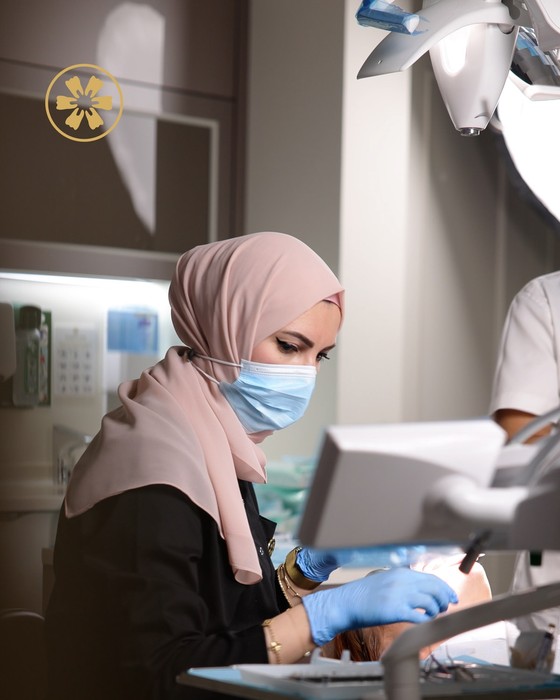
Dr. Duaa Ameen and Dr. Julia, General Dentists, assess toothache in children, treat decay and infection in baby and adult teeth, and keep visits as calm and short as possible.

Sources
Clinical statements on this page are consistent with these independent sources. They describe averages from studies, not a promise for any one patient.
- NHS. Toothache. NHS (nhs.uk), 2024.
- NHS. Tips for helping your teething baby. NHS, n.d..
Frequently asked questions
What painkiller can I give my child for toothache?
A paracetamol or ibuprofen product made for children and suitable for their age, given exactly as directed on the label or by your pharmacist or doctor. Children under 16 should not take aspirin. Painkillers ease the pain while you arrange a dental visit; they do not treat decay or infection.
Is a child's toothache with swelling an emergency?
Swelling of the gum near one tooth needs a dental visit the same or next day. Swelling of the face with fever, swelling spreading to the eye or neck, or difficulty swallowing, breathing or opening the mouth is an emergency: go to a hospital emergency department straight away.
Why does my child's toothache get worse at night?
Lying down increases blood flow to the head, which can make an inflamed tooth throb, and there is less to distract a child at bedtime. Toothache that wakes a child often means decay has reached or is close to the nerve, so book a dental visit soon rather than waiting to see if it settles.
Can a child's toothache go away on its own?
Pain from trapped food or a new molar coming through often settles in a few days. Pain from decay may come and go, but the decay keeps growing, and pain that suddenly stops can mean the nerve has died. If toothache lasts more than two days or keeps coming back, have it checked.
Can I use a teething gel for my older child's toothache?
It is better not to. The NHS notes a lack of evidence that teething gels work and says general oral pain-relief gels are not suitable for children. A cold compress, soft food and a children's painkiller suitable for the age, as the label directs, are safer until your child sees a dentist.
My child has toothache in the back of the mouth at age six. What is it?
It is often the first adult molar coming through behind the baby teeth. The gum over it can be swollen and sore, and food trapped there makes it worse. Clean the area gently and give soft food. If the pain is in an existing tooth, or there is a hole or swelling, a dental check is needed.
Related treatments
One clinic, in Jumeirah 3 / Umm Suqeim 1
Creative Arts has a single clinic on Jumeira Street (Jumeirah Beach Road). Ask about parking when you book.
- Address614 Jumeira St, Jumeirah 3, Umm Suqeim 1, Dubai
- Opening hoursDaily 10:00–20:00, including Friday and Sunday
- Neighbouring areasJumeirah 1–3, Umm Suqeim 1–3, Al Wasl, Al Safa, Al Manara
Our clinic in Jumeirah Open in Google Maps · Rated 4.8 on Google from 238 patient reviews (October 2026) — read them
Request a consultation
Tell us what you would like to change. The clinic replies within working hours with an appointment time.
- Address614 Jumeira St, Jumeirah 3, Umm Suqeim 1, Dubai · Our clinic in Jumeirah 3 / Umm Suqeim 1
- Opening hoursClinic open daily, 10:00–20:00
- Phone+971 4 342 4444 · WhatsApp +971 56 677 7537
Book Your Consultation
Or call us +971 4 342 4444Or message us on WhatsApp
Talk to a dentist about your case
A consultation ends with a diagnosis and a written, itemised plan — not a sales pitch. Book online, message us on WhatsApp, or call the clinic.