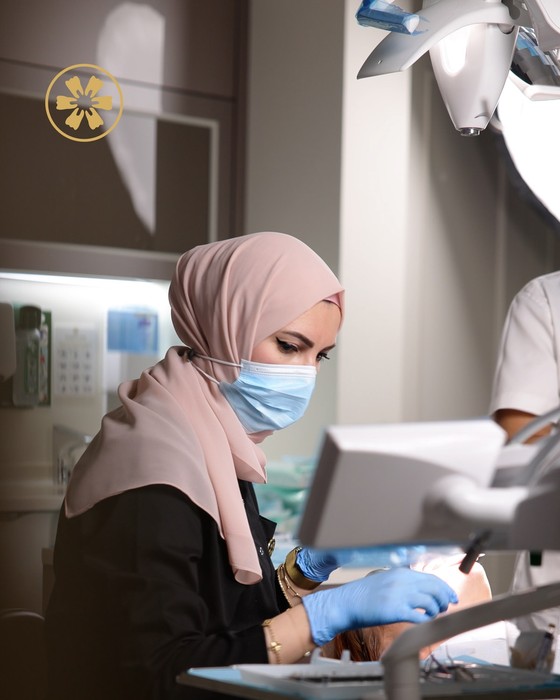
Sticky, dry feeling
The tongue sticks to the palate, saliva feels thick or stringy, and you reach for water often, especially when speaking.
Saliva quietly protects your teeth. When there is too little of it, decay, gum problems and bad breath become more likely. Finding the cause and protecting the teeth go together.
Bring a list of the medicines you take; it is often the key to the cause.
Dry mouth usually happens because the salivary glands make less saliva, most often as a side effect of medicines, or because the body is short of fluid, for example after hours in Dubai's heat or a day of fasting. Mouth breathing, diabetes, radiotherapy and conditions such as Sjögren's disease are other causes. Because saliva protects the teeth, a persistently dry mouth raises the risk of decay; at Creative Arts in Dubai the dentist checks for this and advises on protection.
Who treats you here Dr. Duaa Ameen General Dentist · Dr. Julia General Dentist · Dr. Marina Antoniuk Dentist
Every dentist’s licence can be checked on the DHA Sheryan medical directory.
Everyone's mouth is dry now and then. These signs suggest it is happening often enough to affect your teeth.
The tongue sticks to the palate, saliva feels thick or stringy, and you reach for water often, especially when speaking.
Bread or rice is hard to chew and swallow without a drink, and taste may seem dulled.
A burning or sore tongue, cracked lips or corners of the mouth, and ulcers that are slow to heal.
Breath that stays stale despite brushing, and new cavities at the gum line even though your routine has not changed.
Often more than one cause is involved. The US National Institute of Dental and Craniofacial Research stresses that dry mouth is not a normal part of ageing.
| Cause | Why it dries the mouth | What helps |
|---|---|---|
| Medicines | Hundreds of medicines reduce saliva, including some for blood pressure, depression and bladder problems | Ask your doctor or pharmacist whether an alternative or a change of timing is possible; never stop a medicine on your own |
| Heat and dehydration | Sweating in hot weather or exercise leaves less fluid for saliva | Water through the day, not only when you are thirsty |
| Fasting | No fluids for many hours, often with caffeine at suhoor and iftar | Spread water through the evening; see oral hygiene while fasting |
| Mouth breathing and snoring | Air passing over the mouth all night dries it out | Ask a doctor about a blocked nose; a humidifier at night can help |
| Caffeine, alcohol, tobacco and shisha | They dry the mouth directly | Cut down, and alternate coffee or tea with water |
| Diabetes | High blood sugar increases fluid loss and reduces saliva | Good sugar control; see diabetes and gum disease |
| Sjögren's disease, radiotherapy, cancer drugs | The salivary glands themselves are affected | Care led by your doctor, with closer dental prevention |
Saliva does several jobs you never notice. It rinses food and sugar off the teeth, neutralises the acid that plaque bacteria produce after you eat, and carries calcium, phosphate and fluoride back into enamel that acid has softened. It also keeps bacteria and yeast in check.
With too little saliva, acid lingers after every snack or sweet drink and softened enamel does not recover. Decay can then progress quickly, often at the gum line, on exposed roots and around the edges of fillings and crowns. The NIDCR notes that dry mouth increases the risk of tooth decay and of fungal infections in the mouth. Gum inflammation and bad breath also become more likely.
This is why a persistently dry mouth changes your dental plan: more fluoride, earlier treatment of small cavities and often shorter intervals between visits. Our page on tooth decay explains how cavities progress.
your eyes are also dry or gritty, you have joint pain or unexplained tiredness, you are unusually thirsty and passing urine often, the dryness began after a new medicine or cancer treatment, or a salivary gland in front of the ear or under the jaw is swollen. These can point to a medical cause that needs its own treatment. A painful, swollen gland with fever needs prompt medical care.
Most people need the first rows; the later ones are added when dryness is severe or long-term.
| Option | When it fits | What it involves |
|---|---|---|
| Water and habits | Every case | Regular sips of water, less caffeine and alcohol, no smoking or shisha |
| Saliva stimulation | When the glands still work | Sugar-free gum or sugar-free sweets; some contain xylitol, which may also help prevent cavities |
| Fluoride toothpaste | Every case | Brush twice daily and spit rather than rinse; see how to brush your teeth |
| Professional fluoride | Raised decay risk or early decay | Fluoride varnish at the clinic, and higher-strength toothpaste where your dentist advises it |
| Saliva substitutes and gels | Persistent dryness that water does not relieve | Products that coat and moisten the mouth, recommended by your dentist, doctor or pharmacist |
| Medicine review | Dryness that started with a medicine | Your doctor decides whether a change is possible |
| Closer check-ups | Long-term dry mouth | Shorter intervals and early fillings for small cavities |
A night-time humidifier can ease dryness for people who breathe through the mouth while asleep.
The visit starts with questions: when the dryness began, whether it is worse at night, how much water you drink, and every medicine and supplement you take. The dentist then looks at the amount and texture of your saliva, the tongue and the inside of the cheeks, and checks the teeth closely for early decay at the gum line and around fillings. X-rays may be taken if decay between the teeth is suspected.
You leave with a plan matched to your risk: which fluoride products to use, how often to come back and whether a conversation with your doctor about a medical cause or a medicine change is worthwhile.
Some common ways of relieving dryness protect the mouth; others quietly feed decay.
Dr. Duaa Ameen, Dr. Julia and Dr. Marina Antoniuk check the teeth for early decay linked to dry mouth, advise on fluoride and prevention, and suggest seeing your doctor when a medical cause is likely. See preventive dentistry for how prevention is planned.
Clinical statements on this page are consistent with these independent sources. They describe averages from studies, not a promise for any one patient.
Yes. Saliva neutralises acid, rinses away sugar and helps repair softened enamel, so with less of it decay can progress quickly, especially at the gum line and around fillings. People with a persistently dry mouth usually benefit from extra fluoride, fewer sugary snacks between meals and more frequent check-ups.
The most common reason is breathing through the mouth or snoring while asleep, often with a blocked nose. Saliva flow also falls naturally during sleep, and some medicines taken in the evening add to it. A humidifier, water by the bed and a check of your nose by a doctor can help.
A dry mouth for some hours of the day is expected while fasting and is not harmful on its own. What matters is what happens in the evening: spread water through the hours between iftar and suhoor, limit sweets and sugary drinks to mealtimes, and brush with fluoride toothpaste before sleep and after suhoor.
Many do. The NIDCR mentions medicines for high blood pressure, depression and bladder problems among hundreds that can reduce saliva, and antihistamines are another common example. If dryness started with a new medicine, ask your doctor or pharmacist about options, and do not stop any medicine without their advice.
It often contributes. Saliva washes away food and bacteria, so a dry mouth lets odour-producing bacteria build up, particularly on the tongue. Drinking water, cleaning the tongue and treating any gum disease usually help; if bad breath persists, other causes are checked.
It can be. Dry mouth together with unusual thirst, passing urine often or unexplained tiredness can be signs of high blood sugar and should be checked by your doctor. People with diabetes also have a higher risk of gum disease, so regular dental check-ups matter.
Plain water is the safest choice, sipped regularly through the day. Milk with meals is also fine for teeth. Sugary or acidic drinks such as juice, soft drinks, energy drinks or sweetened tea feel refreshing but increase the risk of decay when the mouth is dry, and caffeine and alcohol can dry it further.
Creative Arts has a single clinic on Jumeira Street (Jumeirah Beach Road). Ask about parking when you book.
Our clinic in Jumeirah Open in Google Maps · Rated 4.8 on Google from 238 patient reviews (October 2026) — read them
Tell us what you would like to change. The clinic replies within working hours with an appointment time.
Or call us +971 4 342 4444Or message us on WhatsApp
A consultation ends with a diagnosis and a written, itemised plan — not a sales pitch. Book online, message us on WhatsApp, or call the clinic.