Bottles in bed and night feeds
Falling asleep with milk, formula or juice, or frequent on-demand night feeds once teeth are through, leaves sugars on the teeth while saliva is low.
Decay that starts on a toddler's upper front teeth is usually linked to milk, formula or juice sipped often or through the night. Caught at the white-spot stage, it can often be stopped without drilling.
If you can, send a clear photo of the front teeth when you book, and tell us your child's age.
Baby bottle tooth decay, or early childhood caries, is tooth decay in children under six, typically starting on the upper front baby teeth. It is linked to milk, formula, juice or sweet drinks sipped often, especially from a bottle or at night once teeth have come through. It begins as chalky white lines near the gum. At Creative Arts in Dubai, early spots are treated with fluoride and feeding advice; cavities need fillings or other care.
Who treats you here Dr. Duaa Ameen General Dentist · Dr. Julia General Dentist
Every dentist’s licence can be checked on the DHA Sheryan medical directory.
Plaque bacteria turn sugars into acid, and acid dissolves enamel. Milk, formula and juice all contain sugars. When a child falls asleep with a bottle, or feeds or sips on demand through the night, the drink pools around the upper front teeth. During sleep saliva, the mouth's natural rinse, slows right down, so the acid sits on the enamel for hours instead of minutes.
The lower front teeth are often spared, because the tongue covers them during sucking and they sit close to the openings of large saliva glands. That pattern, upper front teeth affected and lower front teeth healthy, is the classic sign dentists look for. Baby enamel is also thinner than adult enamel, so once decay starts it can spread quickly to the back molars as well.
Decay is not only about bottles: sweet snacks grazed through the day and a dummy dipped in honey add to the risk. Noticing it early makes the biggest difference.
Lift your child's upper lip once a month and look at the front teeth near the gum. This is what the stages look like.
| Stage | What you see | What it usually needs |
|---|---|---|
| White spots | Dull, chalky white lines or patches along the gum line of the upper front teeth | Fluoride varnish, brushing with fluoride toothpaste and feeding changes; often reversible |
| Early cavity | Spots turning yellow or light brown, with a rough or soft surface | Arresting the decay or a small tooth-coloured filling |
| Established decay | Brown or black holes, teeth that look worn or chipped near the gum | Fillings, or a crown on a back molar |
| Advanced decay | Teeth broken down to stumps, pain, a pimple on the gum or facial swelling | Pulp treatment or extraction; urgent care if there is swelling |
The NIDCR explains that white-spot decay can be stopped or reversed with minerals from saliva and fluoride; once a cavity forms, it cannot repair itself.
It is rarely one thing. These habits add up.
Falling asleep with milk, formula or juice, or frequent on-demand night feeds once teeth are through, leaves sugars on the teeth while saliva is low.
A bottle or sippy cup of juice, flavoured milk or sweet tea carried around turns into many acid attacks a day. How often matters more than how much.
Brushing should start with the first tooth, using a smear of fluoride toothpaste. Many parents begin later, when decay has already started.
Biscuits and sweets between meals, honey or sugar on a dummy, and sweetened syrups taken at bedtime without brushing afterwards.
Breastfeeding has well-established health benefits, and this page is not advice to stop. The American Academy of Pediatric Dentistry recommends avoiding on-demand or night-time bottle- and breastfeeding beyond 12 months of age, together with avoiding frequent sugary drinks and foods. In practice, once teeth have come through, wipe or brush them after the last feed where you can, and do not add other sugars at night. Discuss your child's feeding with your paediatrician.
Treatment depends on how far the decay has gone, how many teeth are affected and how much a young child can manage. The dentist explains each option and its alternatives before anything is done.
| Option | When it fits | What it involves |
|---|---|---|
| Changes at home | Every child with early decay | Water only at night, sugars kept to mealtimes, brushing twice daily with a fluoride toothpaste |
| Fluoride varnish | White spots and early decay with an intact surface | Painted on in a minute or two, repeated at intervals set by risk; see fluoride treatment |
| Fillings | Small to moderate cavities | Decay removed and replaced with a tooth-coloured filling, usually with local anaesthetic |
| Crowns on baby molars | Large decay on a back tooth, or after nerve treatment | A small preformed crown covers the tooth until it is lost naturally |
| Pulp treatment | Decay that has reached the nerve but the tooth can be kept | Removing the inflamed pulp and sealing the tooth; see pulpotomy |
| Extraction | A tooth broken down beyond repair or with an abscess | Removal under local anaesthetic; the space for the adult tooth is then checked |
When many teeth need treatment in a very young or very anxious child, the dentist may discuss treatment over several short visits, with laughing gas, or in some cases under general anaesthesia given by an anaesthesiologist, after a medical-history review.
In most cases, yes. Baby front teeth stay until about six or seven, and baby molars until ten to twelve. Untreated decay can cause pain that disturbs eating and sleep, an abscess near the adult tooth developing underneath, and early loss of teeth that hold space for the adult teeth.
Not every decayed baby tooth needs a filling, though. A tooth close to falling out, or early decay that fluoride can stop, may simply be monitored. Our guide on whether cavities in baby teeth need fillings explains how that decision is made.
Most of prevention happens at home. These are the changes that make the most difference.
Book a dental visit soon if your child has toothache, a broken tooth, a pimple or boil on the gum, or bad breath that will not go away. The clinic is open daily, 10:00–20:00, but is not a 24-hour service. Facial swelling with fever, swelling spreading towards the eye or neck, difficulty breathing or swallowing, or a child who seems very unwell needs a hospital emergency department straight away. Our child toothache page explains safe relief while you wait.
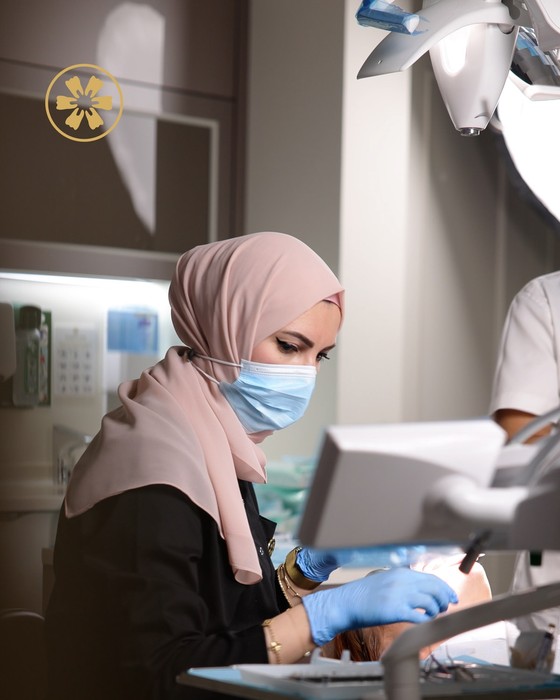
Dr. Duaa Ameen and Dr. Julia, General Dentists, see young children with early decay, keep visits short and calm, and plan treatment around what each child can manage.
Clinical statements on this page are consistent with these independent sources. They describe averages from studies, not a promise for any one patient.
Only at the earliest stage. Chalky white spots where the enamel surface is still intact can harden again with fluoride varnish, brushing with fluoride toothpaste and fewer sugary drinks. Once the enamel breaks down into a cavity, it cannot repair itself, and the tooth needs a filling, a crown or other treatment.
During sucking the tongue covers the lower front teeth and large saliva glands sit close to them, so they are better protected. Milk or juice pools around the upper front teeth instead, especially during sleep, when saliva flow drops. Upper decay with healthy lower teeth is the typical pattern.
It can. Milk and formula contain natural sugars, and saliva slows during sleep, so frequent night feeds once teeth are through leave sugars on the teeth for hours. The risk rises with sugary drinks or snacks during the day and no brushing at night. Water is the safest drink after teeth are brushed.
It depends on the stage. White spots are treated with fluoride varnish and changes at home. Cavities usually need fillings, and badly damaged back teeth may need a small crown, pulp treatment or extraction. For extensive treatment in a very young child, visits may be shortened or sedation discussed.
It can. An abscess on a baby tooth can affect the adult tooth developing underneath, and losing baby teeth early can let other teeth drift into the space. Children who have decay in baby teeth are also at higher risk of decay in adult teeth, so prevention and regular checks matter.
By the first birthday, or within six months of the first tooth coming through. The first visit is short and checks for early white spots while they can still be reversed, and gives you practical advice on feeding, brushing and fluoride for your child's age.
Creative Arts has a single clinic on Jumeira Street (Jumeirah Beach Road). Ask about parking when you book.
Our clinic in Jumeirah Open in Google Maps · Rated 4.8 on Google from 238 patient reviews (October 2026) — read them
Tell us what you would like to change. The clinic replies within working hours with an appointment time.
Or call us +971 4 342 4444Or message us on WhatsApp
A consultation ends with a diagnosis and a written, itemised plan — not a sales pitch. Book online, message us on WhatsApp, or call the clinic.