
Can you get veneers if you have gum disease?
Not while the gum disease is active. Bleeding, swollen gums make it hard to scan accurately, finish clean margins and bond veneers reliably, and once the inflammation settles the gum line can shift and expose the edges. At Creative Arts in Dubai, gum problems are treated and re-checked first; veneers are planned once the gums are stable, and gum maintenance continues afterwards.
Why do veneers depend on healthy gums?
A veneer is a thin ceramic shell whose edge, the margin, usually sits at or very close to the gum. Everything that happens at that junction affects the result, and inflamed gums interfere in four ways.
- Accuracy. Swollen gum tissue covers part of the tooth and bleeds when touched. The scan or impression then cannot capture the true edge of the preparation, so the veneer is made to a guess.
- Bonding. Veneers are bonded with adhesive that needs a clean, dry surface. Blood and gum fluid seeping onto the tooth during fitting weaken the bond and can stain the edge.
- Appearance. A red, puffy rim around white ceramic draws the eye. Worse, when inflamed gums are later treated they usually tighten and shrink slightly, which can uncover a margin that was hidden on the day of fitting.
- Longevity. Veneers rarely fail because the ceramic wears out. More often the problem starts at the margin: plaque, decay or recession around the edge.
That is why gum health is part of the veneer plan, not a separate topic. Our guide to getting your mouth ready before cosmetic treatment covers decay, old fillings and grinding as well.
Common gum problems and what they mean for veneers
A general guide. Only an examination with gum measurements tells you which applies to you.
| Gum finding | What it means for veneers | What usually happens first |
|---|---|---|
| Gingivitis: gums bleed on brushing, red puffy edges | Reversible, but margins and bonding are unreliable while it lasts | Professional cleaning and better home care, then a re-check |
| Periodontitis: deep pockets, bone loss around teeth | Support for the teeth is reduced; teeth may drift or feel loose | Periodontal assessment and deep cleaning below the gum line; veneers only once stable |
| Receding gums | Veneers do not move gums back; exposed roots make teeth look longer | Find the cause (brushing, grinding, gum disease); a gum graft may be considered for some cases |
| Uneven or high gum line | Uneven gum heights show even under well-made veneers | Gum contouring may be planned together with the veneers |
| Rough or overhanging old fillings at the gum | They trap plaque and keep the gum irritated | Replace or smooth them and let the gum settle |
Waiting times after gum treatment vary. Your dentist re-measures the gums before scanning for veneers.
Signs your gums need attention before veneers
None of these rules veneers out for good. They mean the gums should be assessed and treated first.
Bleeding when you brush or floss
Healthy gums do not normally bleed with gentle cleaning. Bleeding is the most common early sign of gingivitis. See bleeding gums.
Red, swollen gum edges
The thin collar of gum around each tooth should be pale pink and tight. A rolled, shiny or dark red edge points to inflammation.
Teeth that look longer
Gum that has pulled back exposes the root, which is darker and more sensitive. Veneer length and margin position depend on where the gum will stay.
New gaps or movement
Front teeth that have fanned out, developed gaps or feel loose can indicate bone loss. That needs a periodontal assessment before any cosmetic plan.
Persistent bad taste or breath
Plaque and bacteria in gum pockets often cause it. A deep clean usually comes before veneers in this situation.
How gums are prepared before veneers
The order matters more than the speed. Each step is reviewed before the next.
Gum assessment
Pocket depths and bleeding are measured around each tooth (periodontal charting), with X-rays where needed to check bone levels.
First visitProfessional cleaning
Guided Biofilm Therapy removes plaque and tartar above and, where needed, below the gum line. Home-care technique is adjusted to your teeth.
Hygiene visitTargeted treatment
Deep cleaning for periodontal pockets, replacement of irritating old fillings, or laser gum contouring if the gum line itself needs reshaping.
If neededHealing and re-check
Gums are re-measured after they settle. The wait is typically several weeks and longer after more extensive gum treatment.
ReviewScan, design and mock-up
With a stable gum line, the teeth are scanned, the smile is designed and you see a mock-up before any preparation.
Veneer planning
How a well-designed veneer protects the gum
Gum health is not only about what happens before treatment. The way a veneer is shaped and fitted affects the gum for years.
- Margin position. Where the tooth colour allows, margins are placed at or just above the gum line, where they are easiest to clean and check. Placing an edge slightly under the gum is sometimes needed to hide a dark tooth or root, and it demands healthy tissue and careful technique.
- Emergence profile. The veneer should leave the gum in a smooth, natural contour. A veneer that bulges outwards at the gum line traps plaque and can keep the gum inflamed, one reason over-thick veneers cause problems.
- Respecting the gum attachment. The gum is attached to the tooth just above the bone. Margins pushed too deep into that zone tend to cause chronic redness or recession, so the depth is planned on the scan.
- Surface finish and cement. Glazed, polished ceramic collects less plaque than a rough edge, and excess cement is removed carefully at fitting so nothing is left under the gum.
If you are also changing the gum line, see how veneers and gum contouring are planned as one design.
Ready to find out whether your teeth and gums suit veneers? See how we assess, design and fit veneers, including the mock-up you approve before anything is prepared.
Read about veneers in DubaiCan you have veneers if you had gum disease in the past?
Often, yes. What matters is whether the disease is controlled now. A patient who has had periodontal treatment, has stable pocket depths and attends regular maintenance can be a reasonable veneer candidate. The dentist will still look closely at a few things:
- Bone support. Teeth with significant bone loss carry a veneer less predictably, especially if they move under biting forces.
- Tooth length and dark triangles. After gum disease, teeth can look long and small dark gaps can appear between them near the gum. Veneers can sometimes reduce these gaps by reshaping the contact area, but making teeth too wide to close them looks unnatural.
- Ongoing maintenance. Veneers do not stop gum disease returning. Regular hygiene visits matter even more once you have them.
Equally important: veneers are not a treatment for gum disease, and they will not stabilise loose teeth. If teeth have drifted because of bone loss, orthodontic or periodontal options may come first.
Veneers do not fix receding gums
A veneer can cover part of an exposed root in some cases, but it does not regrow gum. Covering a lot of root makes teeth look long and can leave the margin on root surface, which bonds less well than enamel. The cause of recession is addressed first, and a gum graft may be considered for some cases. Read more about receding gums.
Keeping gums healthy around veneers
The gum around a veneer needs the same care as the gum around a natural tooth, with a little extra attention at the margin.
- Brush the gum line. A soft brush angled towards the gum, twice a day, with a non-abrasive toothpaste that will not dull the glaze.
- Clean between the teeth daily. Floss or interdental brushes sized for your gaps. Most problems around veneers start between teeth, where a brush does not reach.
- Keep hygiene visits. Professional teeth cleaning with GBT is gentle on ceramic surfaces. Your recall interval is set by your gum risk, not a fixed calendar.
- Protect against grinding. If you clench or grind, a night guard protects both the veneers and the supporting tissues.
Tell your dentist if one veneer starts to bleed, a dark line appears at the edge or food keeps catching in the same spot. Our guide to common veneer problems explains what can be repaired and what needs a new veneer.
Who looks after your gums and your veneers
Gum treatment and laser soft-tissue work are handled by Dr. Taban Ameen. Veneers are planned and fitted by Dr. Khalid Saeed, Dr. Kinan Bonni, Dr. Somar Dahdal and Dr. Marina Antoniuk, working from the same records.
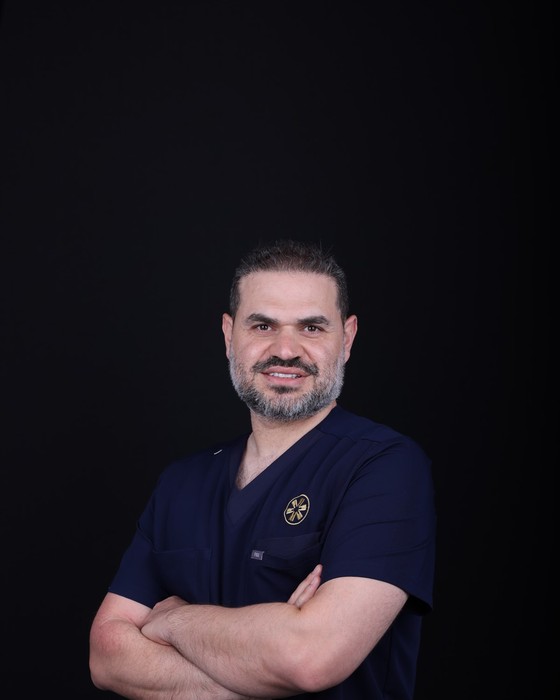 Dr. Khalid SaeedCo-founder & DentistCosmetic dentistry, veneers & implants
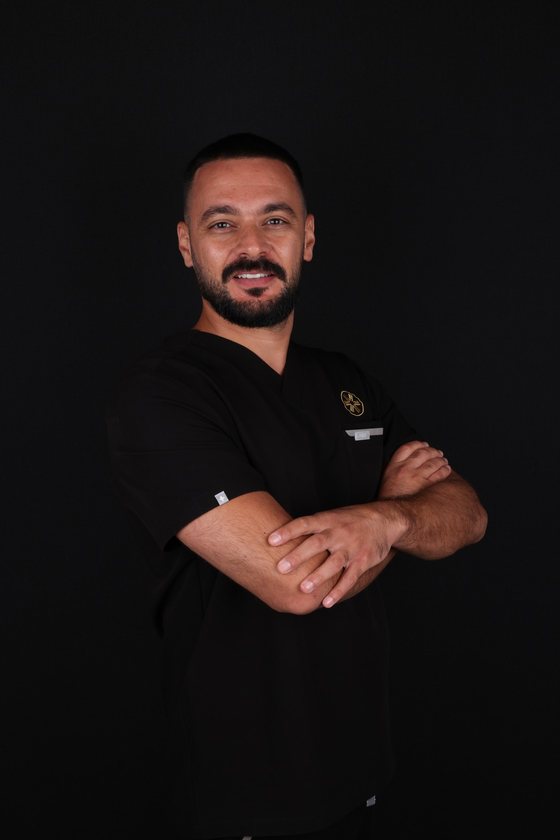 Dr. Kinan BonniDentistVeneers, cosmetic & implant dentistry, full mouth rehabilitation
 Dr. Somar DahdalGeneral DentistVeneers & smile makeovers
 Dr. Marina AntoniukDentistRestorative & microscopic dentistry
 Dr. Taban AmeenDentistLaser & cosmetic dentistry