
At Home Aligners vs Orthodontist-Supervised Treatment: The Real Risks and Differences
The plastic trays may look alike. What differs is whether anyone examines your gums, roots and bite before teeth start moving, and who checks on them along the way.
- Specialist orthodontists supervise in person
- X-rays and gum check where needed
- Cases started elsewhere reviewed
Already using at-home aligners? Bring your records and remaining trays for a specialist review.
Are at-home aligners as safe as aligner treatment with an orthodontist?
At-home aligners are usually planned from photos or a home impression kit and monitored remotely, so problems such as gum disease, decay, short roots or a bite issue may not be found before teeth move. Orthodontist-led treatment starts with an in-person examination, X-rays where needed and a diagnosis, then adds checks, attachments and refinements. Creative Arts in Dubai offers Invisalign supervised in person by specialist orthodontists, not at-home aligner systems.
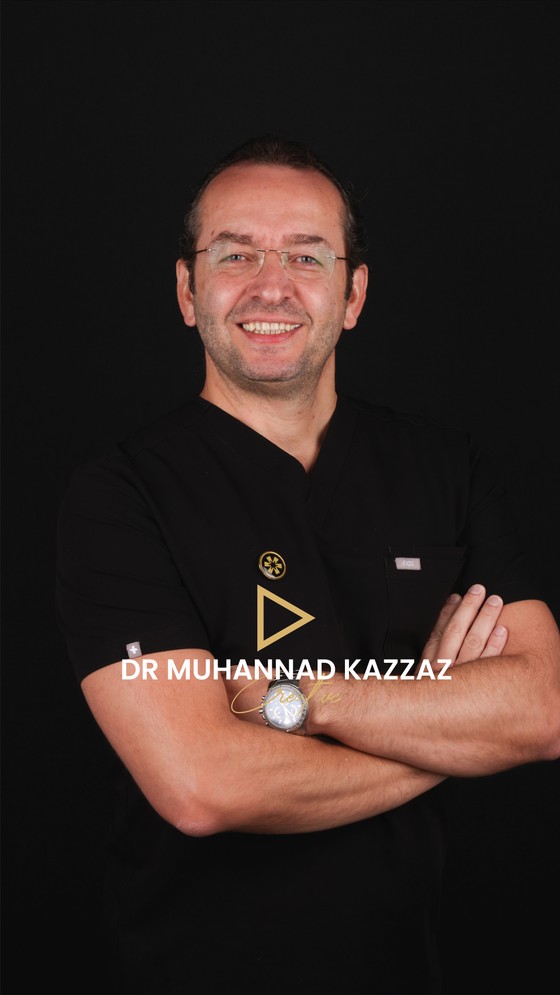
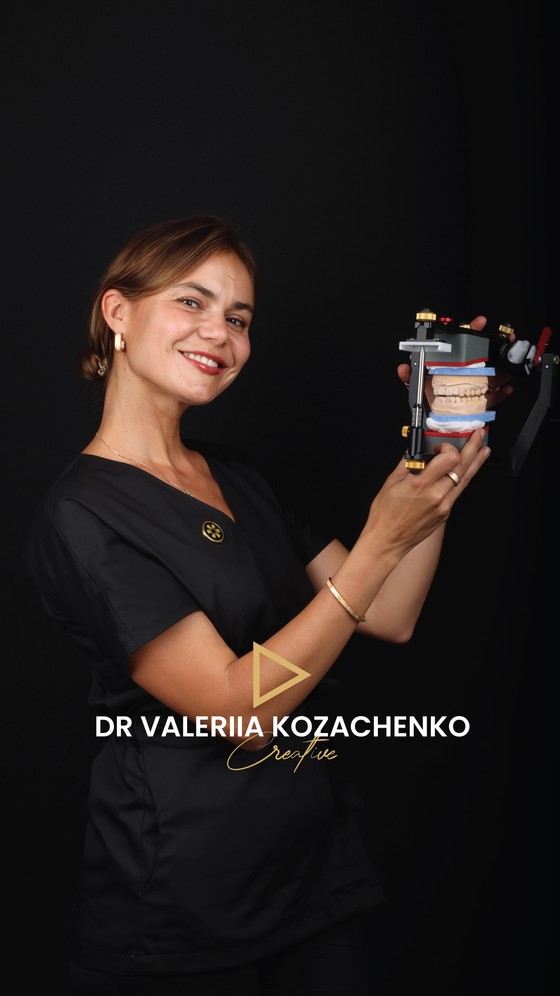
Who treats you here Dr. Muhannad Kazzaz Specialist Orthodontist · Dr. Valeriia Kozachenko Specialist Orthodontist
Every dentist’s licence can be checked on the DHA Sheryan medical directory.
What is the difference between at-home aligners and an orthodontist?
"At-home" or "direct-to-consumer" aligners are sold to the public with as little clinic contact as possible. Typically you take impressions with a home kit or have a scan at a shop, a remote clinician approves a computer plan, the trays are posted to you, and progress is checked through photos or an app. Some services include one in-person dental visit; many do not.
Orthodontist-led aligner treatment uses the same idea of a series of clear trays, but wraps it in a clinical process: an examination of teeth, gums, bite and jaw joints; X-rays when they are needed; a diagnosis that decides whether aligners are the right tool at all; and regular in-person visits where the plan can be changed. The trays are the visible part; the diagnosis and supervision are what you are really choosing between.
Brand is a separate question. The guide to Invisalign vs other aligners explains why the system matters less than the clinician, and lists the questions the American Association of Orthodontists suggests asking any aligner provider.
At home aligners vs orthodontist: what each route includes
A general comparison. Individual services differ, so check each point with any provider you are considering.
| Step | Typical at-home aligner service | Orthodontist-led treatment (Invisalign at Creative Arts) |
|---|---|---|
| First assessment | Questionnaire and photos; sometimes one dental visit | In-person examination of teeth, gums, bite and jaw joints |
| X-rays | Often not required | Taken or reviewed where needed to check roots, bone and hidden problems |
| Gum and decay check | Patient usually asked to confirm it themselves | Checked at the examination and treated first if needed |
| Diagnosis | Mainly how the front teeth look | Bite, jaw relationship and tooth positions, with alternatives explained |
| Tools available | Trays only, sometimes limited add-ons | Attachments, enamel polishing (IPR), elastics and refinements when the movement needs them |
| Monitoring | Photos or app; remote contact | Regular in-person reviews |
| If teeth do not track | May be noticed late, or not at all | Seen at review; plan adjusted or refined |
| Emergencies | Ask who you can see in person | Handled at the clinic during opening hours |
| Retainers | Varies; check what is included | Planned as part of treatment |
Creative Arts does not provide at-home aligner systems. Clear aligner treatment here is Invisalign, supervised in person by specialist orthodontists.
What can go wrong without X-rays and check-ups?
Moving teeth is a biological process in the bone, not just a change in how the front teeth look. The risks of skipping diagnosis and supervision are mostly things that cannot be seen in a photo:
- Gum disease. Teeth moved through bone already weakened by periodontal disease can lose more support, which can cause gum recession or loose teeth.
- Hidden problems. Decay, infection at a root tip, short or resorbing roots, or an impacted tooth in the path of movement only show on an examination or X-ray.
- Bite changes. Straightening the front teeth without planning the bite can leave the back teeth not meeting properly, create an open bite or push teeth out of their bony housing.
- Teeth not tracking. When a tooth falls behind the plan, each new tray fits worse. In person this is spotted early; remotely it can go unnoticed for weeks.
- Jaw joint strain. A bite that shifts during treatment can aggravate clicking or pain in people prone to jaw problems.
Some of these, such as lost bone or shortened roots, cannot be fully reversed later. That is the strongest argument for an in-person diagnosis before treatment rather than a rescue afterwards.
Why are at-home aligners cheaper?
Mostly because they include less. A treatment fee reflects clinical time and the scope of care, and the direct-to-consumer model removes much of it: fewer or no examinations, often no X-rays, remote rather than in-person monitoring, and a narrower range of cases that can be treated with trays alone. Refinements, retainers and help when something goes wrong may be limited or charged separately.
Some people with mild front-tooth crowding are happy with an at-home result, but the two prices are not for the same service. When you compare, compare what is included: who examines you, whether X-rays are taken, how many in-person visits there are, what happens if teeth do not track, and which retainers follow. At Creative Arts the written plan lists these before you commit, and the Invisalign cost page explains what drives the fee.
When is the difference smaller, and when does it matter most?
Every mouth should be examined before teeth are moved. Beyond that, the gap between the two routes grows with the complexity of the case.
The difference is smaller when
- Crowding is mild and limited to the front teeth
- Gums and teeth have recently been checked and are healthy
- The bite is otherwise normal
- It is a small relapse after earlier orthodontic treatment
In-person orthodontic care matters most when
- You have had gum disease, recession or bone loss
- There are crowns, implants, root canal teeth or missing teeth
- The bite is deep, open, crossed or an underbite
- Teeth need to rotate a lot, move up or down, or move a long way
- You have jaw pain, clicking or headaches
Already using at-home aligners and something feels wrong?
If teeth feel loose, gums are receding, your back teeth no longer meet or trays stop fitting, pause the next tray and have your teeth examined. Bring your plan, remaining trays and any photos so the orthodontist can see what was intended.
Can a clinic fix a failed at-home aligner case?
Often, yes, although how much can be corrected depends on what has happened. The process starts like any orthodontic case: an examination, X-rays where needed and an intraoral 3D scan to record where the teeth are now, which may be quite different from the original plan. Gums and roots are checked first, because any damage there changes what is safe to do next.
A new plan is then made from the current position. Depending on the problem, that may be Invisalign with attachments and refinements, fixed braces when they will be more predictable, or treatment of gum or tooth problems before any further movement. Lost gum or bone cannot always be regained, so the earlier a problem is seen, the more options remain. For a broader approach to reviewing treatment done elsewhere, see getting a second opinion in Dubai.
Considering aligners, or worried about treatment started elsewhere? Our specialist orthodontists in Dubai examine your teeth, explain the options and supervise treatment in person.
Orthodontics at Creative ArtsHow is aligner treatment supervised at Creative Arts?
Clear aligner treatment at Creative Arts is Invisalign, planned and supervised in person by our specialist orthodontists, Dr. Muhannad Kazzaz and Dr. Valeriia Kozachenko. The process includes an examination with X-rays where needed, an intraoral 3D scan, a treatment simulation and a written plan with alternatives, then attachments or IPR where the plan needs them, regular reviews, refinements if teeth do not track, and retainers at the end.
Not every case needs the same amount of treatment. The guide to Invisalign Lite vs Comprehensive explains how the scope of an aligner plan is matched to the problem, and what Invisalign can fix covers where aligners work well and where braces are the better tool.
Specialist orthodontists who supervise aligner treatment
Invisalign at Creative Arts is diagnosed, planned and monitored in person by our two specialist orthodontists.
Sources
Clinical statements on this page are consistent with these independent sources. They describe averages from studies, not a promise for any one patient.
- American Association of Orthodontists. Questions to Consider When Researching Direct-To-Consumer Orthodontic Companies. American Association of Orthodontists, 2018.
Frequently asked questions
Are mail-order or at-home aligners safe?
Safety depends largely on diagnosis and supervision. Without an in-person examination and X-rays where needed, gum disease, decay, root problems or a bite issue can be missed before teeth start moving, and problems during treatment may be noticed late. Some people with mild crowding do well; the risk rises with anything beyond simple front-tooth alignment.
What can go wrong with at-home aligners without X-rays and check-ups?
Teeth may be moved through bone weakened by gum disease, causing recession or loosening; hidden decay, infection or short roots may be missed; the bite can change so back teeth no longer meet; and teeth that stop tracking may go unnoticed. Some of this damage, such as lost bone, cannot be fully reversed.
Why are at-home aligners cheaper than orthodontist treatment?
Mainly because they include less: fewer or no in-person examinations, often no X-rays, remote monitoring, a narrower range of treatable cases and limited refinements or help when things go wrong. The prices are for different levels of care, so compare what each includes rather than the headline figure.
Can a clinic fix a failed at-home aligner result?
Often, yes. An orthodontist examines the teeth and gums, takes X-rays where needed and a new 3D scan, then plans from the current position, using Invisalign or braces as appropriate. Gum or root problems are dealt with first. Lost gum or bone may not be fully recoverable, so earlier review keeps more options open.
Does Creative Arts provide at-home aligners?
No. Creative Arts does not provide at-home or direct-to-consumer aligner systems. Clear aligner treatment at the clinic is Invisalign, diagnosed and supervised in person by specialist orthodontists Dr. Muhannad Kazzaz and Dr. Valeriia Kozachenko, with braces offered where they would be more predictable.
Is an orthodontist needed for simple at-home aligner cases?
Even a case that looks simple should start with an examination, because healthy gums and roots are what make tooth movement safe, and a photo cannot show them. If everything is healthy and the problem is mild, treatment may be short and straightforward; the orthodontist can tell you that before you commit.
Can I switch from at-home aligners to Invisalign mid-treatment?
Usually, yes. Stop at your current tray and bring your plan, remaining trays and any records. A specialist orthodontist examines your teeth, takes a new scan and X-rays where needed, and makes a new Invisalign plan from where your teeth are now, rather than continuing the old one.
Related treatments
One clinic, in Jumeirah 3 / Umm Suqeim 1
Creative Arts has a single clinic on Jumeira Street (Jumeirah Beach Road). Ask about parking when you book.
- Address614 Jumeira St, Jumeirah 3, Umm Suqeim 1, Dubai
- Opening hoursDaily 10:00–20:00, including Friday and Sunday
- Neighbouring areasJumeirah 1–3, Umm Suqeim 1–3, Al Wasl, Al Safa, Al Manara
Our clinic in Jumeirah Open in Google Maps · Rated 4.8 on Google from 238 patient reviews (October 2026) — read them
Request a consultation
Tell us what you would like to change. The clinic replies within working hours with an appointment time.
- Address614 Jumeira St, Jumeirah 3, Umm Suqeim 1, Dubai · Our clinic in Jumeirah 3 / Umm Suqeim 1
- Opening hoursClinic open daily, 10:00–20:00
- Phone+971 4 342 4444 · WhatsApp +971 56 677 7537
Book Your Consultation
Or call us +971 4 342 4444Or message us on WhatsApp
Talk to a dentist about your case
A consultation ends with a diagnosis and a written, itemised plan — not a sales pitch. Book online, message us on WhatsApp, or call the clinic.