
White Spots on Teeth: Causes and Treatment in Dubai
White marks on teeth have several causes, from early decay around old brace brackets to enamel that formed differently in childhood. Some fade, some need only fluoride, and a few are best covered. The cause decides the treatment.
- Cause diagnosed before treatment
- Composite bonding for persistent marks
- Whitening supervised by a dentist
If the spots appeared after braces or whitening, mention when, as it helps the diagnosis.
What causes white spots on teeth, and how are they treated?
White spots on teeth are most often early decay where enamel has lost minerals, including marks left around brace brackets, or enamel that formed differently in childhood, such as fluorosis or enamel hypomineralisation. Early decay can often be stopped with fluoride; persistent marks can be blended or covered with composite bonding, and veneers are kept for severe cases. At Creative Arts in Dubai the cause is diagnosed first.
Who treats you here Dr. Duaa Ameen General Dentist · Dr. Somar Dahdal General Dentist · Dr. Taban Ameen Dentist
Every dentist’s licence can be checked on the DHA Sheryan medical directory.
What causes white spots on teeth?
The pattern, the age they appeared and your history usually point to the cause.
| Cause | What it typically looks like | Clues |
|---|---|---|
| Early decay (demineralisation) | Chalky, matt white patches, often near the gum line | Frequent sugar or acidic drinks, plaque left at the gum line; can progress to a cavity |
| Marks after braces | White outlines or patches where brackets sat, or around them | Plaque trapped around brackets during treatment; early decay of the same kind |
| Fluorosis | White flecks, lines or a cloudy look, usually on several teeth symmetrically | Too much fluoride while teeth were forming, before about age eight; does not progress |
| Enamel hypomineralisation (including MIH) | Creamy-white to yellow-brown patches, often on first molars and front teeth | Present when the tooth came through; enamel may be softer and sensitive |
| Injury or infection of a baby tooth | A single white or discoloured patch on one adult tooth | A knock or abscess on the baby tooth before it |
| Dehydration after whitening or mouth breathing | Bright white patches that look worse in the morning or straight after whitening | Temporary; fades as the enamel rehydrates |
The CDC notes that only young children can develop fluorosis, because permanent enamel is fully formed by about age eight, and that mild fluorosis does not affect tooth function.
White spots after braces: will they fade?
White marks that show when brackets come off are usually early decay: plaque that sat around the brackets has drawn minerals out of the enamel. Once braces are off and cleaning becomes easier, saliva and fluoride toothpaste help the surface regain minerals, and many marks soften over the following months. Deep or long-standing marks may improve only partly, because the surface can remineralise while the white layer underneath stays.
The first months after removal are a time to protect the enamel rather than treat it aggressively: careful brushing with fluoride toothpaste, fewer sugary and acidic drinks, and a professional fluoride where advised. Whitening straight after braces can make marks more noticeable for a time; our guide to whitening after braces explains the timing. If you still have braces, regular cleaning with braces helps prevent new marks.
Seek prompt dental assessment if…
a white patch has become soft, rough, brown or has a hole in it; a tooth with white patches is sensitive or painful; or a child's back teeth have patches that are chipping or breaking down. These can mean active decay or weak enamel that needs protecting. The clinic is open daily, 10:00–20:00.
How are white spots on teeth treated, from simplest to most involved?
Start with the least invasive option that suits the cause. Many people never need more than the first two rows.
| Option | Best suited to | What to expect |
|---|---|---|
| Monitoring | Mild fluorosis or faint marks that do not bother you | Nothing removed; checked at routine visits |
| Fluoride and remineralisation | Early decay and marks after braces | Fluoride toothpaste, professional fluoride and diet changes; marks often soften over months |
| Whitening | Spots on otherwise darker teeth, where lighter teeth reduce the contrast | Results vary; spots can look brighter at first before blending. See teeth whitening |
| Microabrasion or resin infiltration | Shallow surface marks, in some cases | Techniques some clinics use to polish away or fill the surface layer; ask whether they suit your case |
| Composite bonding | Persistent or deeper marks, enamel defects | Tooth-coloured composite blends or covers the patch with little or no drilling; see composite bonding |
| Veneers | Severe, widespread marks on several front teeth | Covers the front surface; involves some tooth preparation, so it is kept for cases simpler options cannot fix |
For the cost of bonding, see composite bonding cost, and for how long it typically lasts, how long bonding lasts.
Do white spots on teeth need veneers?
Rarely. Veneers remove some enamel and are a long-term commitment; most white spots can be handled more simply.
Usually considered first
- Time and fluoride for marks after braces
- Diet and cleaning changes for early decay near the gum line
- Leaving mild fluorosis alone if it does not bother you
- Composite bonding for a few persistent patches
Worth knowing
- Whitening does not remove white spots and can make them stand out for a while
- Abrasive whitening toothpastes and home remedies can wear enamel
- Active decay must be controlled before cosmetic treatment
- Veneers are for severe, widespread cases, decided after examination
How is the cause of white spots diagnosed?
The questions and checks are simple, but they decide whether the treatment is fluoride, bonding or something else.
History
When the marks appeared, whether you had braces, fluoride use in childhood, whitening, and any knocks to baby teeth.
ConsultationExamination
Teeth are cleaned and viewed wet and dry. The pattern, texture and whether the surface is rough or soft separate active decay from enamel defects.
ConsultationX-rays if needed
Used where decay is suspected between teeth or under the surface.
When neededOptions in writing
You receive the cause, the options from conservative to more involved, and what each would achieve.
Before treatment
Are white spots on a child's teeth serious?
Sometimes. Chalky white bands near the gum on a young child's teeth can be the first sign of decay and need prompt attention with cleaning, diet changes and fluoride. Patches present on adult molars and incisors as soon as they come through suggest enamel hypomineralisation, where the enamel may be softer and more sensitive and benefits from early protection such as fluoride or sealants. Faint symmetrical flecks are often mild fluorosis. Our pages on discoloured baby teeth and tooth decay explain more.
Dentists who assess and treat white spots
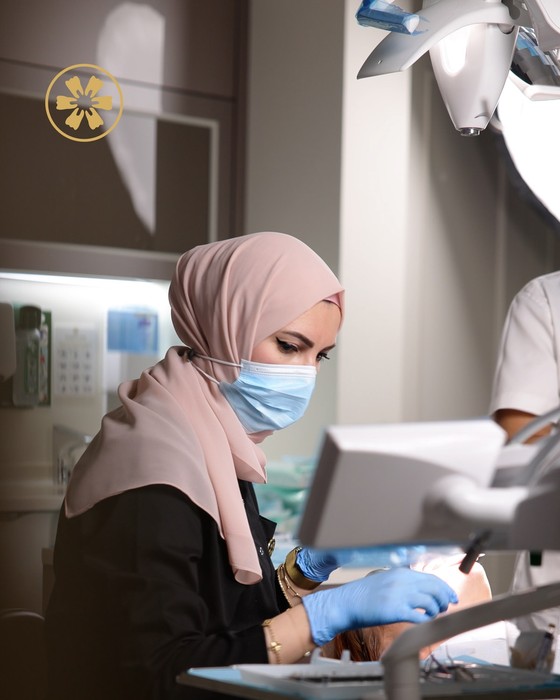
Dr. Duaa Ameen, Dr. Somar Dahdal and Dr. Taban Ameen assess white spots, manage early decay, and provide whitening and composite bonding when the marks persist.


Sources
Clinical statements on this page are consistent with these independent sources. They describe averages from studies, not a promise for any one patient.
- National Institute of Dental and Craniofacial Research. Tooth Decay. NIDCR / NIH, n.d..
- Centers for Disease Control and Prevention. About Dental Fluorosis. CDC, n.d..
Frequently asked questions
Do white spots on teeth go away on their own?
Some do. White patches after whitening or a night of mouth breathing usually fade within a day or two as the enamel rehydrates. Early decay and marks after braces often soften over months with fluoride and good cleaning, though deeper ones may not disappear fully. Fluorosis and enamel defects present from childhood do not fade.
Why do I have white spots on my teeth after whitening?
Whitening temporarily dries the enamel, which can make existing white areas look brighter, and new white patches can appear for a day or two. They usually fade as the teeth rehydrate. Spots that remain once the teeth have settled were usually there before and have become more visible; your dentist can advise on blending them.
Are white spots on teeth a sign of decay?
They can be. Chalky, matt patches near the gum line or around where brace brackets sat are often early decay, which can usually be stopped with fluoride and better cleaning. White spots present since the teeth came through, especially symmetrical flecks, are more likely to be fluorosis or an enamel defect, which is not decay.
Can composite bonding cover white spots on teeth?
Yes, for spots that persist. Composite bonding uses tooth-coloured resin to blend or cover the patch, often with little or no drilling, and is usually done in one visit. Very light, shallow marks may not need it, and active decay must be treated first. Bonding can stain and chip over time and may need polishing or repair.
Can white spots on teeth be removed with whitening?
Whitening does not remove white spots. On teeth that are generally darker, lightening the rest of the tooth can reduce the contrast, so the spots become less obvious. At first, though, whitening often makes white areas look brighter. Your dentist can tell you whether whitening, bonding or a combination suits your marks.
Are white spots on my child's teeth something to worry about?
They should be checked. White bands near the gum in young children can be early decay that needs prompt attention, while patches on new adult molars and front teeth may indicate weaker enamel that benefits from protection. Faint symmetrical flecks are often mild fluorosis, which does not affect how the teeth work.
Related treatments
One clinic, in Jumeirah 3 / Umm Suqeim 1
Creative Arts has a single clinic on Jumeira Street (Jumeirah Beach Road). Ask about parking when you book.
- Address614 Jumeira St, Jumeirah 3, Umm Suqeim 1, Dubai
- Opening hoursDaily 10:00–20:00, including Friday and Sunday
- Neighbouring areasJumeirah 1–3, Umm Suqeim 1–3, Al Wasl, Al Safa, Al Manara
Our clinic in Jumeirah Open in Google Maps · Rated 4.8 on Google from 238 patient reviews (October 2026) — read them
Request a consultation
Tell us what you would like to change. The clinic replies within working hours with an appointment time.
- Address614 Jumeira St, Jumeirah 3, Umm Suqeim 1, Dubai · Our clinic in Jumeirah 3 / Umm Suqeim 1
- Opening hoursClinic open daily, 10:00–20:00
- Phone+971 4 342 4444 · WhatsApp +971 56 677 7537
Book Your Consultation
Or call us +971 4 342 4444Or message us on WhatsApp
Talk to a dentist about your case
A consultation ends with a diagnosis and a written, itemised plan — not a sales pitch. Book online, message us on WhatsApp, or call the clinic.