Floss catches or shreds
Floss that tears or snags in the same gap can mean a rough edge: decay, a chipped filling or tartar. It is a hint, not a diagnosis.
Decay between teeth starts just below the point where two teeth touch, out of sight and out of reach of the brush. Caught early it can sometimes be stopped; once it forms a hole, it needs a filling.
Bring any recent dental X-rays you have from another clinic.
A cavity between teeth starts just below the contact point where two teeth touch, where plaque sits undisturbed and a toothbrush cannot reach. It grows inside the tooth before the surface breaks, so it is usually invisible in a mirror and often causes no pain until it is deep. Dentists find it with bitewing X-rays and a close examination. At Creative Arts in Dubai early decay may be monitored, and cavities are repaired with tooth-coloured fillings.
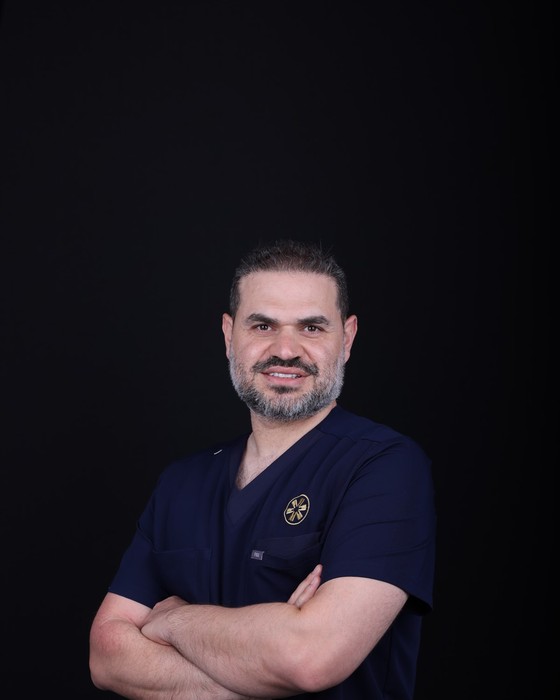
Who treats you here Dr. Marina Antoniuk Dentist · Dr. Julia General Dentist · Dr. Khalid Saeed Co-founder & Dentist
Every dentist’s licence can be checked on the DHA Sheryan medical directory.
Many cause no signs until they are well advanced. These are the clues people notice.
Floss that tears or snags in the same gap can mean a rough edge: decay, a chipped filling or tartar. It is a hint, not a diagnosis.
A new or worse food trap between two teeth can follow a cavity breaking through the side wall. See food stuck between teeth for other causes.
A short, sharp sensitivity in one area when you eat sweets or drink something cold suggests the decay has reached dentine.
Sometimes a greyish shadow shows through the enamel on the biting surface edge, above where the decay is spreading inside.
Decay needs plaque and sugar together, over time. The area just below the contact point is the most sheltered surface in the mouth: plaque there is rarely disturbed by chewing, the tongue or a toothbrush, so bacteria can turn sugars into acid against the enamel for hours. The US National Institute of Dental and Craniofacial Research explains that early decay shows as mineral loss that can still be stopped or reversed, but that continued loss breaks the enamel down into a cavity.
Some mouths are more at risk: crowded or overlapping teeth, gaps that trap food, old fillings with a ledge or gap at the edge, crowns and bridges, frequent snacking or sugary drinks, a dry mouth, and skipping cleaning between the teeth. Brushing alone cannot reach these surfaces, which is why cavities appear here even in people who brush well.
Usually, yes. Bitewing X-rays, small images taken while you bite on a holder, show the contact areas of the back teeth from the side, where decay appears as a darker area in the enamel or dentine. They can reveal decay long before it can be seen or felt. The American Dental Association advises that there is no single interval for X-rays and that they should be chosen for each person's needs and risk, which is how the dentist decides when you need them.
The examination adds what an X-ray cannot: drying the teeth and looking at the edges under good light, checking old fillings for gaps, and feeling for soft or rough areas. Between front teeth, light shone through the tooth often shows a shadow. Our page on dental X-rays explains the types used, and our guide on how to read a dental X-ray shows what the dentist is looking at.
Treatment depends on how deep the decay is and whether the surface has broken.
| Stage | What the dentist finds | Usual treatment |
|---|---|---|
| Early, in enamel | A shadow in the outer enamel on X-ray; surface intact | Fluoride, cleaning between the teeth, less sugar, and a repeat X-ray to check it has stopped |
| Into dentine, surface still intact | A shadow reaching just past the enamel | Monitoring in low-risk patients, or a small filling if it is progressing or risk is high |
| Cavity has formed | A break in the surface; dentine decay | A tooth-coloured composite filling |
| Deep, close to the nerve | Decay approaching the pulp | A deep filling, with the nerve monitored; see deep filling close to the nerve |
| Large, walls or cusps undermined | Too little tooth left to support a filling | A crown after the decay is removed |
| Nerve infected | Lingering pain, swelling or an infection on X-ray | Root canal treatment or, if the tooth cannot be saved, extraction |
Our guide can a cavity heal on its own? explains which early lesions can be stopped and which cannot.
For back teeth, usually from the top. The decay sits below the contact point, and the neighbouring tooth blocks the way in from the side, so the dentist goes through the edge of the biting surface to reach it. Only the decayed and weakened tooth is removed, and modern bonded fillings allow a smaller opening than older techniques needed.
The hardest part of a filling between teeth is rebuilding the side wall so it touches the neighbour firmly. A thin band and a small wedge are placed around the tooth to shape the wall and recreate a tight contact; without it, food would pack into the gap afterwards. The filling is built up in layers of tooth-coloured composite, set with a curing light, then shaped and polished, and the contact is checked with floss.
Front teeth are usually filled from the tongue side to keep the visible enamel intact. Local anaesthetic is used for most fillings in dentine.
a tooth aches on its own, throbs, wakes you at night or hurts for a long time after hot or cold; it is tender to bite on; a gum boil, swelling or bad taste appears near it; or a piece of tooth breaks away. The clinic is open daily 10:00–20:00, with no overnight service. Facial swelling with fever, difficulty breathing or swallowing, swelling spreading to the eye or neck, uncontrolled bleeding or a head or face injury need a hospital emergency department straight away.
Floss does not diagnose decay, but a strand that suddenly shreds or catches in the same place is worth mentioning at your next visit. Cleaning between the teeth is about prevention: it disturbs the plaque that a brush misses. A Cochrane review found that flossing or interdental brushes, added to brushing, may reduce gum inflammation, although none of the trials it included measured decay between teeth, so the evidence for cavity prevention specifically is indirect.
What helps is the combination: fluoride toothpaste twice a day (spit, do not rinse), daily cleaning between the teeth, sugar kept to mealtimes, and check-ups at the interval your dentist recommends. Our guide to floss, interdental brushes and water flossers helps you choose.
Finding a shadow on an X-ray does not automatically mean drilling.
Dr. Marina Antoniuk and Dr. Julia diagnose and fill cavities and use a dental microscope for deeper work, and Dr. Khalid Saeed, co-founder of Creative Arts, plans crowns when a tooth needs more than a filling. All treatment follows our restorative dentistry approach: a written, itemised plan first.
Clinical statements on this page are consistent with these independent sources. They describe averages from studies, not a promise for any one patient.
Because it starts below the contact point where two teeth touch, an area hidden from view and from your toothbrush. Decay spreads inside the enamel and dentine before the surface breaks, so even a fairly large cavity between teeth can look normal from the outside. Bitewing X-rays and a close examination are how dentists find them.
In most cases, yes, at least for back teeth. Bitewing X-rays show the contact areas from the side and can reveal decay long before it is visible. How often you need them depends on your decay risk, age and dental history; the dentist chooses the timing for you rather than following a fixed schedule.
Floss cannot diagnose decay, but floss that suddenly shreds or catches in the same gap can be a sign of a rough edge, which may be decay, a chipped filling or tartar. Mention it at your next visit. Daily cleaning between the teeth is mainly about preventing decay by removing the plaque a brush cannot reach.
For back teeth, usually from the top. The neighbouring tooth blocks access from the side, so the dentist enters through the edge of the biting surface, removes the decay, then rebuilds the side wall against a thin band so it touches the neighbour tightly. Front teeth are usually filled from the tongue side to keep the visible enamel intact.
An early lesion limited to the enamel can sometimes stop or partly remineralise with fluoride, better cleaning between the teeth and less sugar, and is then watched with X-rays. Once the surface has broken into a cavity, it cannot heal and needs a filling. Your dentist explains which stage yours is at.
It can. Decay on one side of a contact often sits against the neighbour's surface, which may develop decay too, so dentists check both. When both teeth need fillings, they are usually done in the same visit so the contact can be rebuilt properly between them.
Creative Arts has a single clinic on Jumeira Street (Jumeirah Beach Road). Ask about parking when you book.
Our clinic in Jumeirah Open in Google Maps · Rated 4.8 on Google from 238 patient reviews (October 2026) — read them
Tell us what you would like to change. The clinic replies within working hours with an appointment time.
Or call us +971 4 342 4444Or message us on WhatsApp
A consultation ends with a diagnosis and a written, itemised plan — not a sales pitch. Book online, message us on WhatsApp, or call the clinic.