Sore, swollen gum at the back
The gum behind or over the last lower tooth is red, puffy and tender, and may be painful to bite on.
When a wisdom tooth is only partly through, the flap of gum over it can trap food and bacteria and become inflamed. Most flare-ups settle with cleaning; repeated ones are a reason to consider removal.
If you have had wisdom tooth X-rays elsewhere, bring them or send them before the visit.
Pericoronitis is inflammation, often with infection, of the gum around a wisdom tooth that has only partly come through. Food and bacteria collect under the flap of gum covering the tooth, causing swelling, pain at the back of the mouth, a bad taste and sometimes difficulty opening. At Creative Arts in Dubai it is treated by cleaning under the flap, with antibiotics only when infection is spreading; repeated episodes are usually a reason to remove the tooth.
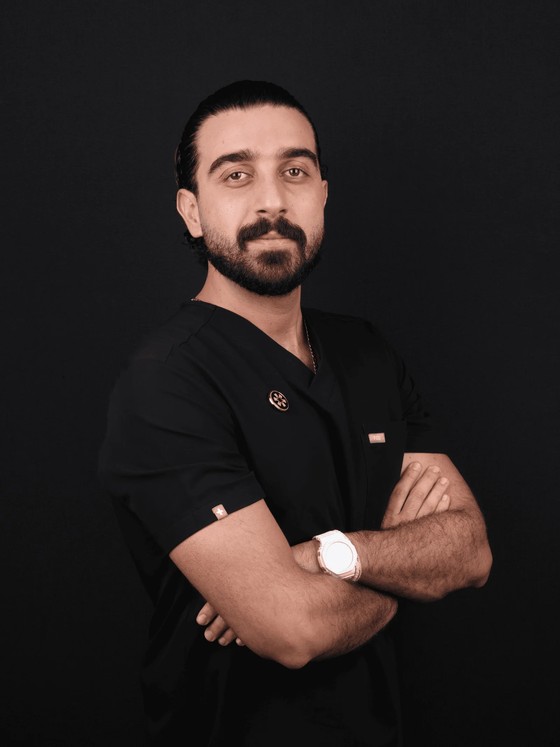
Who treats you here Dr. Firas Osman Oral & Maxillofacial Surgeon & Implantologist · Dr. Khalid Saeed Co-founder & Dentist · Dr. Somar Dahdal General Dentist
Every dentist’s licence can be checked on the DHA Sheryan medical directory.
It usually affects a lower wisdom tooth and often flares when you are tired, run down or unwell.
The gum behind or over the last lower tooth is red, puffy and tender, and may be painful to bite on.
Trapped food and bacteria under the flap cause an unpleasant taste or breath, sometimes with pus.
The ache can radiate along the jaw, to the ear or down towards the throat, making swallowing uncomfortable.
Inflammation near the jaw muscles can make it hard to open wide. This stiffness is called trismus.
Wisdom teeth are the last teeth to come through, usually in the late teens or twenties, and often there is not quite enough room for them. A tooth that is stuck part way leaves a flap of gum (the operculum) covering part of its biting surface. The space underneath is almost impossible to clean with a toothbrush, so food and plaque bacteria collect there.
Most of the time the body keeps this in check. A flare-up tends to happen when something tips the balance: food packed under the flap, an upper tooth biting on and bruising the gum, or a period of illness, stress or poor sleep. The gum becomes inflamed and swollen, which makes the flap bigger and easier to bite on, and the cycle continues.
Pericoronitis is a gum problem, but it is closely linked to the position of the tooth. A wisdom tooth that is impacted, tilted against the tooth in front or only partly through is more likely to cause repeated episodes than one that has erupted fully into a normal position. The NHS lists gum infection around wisdom teeth among the problems that can lead to their removal.
Go to a hospital emergency department straight away if swelling spreads into the cheek, under the jaw or down the neck, you have a fever and feel unwell, you are struggling to swallow or breathe, or you can barely open your mouth and it is getting worse. These can be signs that the infection is spreading beyond the gum; the NHS gives the same advice for dental infections. For pain and swelling limited to the gum, contact the clinic during opening hours, 10:00 to 20:00 daily; there is no overnight service.
Home care does not replace an examination, but it can ease symptoms for a day or two until your appointment:
Avoid putting crushed tablets or strong substances on the gum, which can burn it, and do not use leftover antibiotics. If the swelling is spreading or you are developing a fever, do not wait for home care to work.
The diagnosis is usually clear from an examination. X-rays show what the tooth is doing underneath.
The dentist asks when it started and whether it has happened before, then examines the gum flap, the opposing tooth and the glands under the jaw.
Visit 1A panoramic or local X-ray shows whether the wisdom tooth is impacted, how it is angled, and whether there is decay in it or the tooth in front.
Visit 1When the roots of a lower wisdom tooth appear close to the nerve, a CBCT scan shows the relationship in three dimensions before surgery.
When neededYou leave with treatment for the current flare-up and an explanation of whether the tooth can be kept, monitored or should be removed.
Visit 1The first options treat the flare-up. The last ones deal with the reason it keeps coming back.
| Option | When it fits | What to expect |
|---|---|---|
| Cleaning and irrigation under the flap | Every flare-up | The area under the gum is gently flushed and cleaned, with local anaesthetic if it is very tender; relief often follows within a day or two |
| Short course of antiseptic rinse | Alongside cleaning, if your dentist recommends it | Used for a limited time as instructed; long-term use can stain teeth |
| Adjusting or removing the upper wisdom tooth | When an upper tooth bites on the swollen flap | Smoothing the upper tooth or removing it if it has no opposing tooth to work with |
| Antibiotics | Only with spreading swelling, fever or other signs of wider infection | Prescribed by the dentist when indicated; they do not stop the problem returning |
| Removing the gum flap (operculectomy) | Selected cases where the tooth is upright and has room to erupt fully | May be considered in some cases; the flap can grow back |
| Wisdom tooth removal | Repeated episodes, a tooth that cannot erupt properly, or decay or damage to the neighbouring tooth | Planned once the acute inflammation has settled; see wisdom tooth removal |
In the UK, NICE guidance on the extraction of wisdom teeth states that a first episode of pericoronitis, unless particularly severe, should not in itself be an indication for surgery, while second or subsequent episodes should be. Read more on wisdom tooth removal at Creative Arts.
No. The decision depends on the tooth's position and how often the gum flares, not on a single painful episode.
Dr. Firas Osman, Oral & Maxillofacial Surgeon & Implantologist, assesses and removes complex and impacted wisdom teeth. Dr. Khalid Saeed and Dr. Somar Dahdal treat flare-ups and carry out extractions at the clinic.
Clinical statements on this page are consistent with these independent sources. They describe averages from studies, not a promise for any one patient.
A mild flare-up can settle with careful cleaning and salt-water rinses, but the flap of gum and the trapped space underneath remain, so it often comes back. Having the area professionally cleaned shortens the episode and lets the dentist check the tooth position on an X-ray. Spreading swelling or fever should never be left to settle on its own.
Gum swelling and pain limited to the area around the wisdom tooth is usually urgent but not an emergency, and should be seen within a day or two. It becomes an emergency if swelling spreads into the cheek or neck, you have a fever, you are struggling to swallow or breathe, or you can barely open your mouth. Then go to a hospital emergency department.
Not always. Most flare-ups respond to cleaning under the gum flap and good home care. Antibiotics are prescribed when there are signs of spreading infection, such as facial swelling, fever or swollen glands, or for medical reasons. They calm the infection but do not remove its cause, so the problem can return once the course ends.
Not necessarily after a single mild episode, especially if the tooth is upright and still erupting. Removal is usually recommended when pericoronitis keeps returning, when one episode was severe, or when the tooth is impacted and cannot come through properly. The decision is made with an X-ray, and with a CBCT scan if the roots are close to the nerve.
Usually the acute inflammation is treated first, then the extraction is planned a little later when the swelling has settled and you can open your mouth comfortably. This tends to make the surgery easier and the recovery smoother. Your surgeon decides the timing based on how severe the infection is.
Because the cause stays in place: a tooth that is only partly through, with a gum flap that cannot be cleaned underneath. Each time food and bacteria build up, or you are run down, the gum can flare again. If episodes are repeating, ask about the long-term options, including removal of the tooth, rather than treating each flare-up alone.
Creative Arts has a single clinic on Jumeira Street (Jumeirah Beach Road). Ask about parking when you book.
Our clinic in Jumeirah Open in Google Maps · Rated 4.8 on Google from 238 patient reviews (October 2026) — read them
Tell us what you would like to change. The clinic replies within working hours with an appointment time.
Or call us +971 4 342 4444Or message us on WhatsApp
A consultation ends with a diagnosis and a written, itemised plan — not a sales pitch. Book online, message us on WhatsApp, or call the clinic.