CAD/CAM digital design & milling
Veneers and crowns are designed digitally and milled from ceramic blocks to micron tolerances in our own lab, so marginal fit is verified before anything is made.
Gums and bone are the foundation everything else sits on. Cosmetic work placed over untreated gum disease fails, which is why periodontal health is assessed before any restorative plan.
Or call us +971 4 342 4444
Every case passes through the same governed stages, from diagnosis to review, whatever the treatment.
A clinical examination with digital imaging and radiographs where indicated, to establish what you actually need before anything is proposed.
You receive a written plan covering the steps, the timeline, the cost and the alternatives, before any commitment.
We simulate the outcome digitally and review it with you, so you know where the treatment is heading before it starts.
Carried out by the appropriate specialist to the agreed protocol, with comfort and pain control managed throughout.
A review appointment assesses the result, the bite and gum health, with written home-care guidance.
Footage from real cases filmed at Creative Arts in Dubai — no stock clips, no reconstructions.
Equipment is not the point. Each of these exists because it measurably changes precision, comfort or treatment time.
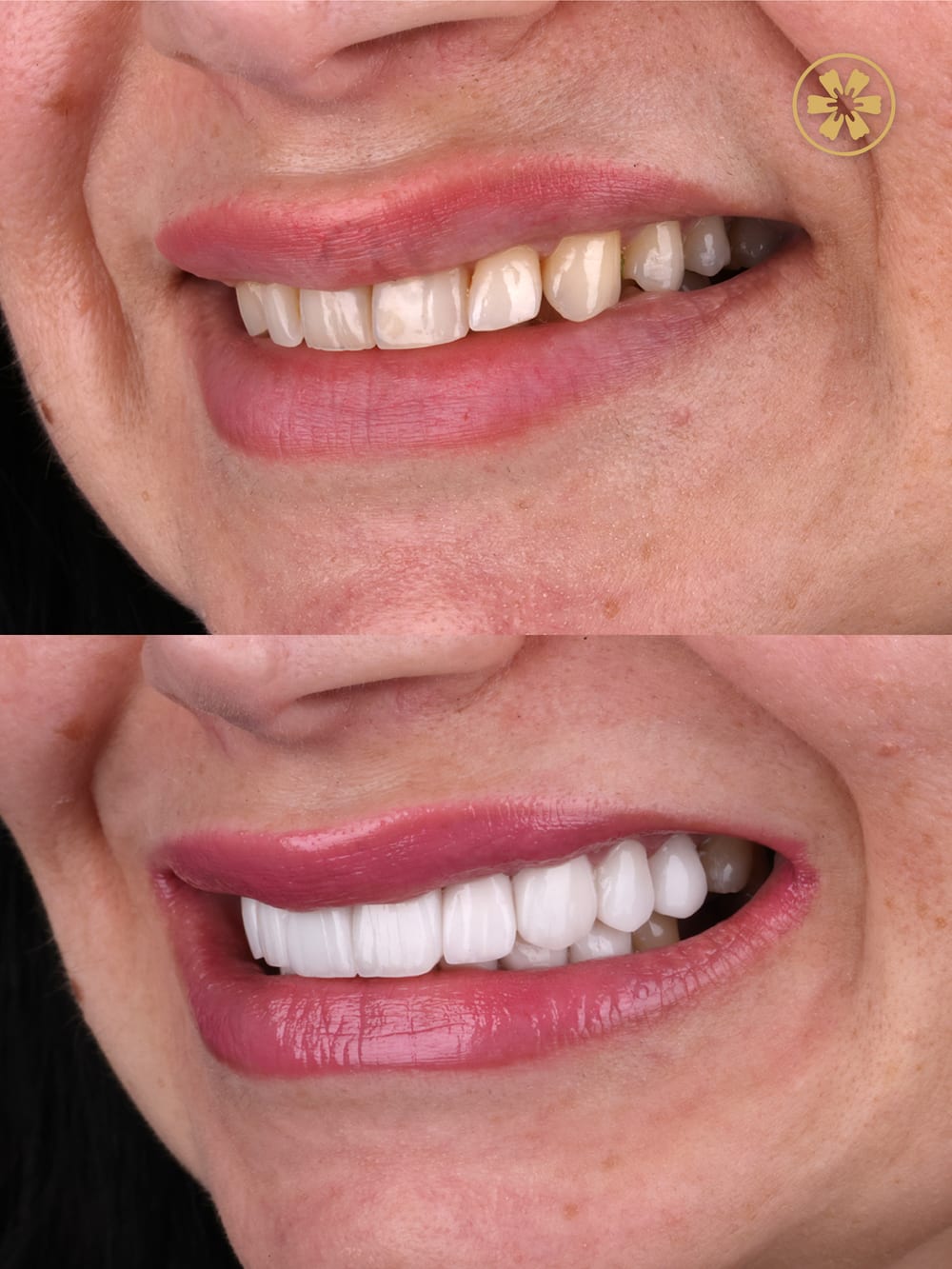
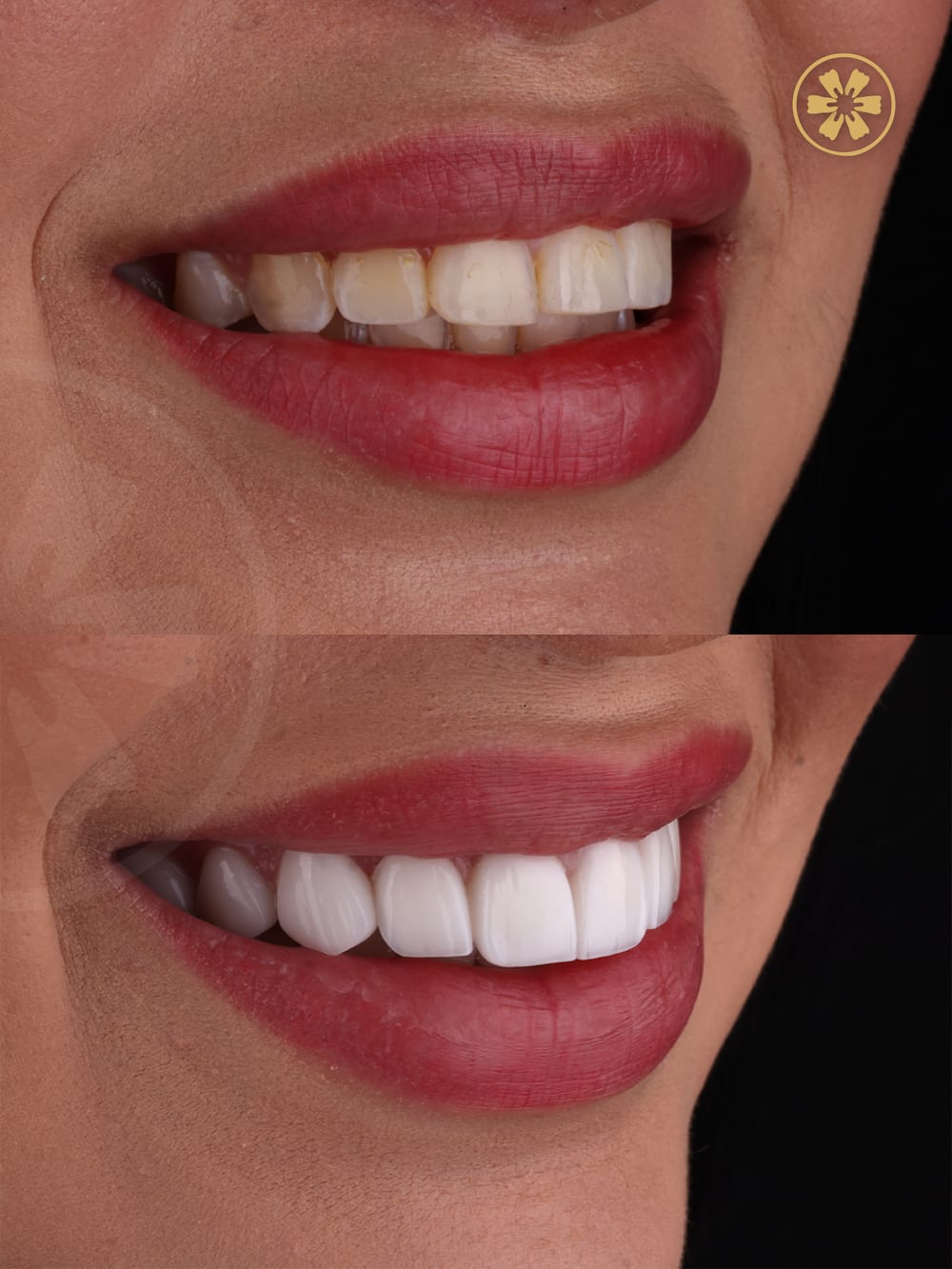
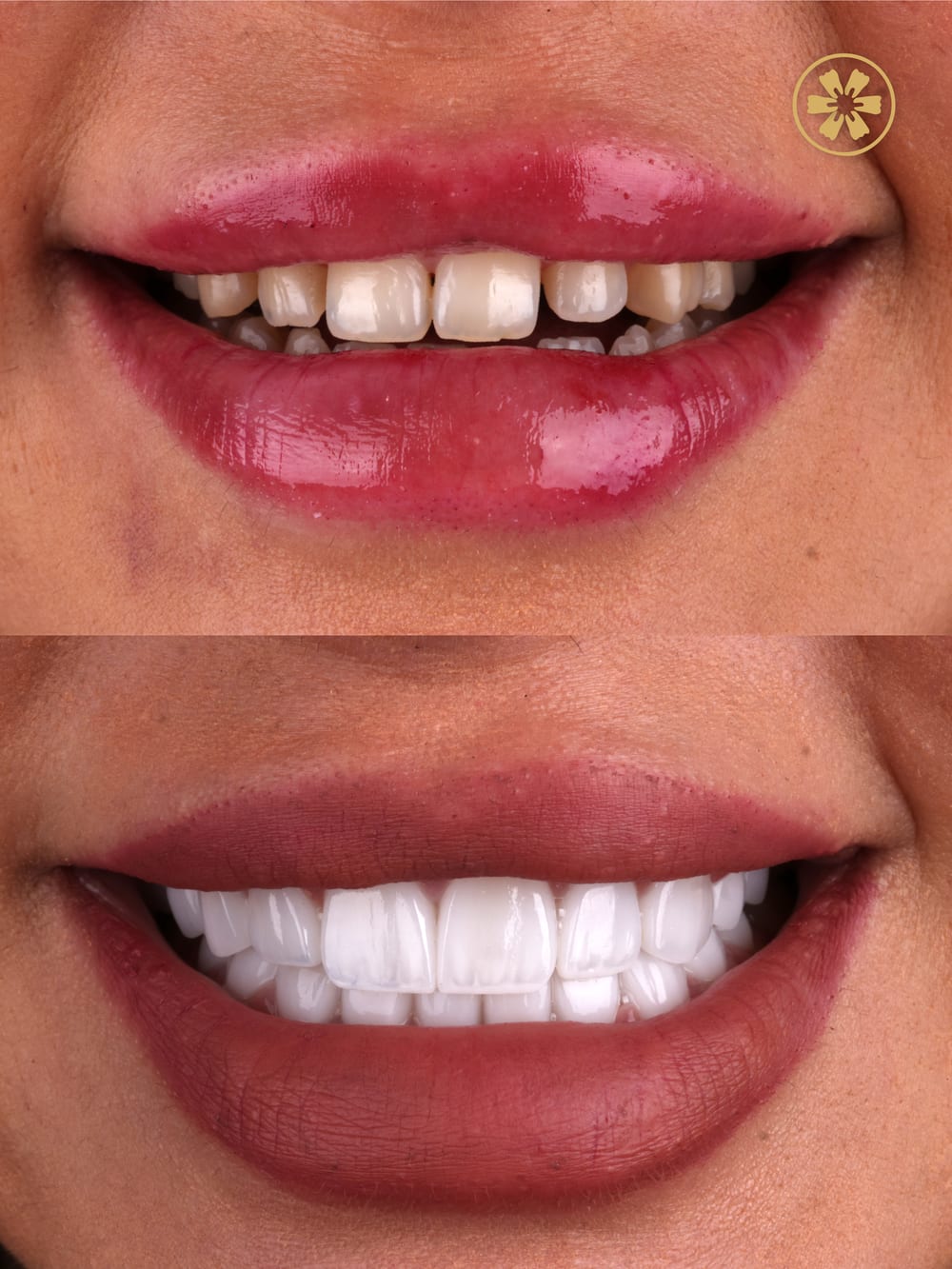
Veneers and crowns are designed digitally and milled from ceramic blocks to micron tolerances in our own lab, so marginal fit is verified before anything is made.
An optical scanner replaces traditional impression material — no gagging, no distortion, and any incomplete area is re-scanned in seconds.
You see and approve your proposed smile before a single tooth is prepared, then wear a physical mock-up to judge it in your own face.
Laser gum contouring and soft-tissue treatment reduce bleeding, healing time and the need for sutures compared with conventional surgery.
Before any implant we assess bone height, density, nerve position and sinus floor precisely — nothing is estimated.
A modern hygiene protocol that discloses biofilm first, then removes it with air, water and fine powder — safe on implants and ceramics.
A crown is only as stable as the bone holding the tooth. A veneer margin is only as clean as the gum it meets. An implant fails when the tissue around it becomes infected.
This is why we assess periodontal health before planning restorative or cosmetic work — and why we will sometimes tell you that the smile makeover has to wait until the gums are treated. Building on an unstable foundation wastes your money and, worse, accelerates the loss underneath.
Biofilm forms on teeth within hours. Where it sits undisturbed at the gum margin, the immune system responds with inflammation.
Gingivitis is that inflammation confined to the gum: redness, swelling, bleeding on brushing. It is fully reversible with thorough cleaning. Nothing has been permanently lost yet.
Periodontitis is what happens when inflammation extends below the gum and begins destroying the periodontal ligament and the bone. Pockets deepen, giving bacteria a protected environment that a toothbrush cannot reach. Bone loss is not reversible — treatment halts the process and stabilises the remaining support.
The insidious part is that periodontitis is usually painless until it is advanced. People notice when teeth begin to loosen or drift, which is very late.
Periodontal charting measures pocket depth at six points around every tooth, plus bleeding, recession and mobility. Healthy sulcus depth is one to three millimetres.
Radiographs show the bone level, which is what actually tells us how much support has been lost.
This charting is the baseline everything else is measured against. Without it, “your gums look fine” is an opinion rather than a finding.
Root surface debridement removes biofilm and calculus from below the gum line, allowing the tissue to reattach and pockets to shallow. Our Guided Biofilm Therapy protocol makes this considerably more comfortable than conventional scaling, and Perioflow reaches into pockets where instruments struggle.
Most cases respond well enough here that surgery is never needed.
We re-chart after healing. This is the step that decides what comes next — not a guess, a measurement.
Where deep pockets persist, surgical access allows direct debridement and reshaping of bone architecture. In selected defects, regenerative techniques can recover some lost support.
This is not optional and it is not the same as a routine hygiene visit. Periodontitis is a controlled condition, not a cured one. Recall intervals of three to four months are typical, because that is roughly how long it takes for the bacterial population in a treated pocket to return to baseline.
Gum recession exposes root surface, which causes sensitivity, decay risk and an elongated appearance.
Causes include aggressive brushing with a hard brush, periodontal disease, thin tissue biotype, and orthodontic movement beyond the bone envelope.
Connective tissue grafting takes a small amount of tissue from the palate and places it over the exposed root. It is predictable in the right case. But not every recession needs surgery — stable recession that causes no symptoms may simply need technique correction and monitoring, and we will tell you when that applies.
A “gummy smile” or an uneven gum line can dominate the appearance of otherwise well-shaped teeth. Laser contouring reshapes the gum margin to restore proportion, with less bleeding and faster healing than conventional surgery.
The important assessment is why the smile is gummy: excess gum tissue, a hyperactive upper lip, or skeletal jaw position. Only the first is treated by contouring — the second may suit botulinum toxin, and the third may need orthodontic or surgical management. Contouring a skeletal case will not fix it.
Naturally dark gum patches from melanin can be lightened with a laser. This is elective cosmetic treatment, generally long-lasting, though some repigmentation can occur over years.
Early periodontitis is far easier and cheaper to control than advanced disease. If you have noticed any of these, the useful next step is a full periodontal assessment rather than another routine clean.
No. Healthy gums do not bleed when you brush or floss. Bleeding is the earliest visible sign of inflammation and, at the gingivitis stage, it is fully reversible. Treating it as normal is how gingivitis progresses into periodontitis, which is not reversible.
Gingivitis is inflammation of the gum only — reversible with proper cleaning. Periodontitis is when that inflammation has destroyed the bone and ligament holding the tooth. The bone lost does not grow back on its own; treatment stops progression and stabilises what remains.
Not if it is caught and treated. Periodontitis is the leading cause of adult tooth loss, but the disease is manageable once diagnosed. What determines the outcome is how much support has already been lost, how well the infection is controlled, and whether you keep the maintenance schedule.
Recession does not reverse on its own. Where it causes sensitivity, root decay risk or an aesthetic problem, a connective tissue graft can cover the exposed root. Not every recession needs treating — some is stable and simply needs monitoring and a change in brushing technique.
A cosmetic procedure that lightens naturally dark patches of gum caused by melanin, usually with a laser. It is elective, not medical, and results are generally long-lasting though some repigmentation can occur over years. We assess suitability before recommending it.