CAD/CAM digital design & milling
Veneers and crowns are designed digitally and milled from ceramic blocks to micron tolerances in our own lab, so marginal fit is verified before anything is made.
Invisalign treatment uses a sequence of clear aligners with data-driven milestones and regular doctor reviews.
Or call us +971 4 342 4444
Every case passes through the same governed stages, from diagnosis to review, whatever the treatment.
A clinical examination with digital imaging and radiographs where indicated, to establish what you actually need before anything is proposed.
You receive a written plan covering the steps, the timeline, the cost and the alternatives, before any commitment.
We simulate the outcome digitally and review it with you, so you know where the treatment is heading before it starts.
Carried out by the appropriate specialist to the agreed protocol, with comfort and pain control managed throughout.
A review appointment assesses the result, the bite and gum health, with written home-care guidance.
Footage from real cases filmed at Creative Arts in Dubai — no stock clips, no reconstructions.
Equipment is not the point. Each of these exists because it measurably changes precision, comfort or treatment time.
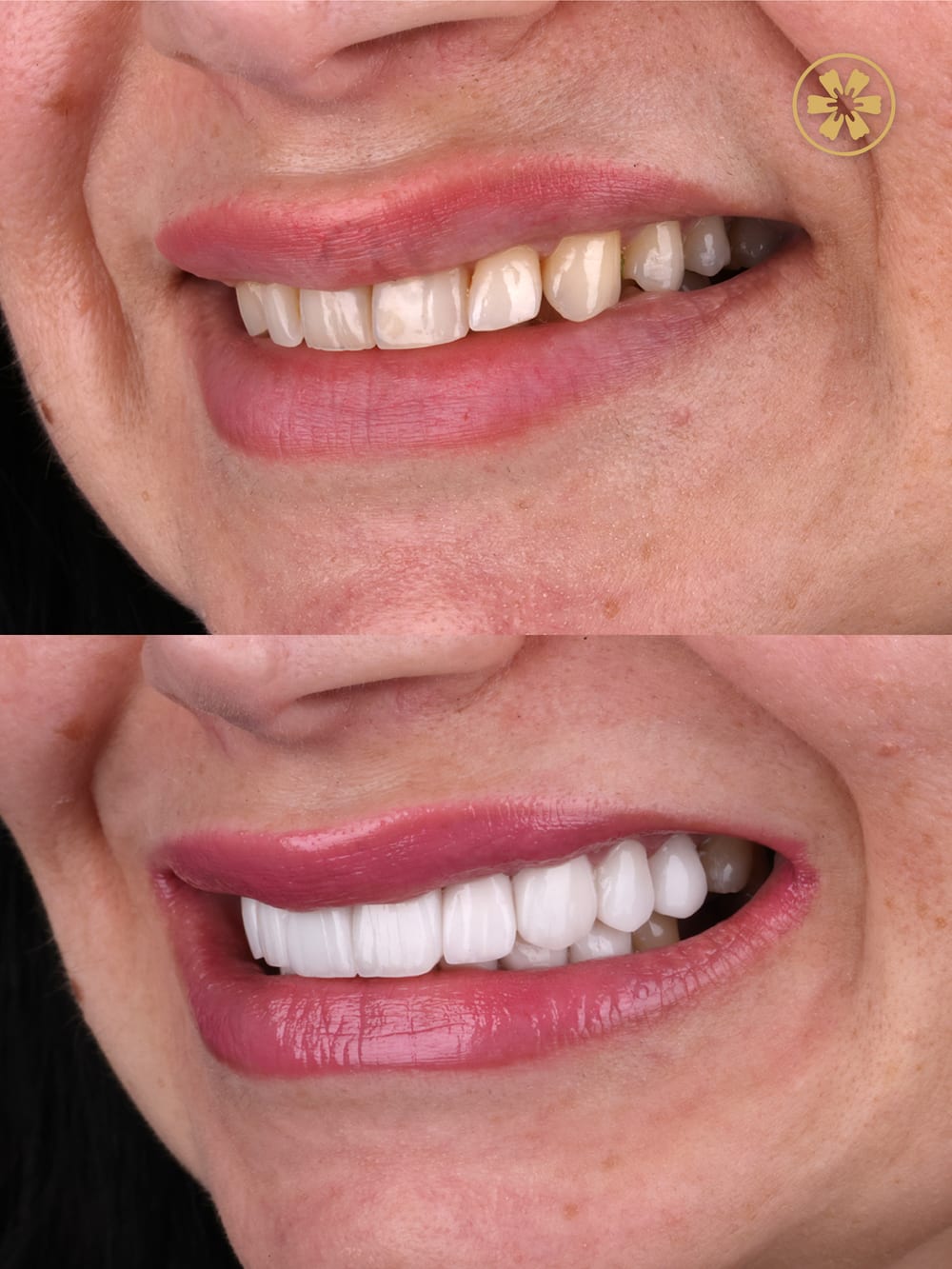
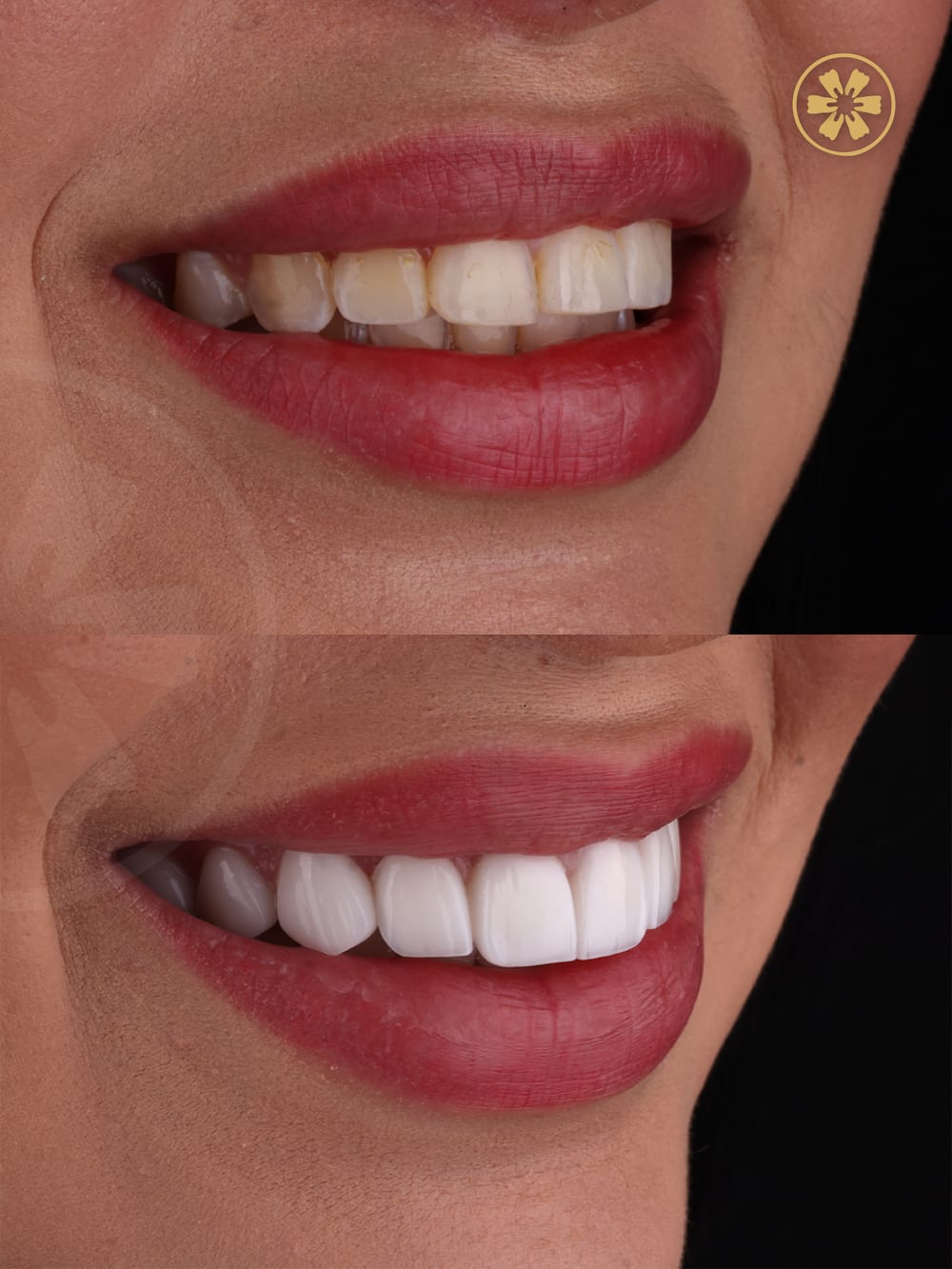
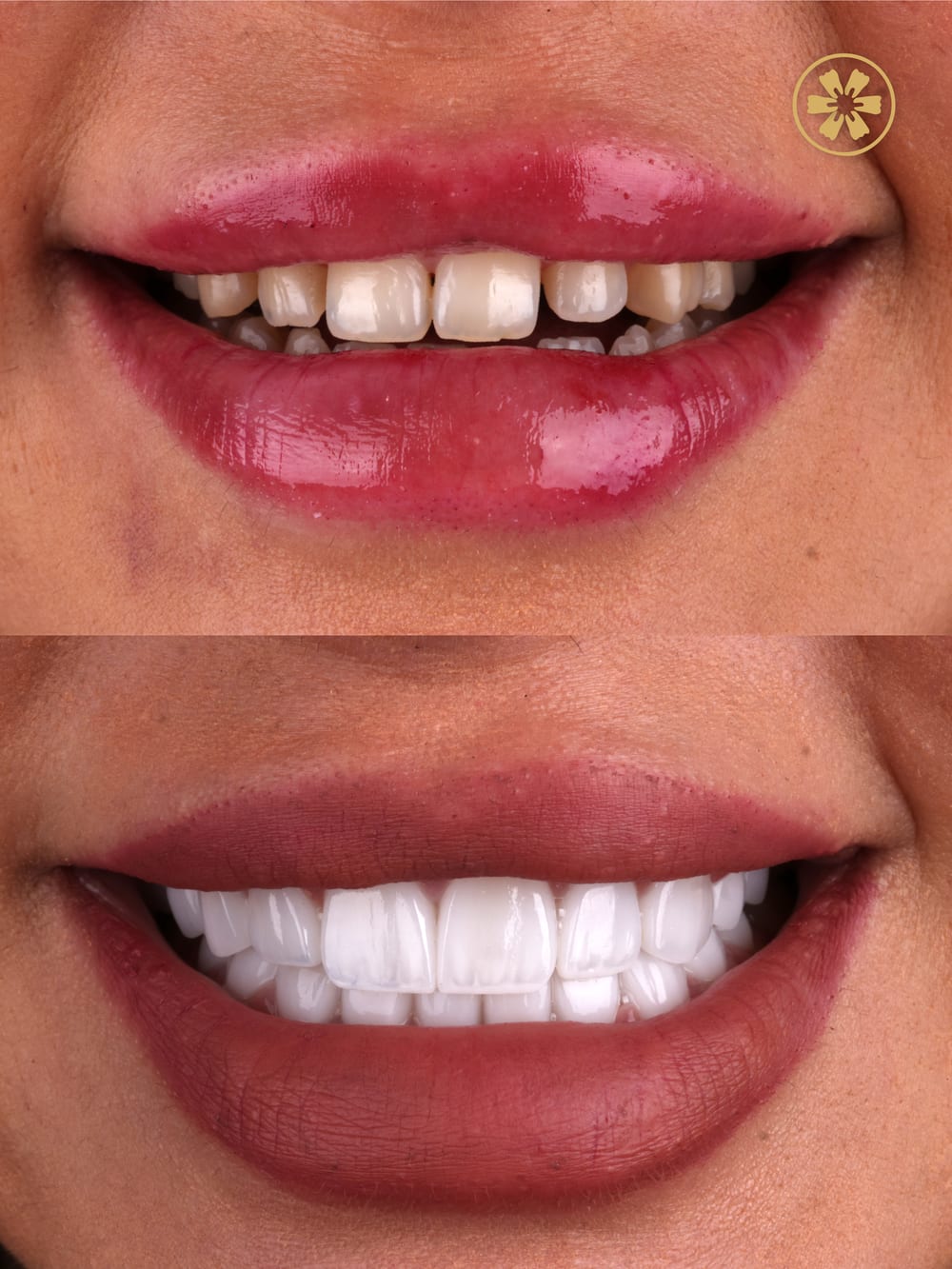
Veneers and crowns are designed digitally and milled from ceramic blocks to micron tolerances in our own lab, so marginal fit is verified before anything is made.
An optical scanner replaces traditional impression material — no gagging, no distortion, and any incomplete area is re-scanned in seconds.
You see and approve your proposed smile before a single tooth is prepared, then wear a physical mock-up to judge it in your own face.
Laser gum contouring and soft-tissue treatment reduce bleeding, healing time and the need for sutures compared with conventional surgery.
Before any implant we assess bone height, density, nerve position and sinus floor precisely — nothing is estimated.
A modern hygiene protocol that discloses biofilm first, then removes it with air, water and fine powder — safe on implants and ceramics.
Each aligner in the sequence is manufactured slightly differently from your current tooth positions. Worn against the teeth, that difference creates gentle, sustained pressure, and the bone remodels around the moving root.
The movement is deliberately small — typically a fraction of a millimetre per aligner — because biology sets the pace. Bone must resorb on one side of the root and rebuild on the other. Force applied faster than that causes damage rather than movement, including root resorption.
Small tooth-coloured attachments are often bonded to specific teeth. These give the smooth aligner something to grip so it can deliver rotational or vertical forces it otherwise could not.
Photographs, radiographs and a digital scan. We assess not just tooth position but gum health, bone levels and root condition.
This matters more than it sounds. Moving teeth through unhealthy bone causes permanent harm, which is why orthodontics requires diagnosis and why remote aligner services that skip examination are a genuine clinical risk.
Your scan is used to plan the full movement sequence and simulate the projected result. You see the starting position, the stages, and the outcome before committing to anything.
This is also where we identify whether aligners are actually the right tool for your case. If fixed braces would give you a better result, we will say so.
Aligners are manufactured and issued in batches. Each is worn one to two weeks. Review appointments confirm the teeth are tracking the plan.
Most cases need a refinement round — an additional short sequence to finish details precisely. This is normal and expected, not a sign that something went wrong. Ask any clinic whether refinements are included in the quoted price.
Teeth are held by a periodontal ligament with elastic memory. Without retention they relapse, often within months.
We plan retention from the start:
Most cases use both. Retention is not an optional upsell at the end — it is what protects everything you paid for.
| Clear aligners | Fixed braces | |
|---|---|---|
| Visibility | Barely noticeable | Visible |
| Oral hygiene | Removed to brush and floss | Considerably harder |
| Complex rotations | Limited | Better |
| Large vertical movement | Limited | Better |
| Depends on compliance | Entirely | Not at all |
| Emergency visits | Rare | Broken brackets |
| Cost | Generally higher | Generally lower |
Neither is universally better. We recommend based on your diagnosis.
Wear them. Twenty-two hours daily. Compliance determines your timeline more than any clinical factor.
Remove for anything but water. Hot drinks warp the plastic. Sugary drinks trapped under an aligner bathe the teeth in sugar for hours — a genuine decay risk.
Clean them properly. Rinse when removed and brush gently with a soft brush. Not hot water, and not toothpaste, which is abrasive enough to cloud the plastic.
Brush before reinserting. Sealing plaque against enamel for twenty-two hours is exactly the wrong thing to do.
Expect pressure for the first day or two of each new aligner. That sensation is the treatment working. If it is genuinely painful rather than tight, contact us.
Keep your previous aligner. If one is lost or damaged it is the safe fallback.
Some cases require IPR — removing a very small amount of enamel between teeth to create space for alignment, typically a few tenths of a millimetre.
It is safe, painless, and does not weaken the teeth at these dimensions. It is frequently the alternative to extracting a tooth, and we will explain exactly where and why if your plan includes it.
Aligners suit a wider range of cases than most people expect, but not every case. At assessment we look at:
Your gum and bone health. This is the gate. Teeth can only be moved safely through healthy bone. Active periodontal disease must be treated and stabilised first — moving teeth through inflamed, resorbing bone accelerates the loss permanently.
Root length and condition. Roots that are already short, or show previous resorption, tolerate movement less well and change how we plan forces and duration.
The type of movement needed. Tipping a tooth is straightforward. Bodily movement, significant rotation of a round-rooted premolar, and true intrusion or extrusion are progressively harder for an aligner to deliver. Attachments extend that range considerably, but not infinitely.
Whether the problem is dental or skeletal. Crowded teeth on well-related jaws are a dental problem aligners handle well. A significant jaw size discrepancy is skeletal, and in adults it may need a combined orthodontic and surgical approach. No aligner moves a jaw.
Existing restorations. Crowns and veneers do not bond to attachments as reliably as enamel, which affects planning. Existing dental work may also need replacing after alignment, since teeth in new positions can expose old margins.
Your honest assessment of compliance. We would rather plan fixed braces that work than aligners that sit in a drawer.
If aligners are not right for your case, we will say so and explain what would work better. A clinic that recommends the same appliance to everyone is selling, not diagnosing.
We give you a written plan covering the whole treatment, including refinements and retainers, so the figure you see is the figure you pay.
Mild crowding or spacing often completes in six to nine months. Moderate cases typically run twelve to eighteen months. Complex bite correction can take two years or more. Your simulation gives a specific estimate for your teeth rather than a general range.
Twenty to twenty-two hours. They come out only for eating, for drinking anything other than water, and for brushing. This is the single biggest variable under your control — at sixteen hours a day teeth fall behind the sequence and the case needs re-scanning, adding months.
No, and we will tell you if yours is not. Aligners handle most alignment, crowding and spacing problems well. Fixed braces remain better for significant rotations, large vertical movements and complex skeletal correction. The case decides, not the brand.
Most people notice a slight lisp for the first few days as the tongue adapts to the aligner edges. It resolves quickly and is rarely noticeable to others after the first week.
Contact us immediately. Depending on where you are in the sequence we will usually advise going back to the previous aligner or forward to the next, rather than leaving a gap in wear. Never simply stop — teeth begin relapsing within days.