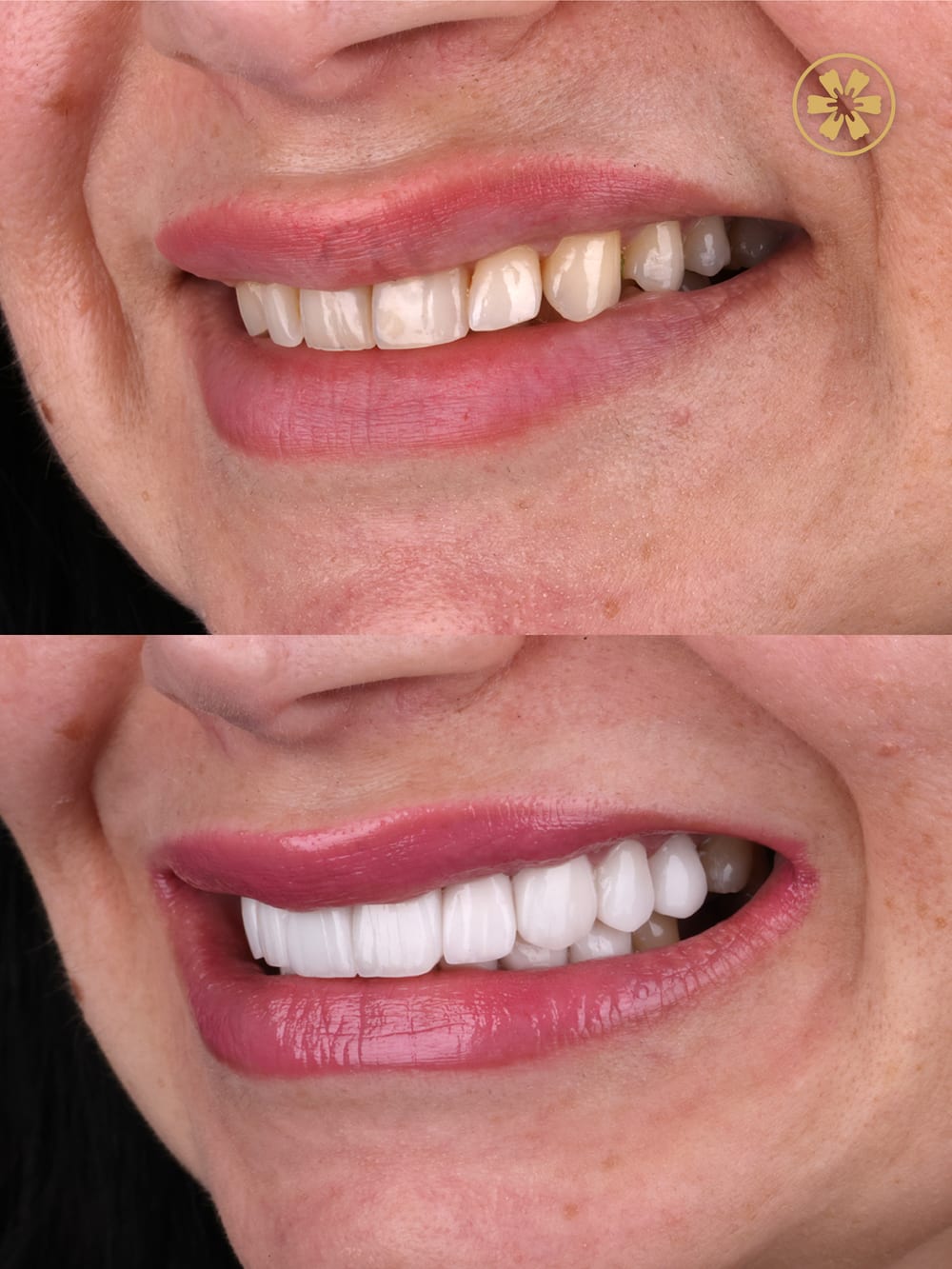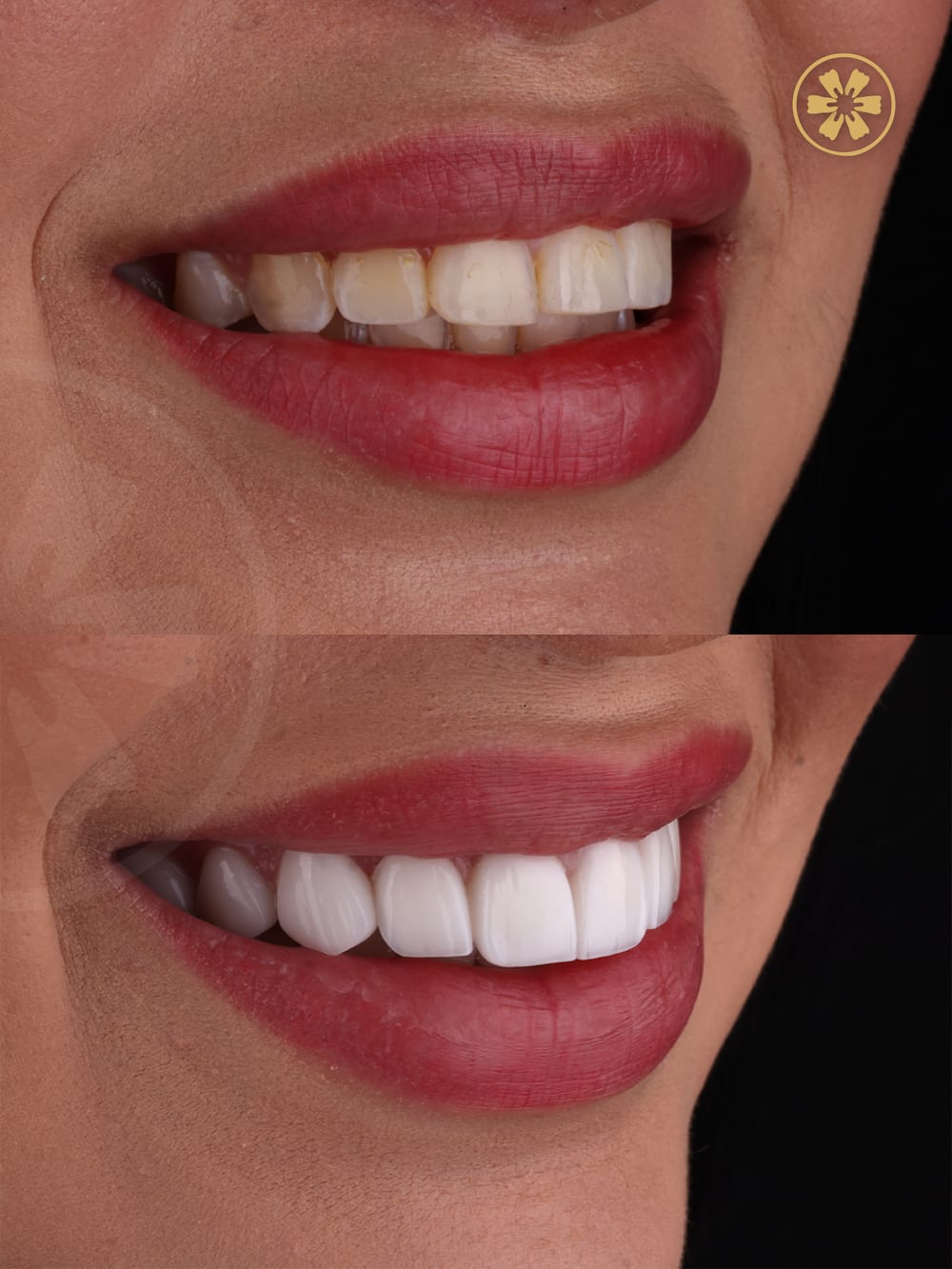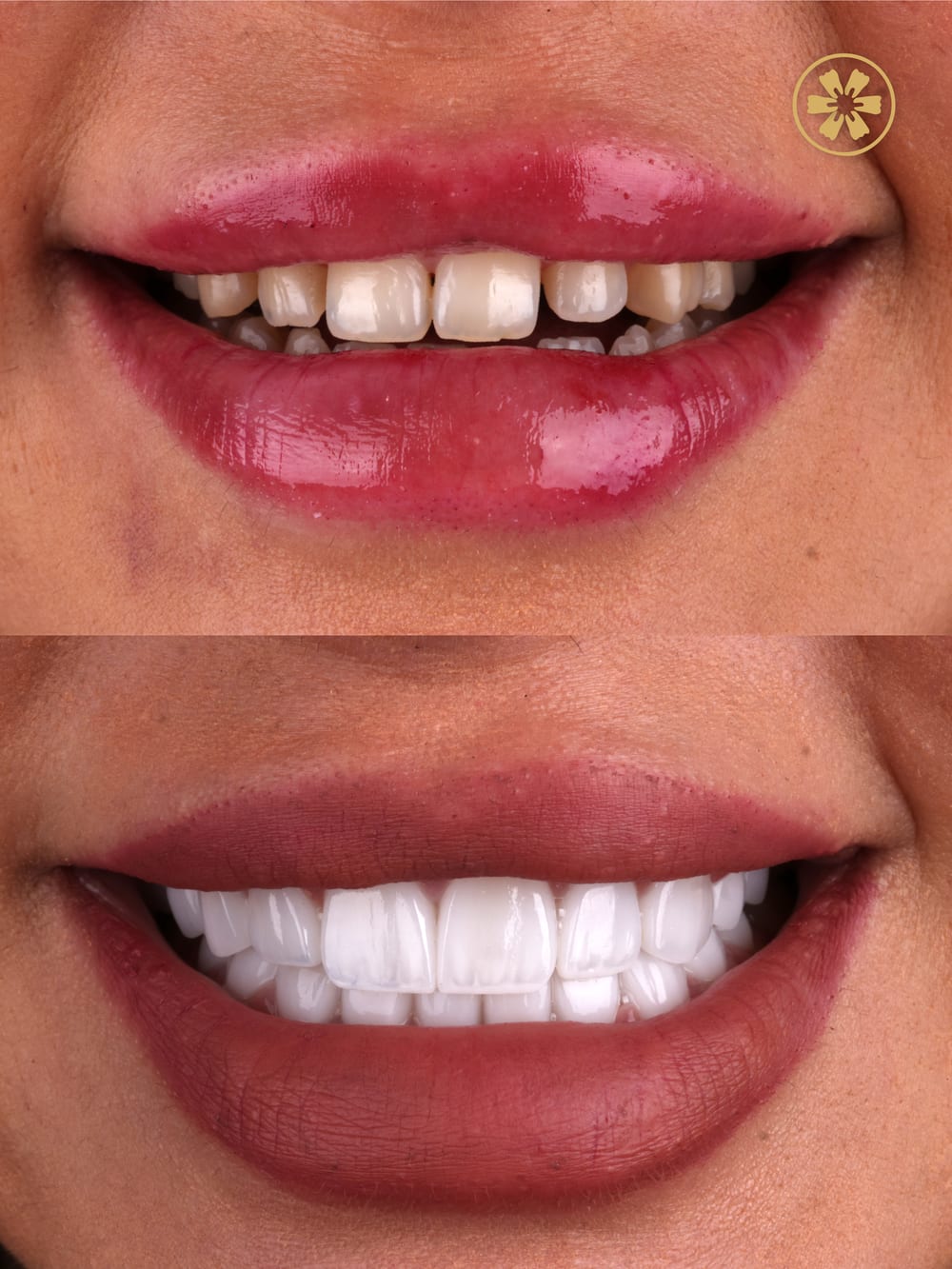
CAD/CAM digital design & milling
Veneers and crowns are designed digitally and milled from ceramic blocks to micron tolerances in our own lab, so marginal fit is verified before anything is made.
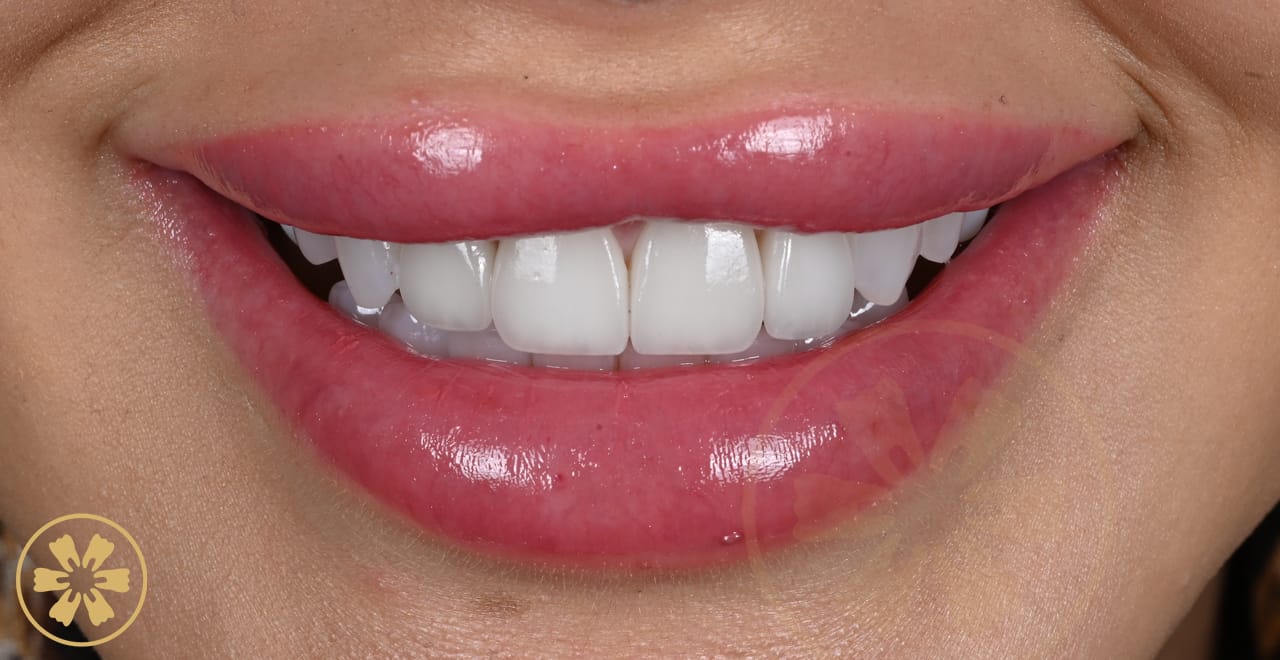
Hollywood Smile treatments are individually designed around face shape, lip dynamics, and your preferred level of brightness.
Or call us +971 4 342 4444
Every case passes through the same governed stages, from diagnosis to review, whatever the treatment.
A clinical examination with digital imaging and radiographs where indicated, to establish what you actually need before anything is proposed.
You receive a written plan covering the steps, the timeline, the cost and the alternatives, before any commitment.
We simulate the outcome digitally and review it with you, so you know where the treatment is heading before it starts.
Carried out by the appropriate specialist to the agreed protocol, with comfort and pain control managed throughout.
A review appointment assesses the result, the bite and gum health, with written home-care guidance.
Footage from real cases filmed at Creative Arts in Dubai — no stock clips, no reconstructions.
Every case digitally designed, made in our in-house laboratory, and fitted by our own clinicians.
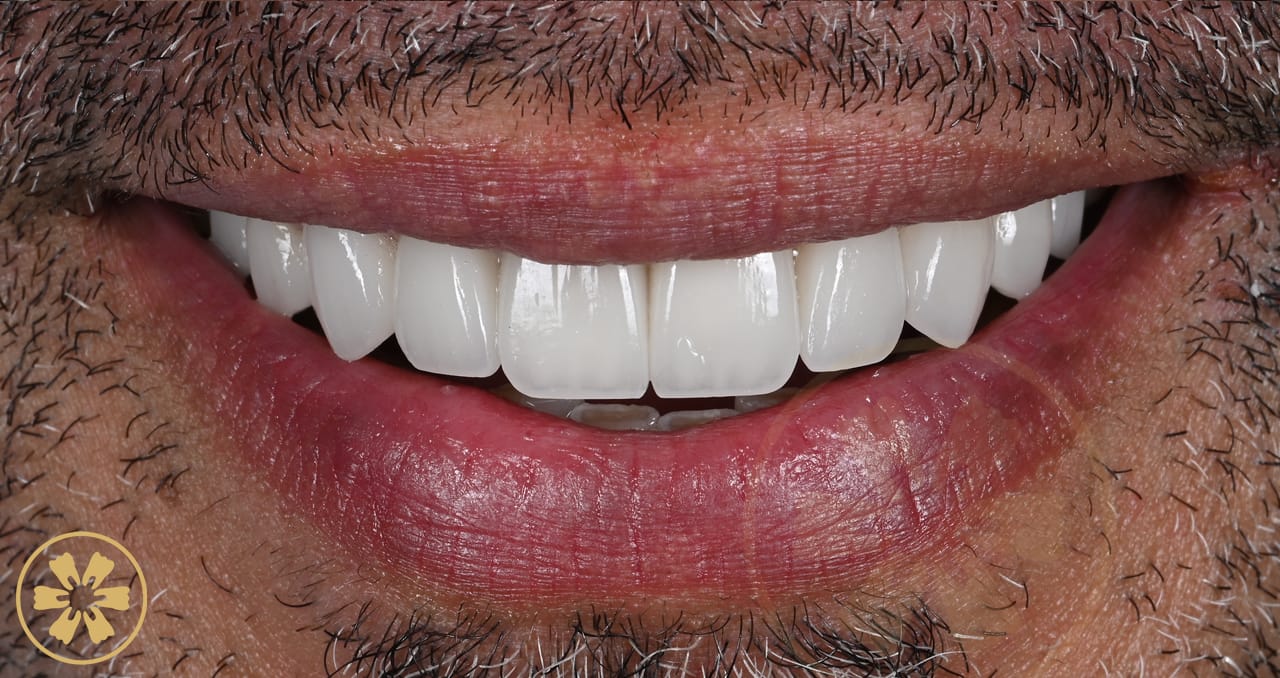
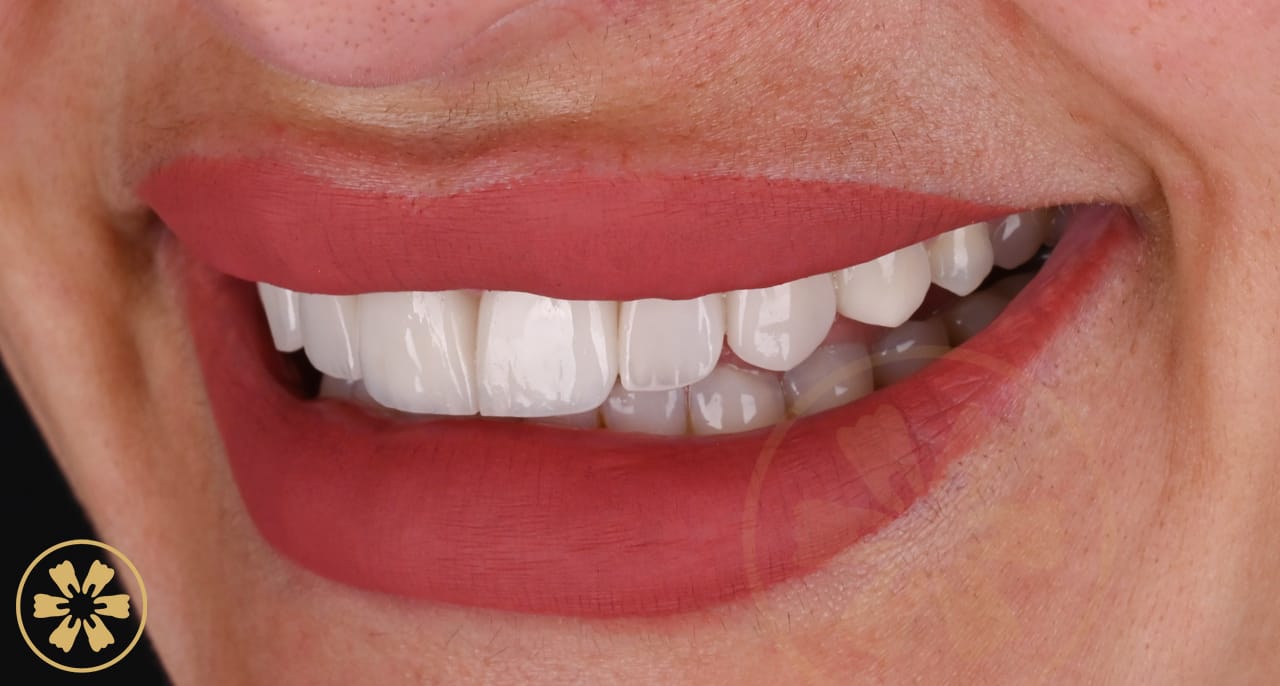
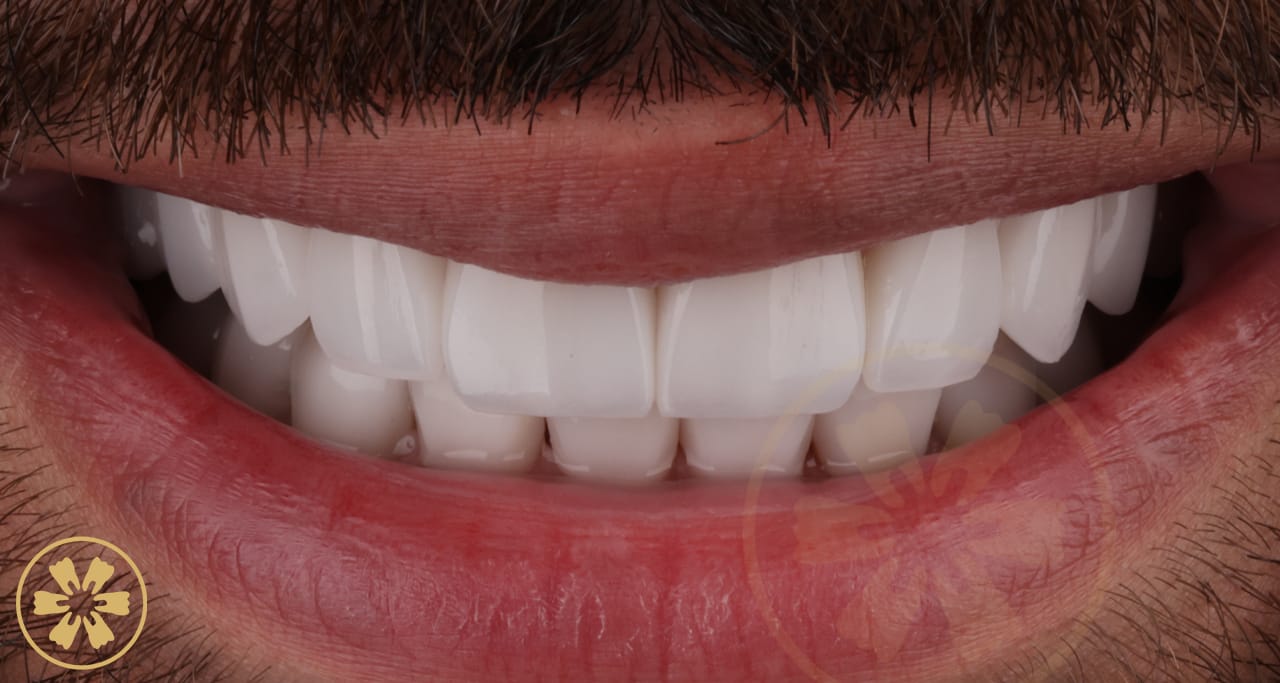
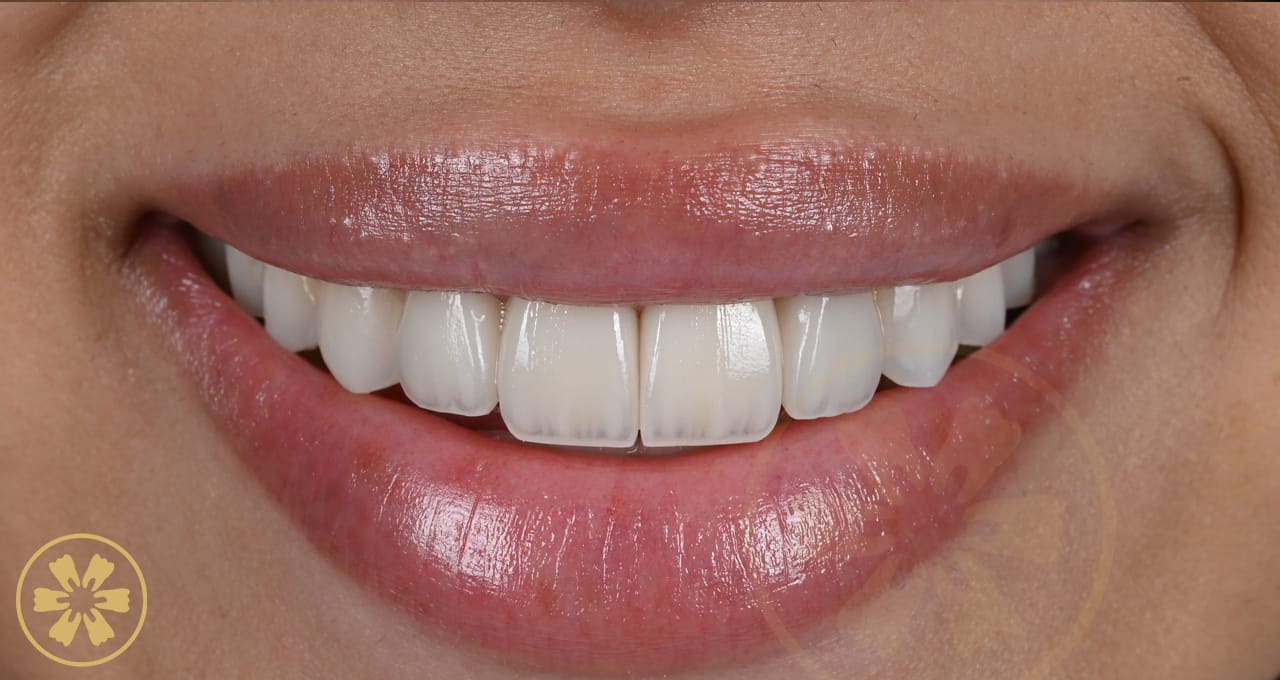
Equipment is not the point. Each of these exists because it measurably changes precision, comfort or treatment time.
Veneers and crowns are designed digitally and milled from ceramic blocks to micron tolerances in our own lab, so marginal fit is verified before anything is made.
An optical scanner replaces traditional impression material — no gagging, no distortion, and any incomplete area is re-scanned in seconds.
You see and approve your proposed smile before a single tooth is prepared, then wear a physical mock-up to judge it in your own face.
Laser gum contouring and soft-tissue treatment reduce bleeding, healing time and the need for sutures compared with conventional surgery.
Before any implant we assess bone height, density, nerve position and sinus floor precisely — nothing is estimated.
A modern hygiene protocol that discloses biofilm first, then removes it with air, water and fine powder — safe on implants and ceramics.
The phrase is a marketing term rather than a clinical one. In practice it describes a cosmetic rehabilitation plan built from several procedures working together: porcelain veneers, sometimes ceramic crowns, occasionally gum contouring, usually whitening of the teeth that are not being veneered, and in some cases short-course alignment beforehand.
The purpose of planning them together is that a smile is a single visual object. Treating one tooth in isolation produces a tooth that looks treated. Designing the whole aesthetic zone produces a smile.
Before any design work, we assess the health of the foundation: decay, gum condition, bone levels, bite interferences and signs of grinding. Cosmetic work placed over untreated disease fails, and it fails expensively. If something needs treating first, we will tell you at consultation rather than after you have paid.
Your intraoral scan is combined with facial photographs to design the proposed smile in three dimensions. This is where the decisions that determine whether a result looks natural are made:
You see this design and adjust it with us before anything else happens.
The approved design is transferred into your mouth as a temporary trial. You can see it in your own face, speak with it, photograph it and live with it briefly.
This step is the single most useful safeguard in cosmetic dentistry, and it is the one most commonly skipped. It converts an abstract plan into something you can actually judge — and if you want the teeth shorter, less bright or differently shaped, that conversation happens now, while everything is still reversible.
Once the design is agreed, preparation is guided by the mock-up. This matters: preparing freehand means removing enamel and hoping the final design fits. Preparing through the mock-up means removing only what the approved design requires.
Enamel does not grow back. Every fraction preserved is a fraction that continues to support the veneer for decades.
The ceramic is milled from a solid block to micron tolerances, then hand-layered by our technician for colour depth, translucency and surface texture. Because the laboratory is inside the clinic, the technician can assess your face and your adjacent natural teeth directly under the same lighting the clinician sees — rather than working from photographs sent to an external lab.
The veneers are tried in before final bonding and checked against the approved design. Then the bite is balanced so that force is distributed correctly across the arch.
This last step determines longevity more than any other. Beautiful veneers on an unbalanced bite chip. Well-balanced veneers last.
| Material | Best suited to | Character |
|---|---|---|
| Feldspathic ceramic | Thin, highly aesthetic veneers | The most lifelike; requires expert handling |
| Lithium disilicate | Most veneer and front-crown cases | Excellent translucency with good strength |
| Layered zirconia | Cases needing strength and aesthetics | Strong core with an aesthetic surface layer |
Material choice is clinical, not commercial: it depends on how much tooth structure remains, how much force the area takes, and how visible it is.
Veneers do not decay — but the tooth underneath still can, and the gum around them still needs care.
We would rather say this at consultation than after treatment:
A smile makeover is a facial design problem before it is a dental one. Teeth that would look excellent on someone else can look borrowed on you, and that is nearly always a proportion decision rather than a colour one.
What the design is actually working from:
You see this as a 3D design and then as a physical mock-up in your own mouth. Changing your mind at that stage costs nothing, which is the entire reason the stage exists.
There is no single price, and a clinic quoting one before examining you is quoting a package rather than a treatment. What can be set out plainly is what moves the number.
What drives the cost
What a plan from us includes
Diagnosis and imaging, the digital design, the mock-up you approve, preparation and temporaries, the ceramic, fitting and bite balancing, and review appointments. The laboratory work is not billed separately because the laboratory is ours.
Why two quotes for “a Hollywood Smile” can differ enormously
Because the phrase describes an outcome, not a procedure. One quote may be ten veneers; another twenty units including crowns; another the same count in a different material; another excludes the gum work that the result actually depends on. Comparing the headline number tells you nothing. Ask for the unit count, the material by name, and the list of what is excluded — from any clinic, including this one.
After diagnosis you receive a written, itemised plan showing the cost of each phase. You decide with that in front of you.
No clinic can honestly call itself the best, and a page claiming it is not evidence of anything. These are checkable instead.
Our answers are throughout this page, and the cases are in the gallery.
Most cases complete across three to four appointments over one to two weeks: diagnosis and scan, design approval and mock-up, preparation with temporaries, then final fit. Because our laboratory is on site, the wait between preparation and fitting is considerably shorter than an outsourced workflow.
As little as the design allows. Preparation is guided by the approved mock-up rather than done freehand, so only the enamel that genuinely needs to go is removed. For suitable candidates we offer no-prep veneers that preserve the tooth entirely.
Porcelain itself does not stain the way natural enamel or composite does. What can discolour over the years is the bonding margin if hygiene is poor, or the adjacent natural teeth, which is why we often whiten the lower arch as part of the plan.
A single veneer can usually be replaced without disturbing the others. If chipping occurs we investigate the cause — most commonly grinding or an unbalanced bite — because replacing it without addressing the cause simply repeats the failure.
Yes, and we consider this essential. You see a 3D design first, then wear a physical mock-up of the proposed smile. Nothing irreversible happens until you have seen and approved both.