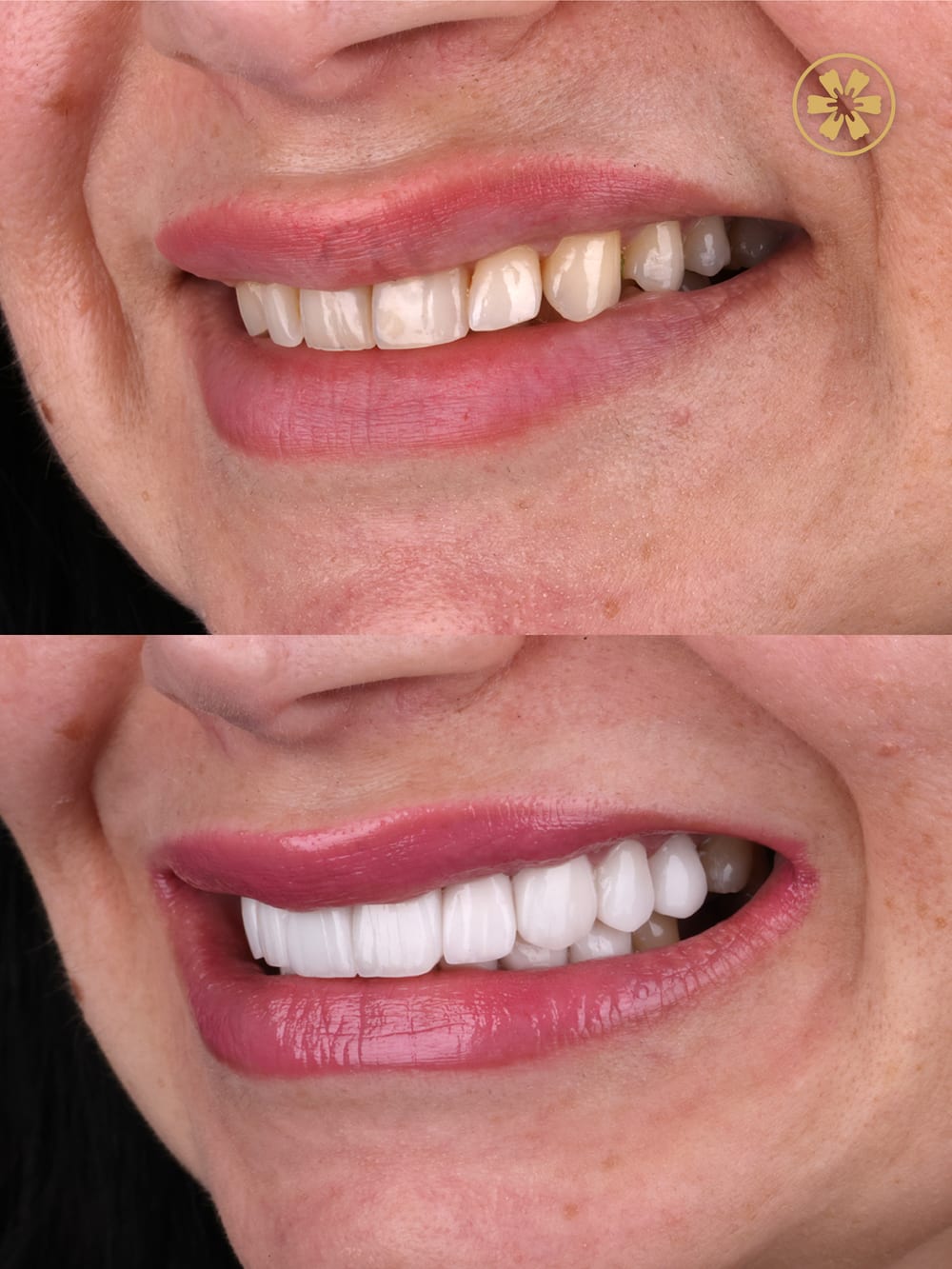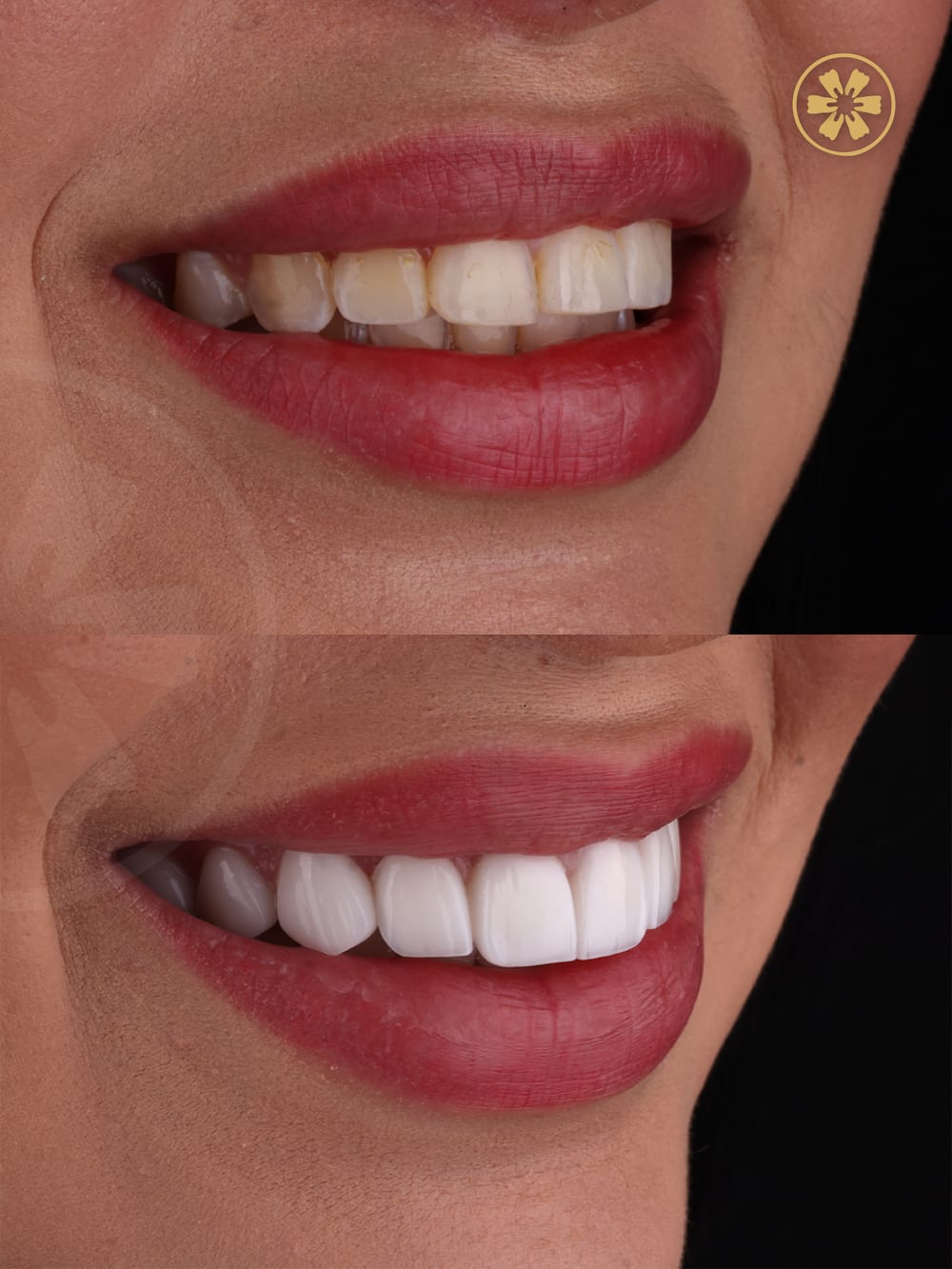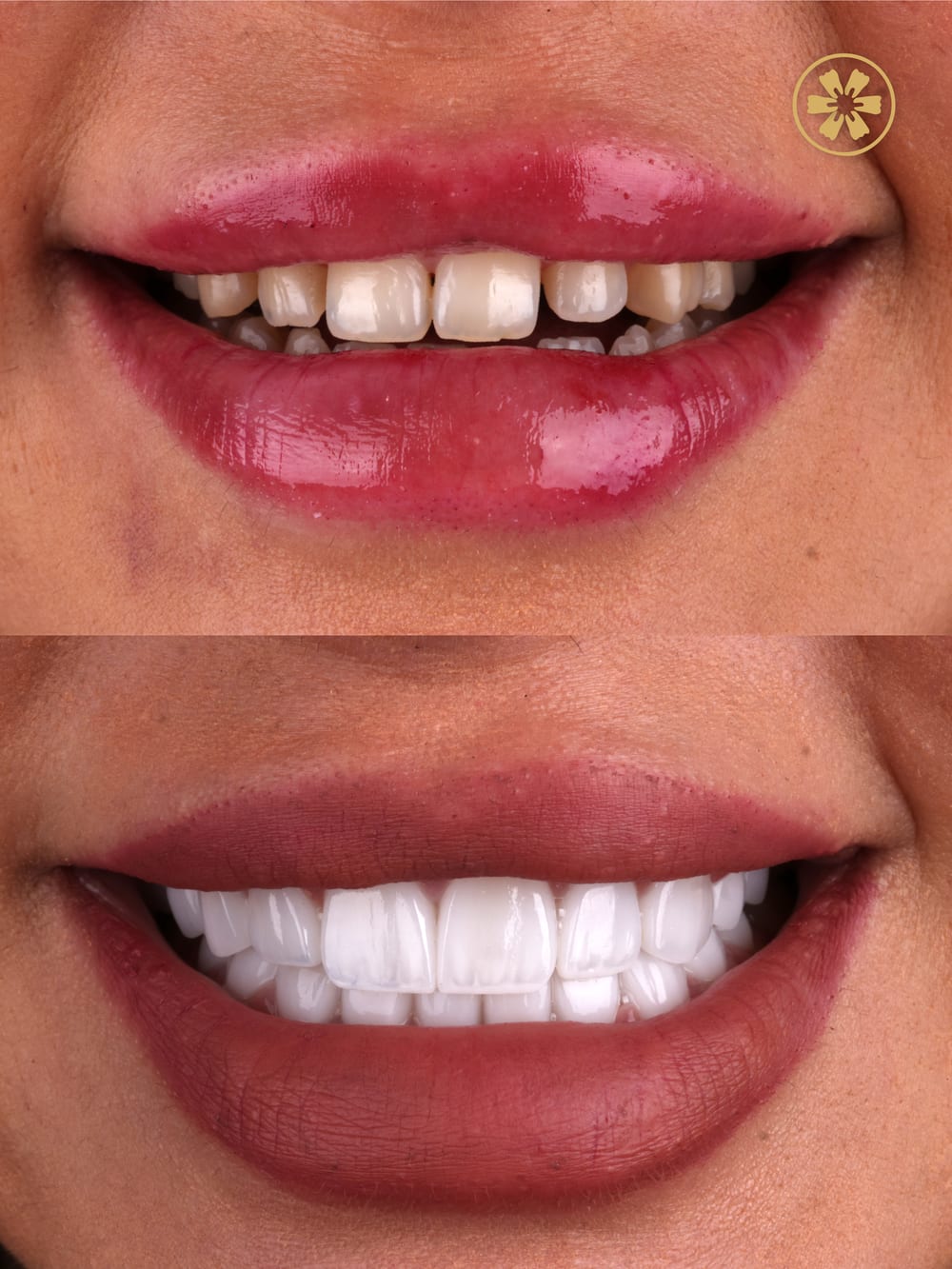
CAD/CAM digital design & milling
Veneers and crowns are designed digitally and milled from ceramic blocks to micron tolerances in our own lab, so marginal fit is verified before anything is made.
Surgical treatment is planned from 3D imaging so nerve and sinus positions are known rather than estimated, and performed with techniques chosen to minimise swelling and recovery time.
Or call us +971 4 342 4444
Every case passes through the same governed stages, from diagnosis to review, whatever the treatment.
A clinical examination with digital imaging and radiographs where indicated, to establish what you actually need before anything is proposed.
You receive a written plan covering the steps, the timeline, the cost and the alternatives, before any commitment.
We simulate the outcome digitally and review it with you, so you know where the treatment is heading before it starts.
Carried out by the appropriate specialist to the agreed protocol, with comfort and pain control managed throughout.
A review appointment assesses the result, the bite and gum health, with written home-care guidance.
Footage from real cases filmed at Creative Arts in Dubai — no stock clips, no reconstructions.
Equipment is not the point. Each of these exists because it measurably changes precision, comfort or treatment time.
Veneers and crowns are designed digitally and milled from ceramic blocks to micron tolerances in our own lab, so marginal fit is verified before anything is made.
An optical scanner replaces traditional impression material — no gagging, no distortion, and any incomplete area is re-scanned in seconds.
You see and approve your proposed smile before a single tooth is prepared, then wear a physical mock-up to judge it in your own face.
Laser gum contouring and soft-tissue treatment reduce bleeding, healing time and the need for sutures compared with conventional surgery.
Before any implant we assess bone height, density, nerve position and sinus floor precisely — nothing is estimated.
A modern hygiene protocol that discloses biofilm first, then removes it with air, water and fine powder — safe on implants and ceramics.
The difference between routine oral surgery and a complication is almost always what happened before the procedure started.
A CBCT scan gives a three-dimensional view of the surgical site. For lower wisdom teeth it shows the exact relationship between the tooth roots and the inferior alveolar nerve — the nerve that supplies sensation to the lip and chin. For upper posterior teeth it shows the sinus floor.
Neither of those can be judged reliably from a two-dimensional radiograph. Nerve injury during wisdom tooth removal is a serious and largely preventable complication, and prevention starts with knowing precisely where the nerve is.
We do not remove wisdom teeth simply because they exist. Removal is indicated when:
A fully erupted wisdom tooth that you can clean and that causes no problems can reasonably be monitored. A clinic that recommends removing all four as a matter of course is not diagnosing.
How difficult the surgery is depends on the angle:
| Impaction | What it means | Typical difficulty |
|---|---|---|
| Vertical | Upright, may be partially erupted | Often straightforward |
| Mesial | Angled forward into the second molar | Moderate |
| Horizontal | Lying on its side | More involved |
| Distal | Angled backward | Moderate to difficult |
Your scan determines which applies, and we explain it before you consent.
Anaesthesia. Local anaesthetic is given and tested before anything begins. You should feel pressure and movement but not sharpness — tell us immediately if you do.
Access. A small incision exposes the tooth. Some bone may need removing, and the tooth is often sectioned into pieces so it can be removed through a smaller opening. Sectioning sounds more invasive but is usually less traumatic than levering out a whole tooth.
Delivery and debridement. The tooth is removed and the socket cleaned of any follicular tissue.
Closure. Sutures are placed. We commonly use dissolvable sutures so a removal appointment is not needed.
A single straightforward extraction takes twenty to thirty minutes. A difficult impaction takes longer.
Bone begins resorbing as soon as a tooth is lost, fastest in the first year. Where an implant is planned, socket preservation — placing graft material into the socket at the time of extraction — maintains the ridge and often removes the need for more invasive augmentation later.
Sinus lift is required when the upper posterior jaw has insufficient bone height because the sinus has expanded downward. Graft material is placed beneath the sinus membrane to create the height an implant needs. It adds months to the implant timeline, which is why it is planned from the outset rather than discovered mid-treatment.
Ridge augmentation widens a ridge that has narrowed over years without a tooth.
Being direct: grafting is sometimes recommended reflexively. Our position is that the scan decides, and where angled or shorter implants can achieve stability in available bone, we use technique rather than graft material.
First 24 hours. Bite firmly on the gauze for the time specified. Ice intermittently — twenty minutes on, twenty off. Do not rinse, spit forcefully, or use a straw; these dislodge the clot. No smoking. Soft, cool food.
Days 2–3. Swelling peaks and then begins to settle. Bruising is normal and can track down the jaw. Start gentle warm salt-water rinses after 24 hours. Continue prescribed medication.
Days 4–7. Swelling reduces noticeably. Jaw stiffness is common and eases with gentle opening. Most people return to work within two to three days.
Week 2 onward. Sutures dissolve. The socket fills with tissue over several weeks; complete bone fill takes months.
Every surgical procedure carries risk. For wisdom teeth those include dry socket, infection, temporary or — rarely — permanent altered sensation in the lip or tongue, sinus communication in upper cases, and jaw stiffness.
These are uncommon, and planning from a 3D scan reduces several of them substantially. But you should hear them before you agree, not after. We set out the risks, the alternatives including doing nothing, and the likely consequence of each.
Most patients recover within three to five days. Swelling peaks at 48 to 72 hours and then settles. Simple extractions often need only a day or two; deeply impacted lower wisdom teeth take longer. We provide a written recovery protocol before you leave.
Most procedures are performed under local anaesthetic, so you are awake but feel pressure rather than pain. For anxious patients or longer surgical cases, sedation options are discussed in advance with the risks and alternatives set out plainly.
No, and we will say so. A wisdom tooth that is fully erupted, cleanable and not causing problems can be left and monitored. Removal is indicated for recurrent infection, decay that cannot be restored, cysts, damage to the neighbouring molar, or impaction causing pain.
Dry socket is loss of the blood clot from the extraction site, exposing bone. It is painful and typically appears three to five days after surgery. The main risks are smoking, vigorous rinsing, spitting and using a straw — avoiding those in the first 72 hours dramatically reduces the chance.
Not always. It is recommended when you plan an implant later, because bone resorbs fastest in the first year after a tooth is lost. Socket preservation at the time of extraction is far less invasive than rebuilding a collapsed ridge afterwards.